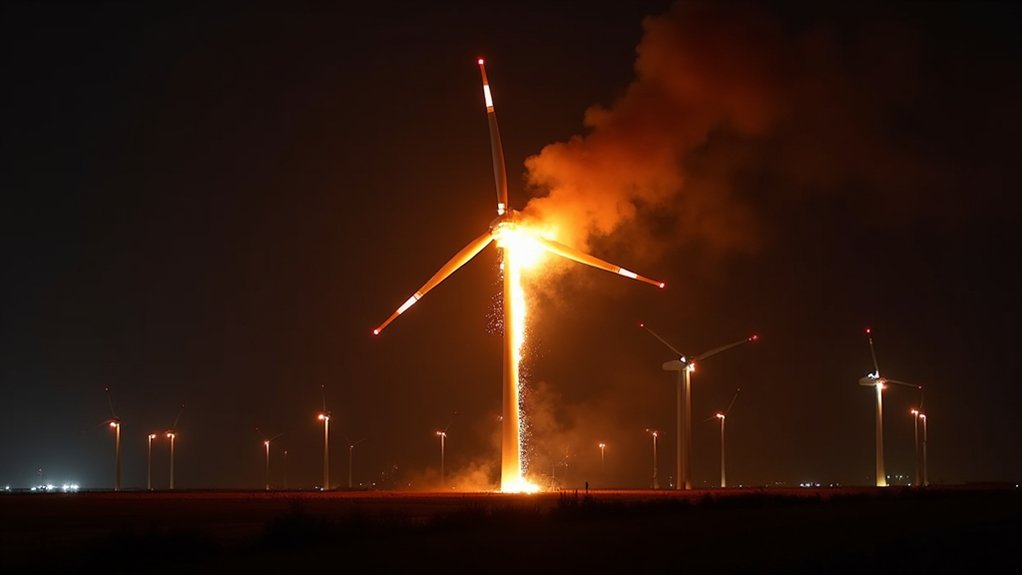
A massive fire engulfed the nacelle section of a 1.5-MW Suedwind S70 wind turbine at EnBW’s Bremervörde-Iserlersheim wind farm, drawing immediate response from local emergency services. The blaze, first detected when nearby residents spotted smoke billowing from the 65-meter-high structure, quickly intensified despite rapid deployment of firefighting resources. Extinguishing efforts faced significant challenges due to the turbine’s considerable height.
Fire consumed the nacelle of a Suedwind S70 turbine at EnBW’s wind farm, with height complicating firefighting efforts.
Local fire brigades established a safety perimeter around the affected area to protect against potentially hazardous debris. The decision was made not to attempt direct fire suppression given the extreme height and associated risks. Fire personnel maintained vigilant monitoring until the blaze eventually subsided. Remarkably, no injuries occurred throughout the incident.
The fire forced the immediate shutdown of the affected turbine, though grid supply remained uninterrupted. EnBW’s remaining turbines at the site continue normal operations while damage assessment is underway. Such incidents highlight the challenges faced by companies like RWE who are making significant investments in wind energy across Germany. The eventual repair or replacement timeline remains undetermined pending thorough inspection.
An investigation has commenced to identify the root cause, with electrical malfunction, overheating components, or mechanical failure representing the most probable scenarios. Technical specialists and manufacturer representatives are conducting detailed forensic analysis of the turbine’s systems, maintenance records, and operational data. The industry has seen similar financial impacts to those experienced by National Grid’s $402 million hit due to project delays and maintenance issues in other regions.
The incident has reignited industry discussions about fire safety standards for wind energy installations. Though statistically uncommon, wind turbine fires present unique challenges due to their remote locations and elevated positions. The event may accelerate adoption of advanced fire detection and suppression technologies across the sector.
Initial environmental assessments detected no hazardous material contamination. Local authorities confirmed the smoke plume posed no health threats to nearby communities. EnBW has established open communication channels with community leaders to address public concerns.
This incident may prompt a sector-wide reassessment of safety protocols. I’ve seen similar events catalyze significant improvements in fire mitigation strategies. Enhanced preventive maintenance, improved detection systems, and more effective emergency response procedures will likely emerge as critical focus areas for operators throughout the industry.