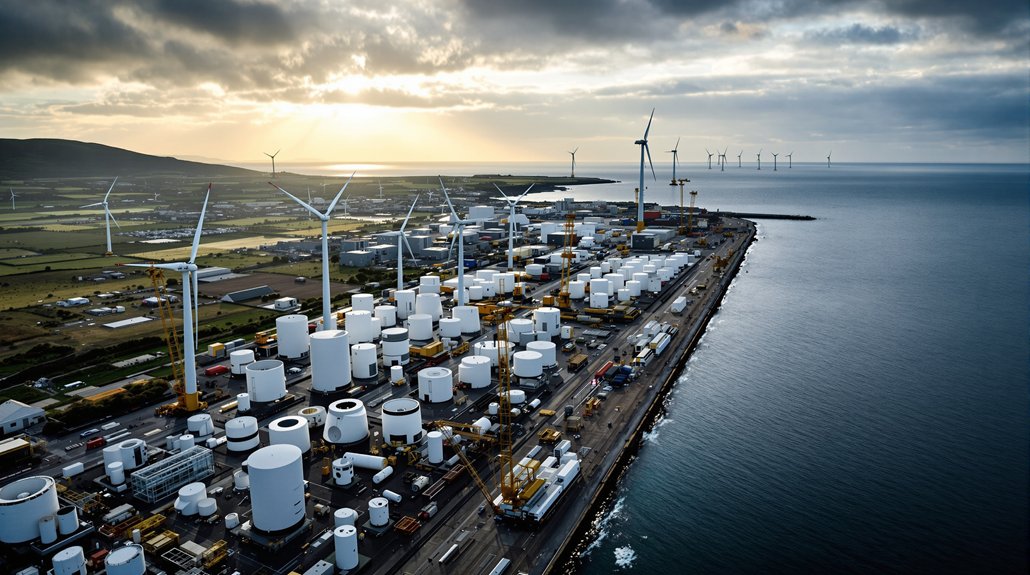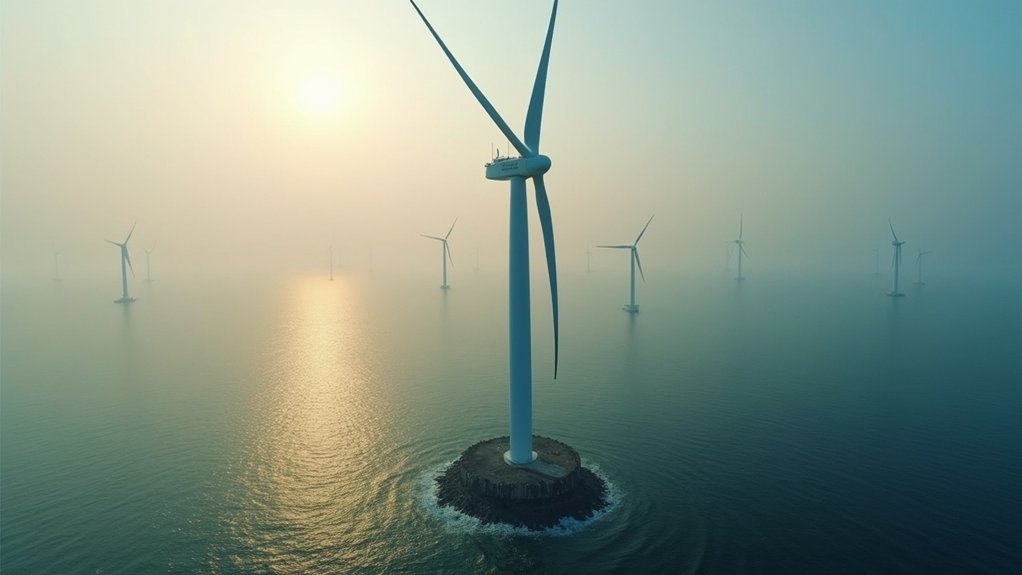

A towering achievement in renewable energy engineering, China’s newest offshore wind turbine stands as a demonstration of the nation’s growing dominance in green technology. The mammoth structure, developed by Dongfang Electric Corporation, reaches an impressive 185 meters (607 feet) in height – equivalent to a 63-story residential building – and represents a quantum leap in offshore wind capability.
The turbine’s rotor diameter exceeds 310 meters, creating a swept area covering the equivalent of 10 standard football fields. This expansive surface area translates directly into unprecedented energy capture. With a rated power of 26 MW, it considerably outperforms previous global benchmarks of 18 MW turbines, producing approximately 100 million kilowatt-hours annually – enough to power 55,000 households.
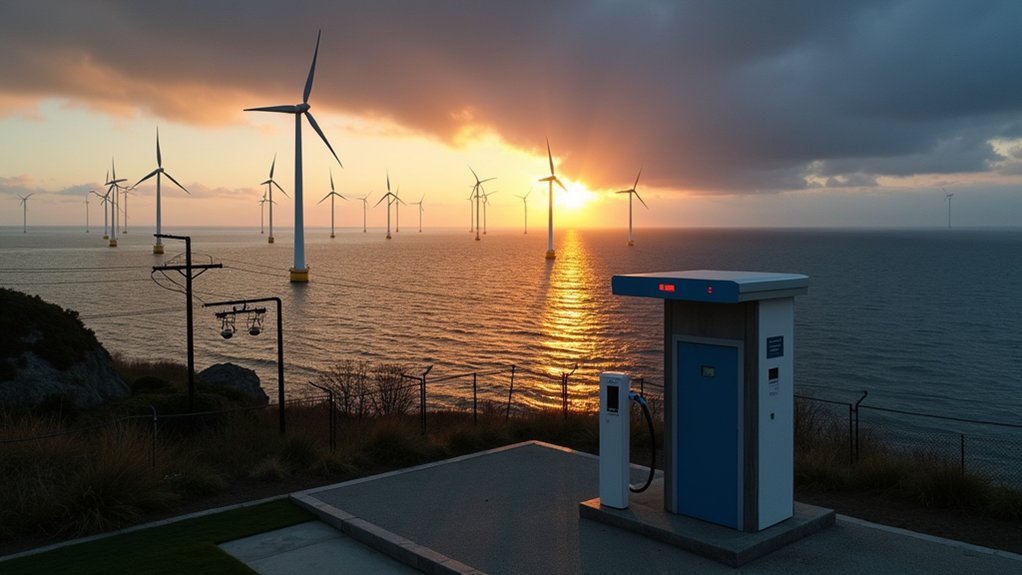
Installed in Fujian Fuzhou’s offshore wind farm, the turbine’s reinforced structure incorporates sophisticated anti-corrosion systems necessary for withstanding typhoons and harsh marine conditions. The engineering is remarkable; direct-drive technology eliminates gearboxes, reducing mechanical complexity while improving long-term reliability.
What’s particularly remarkable is China’s manufacturing independence achieved through this project. The turbine represents a major breakthrough in domestic bearing production, a component previously sourced from imports. The innovative design is projected to generate 63.5 million kWh of electricity annually, helping power over 30,000 homes. This technical milestone establishes China’s self-sufficiency in critical renewable energy infrastructure.
The environmental impact is considerable. By replacing coal-based energy, each turbine prevents approximately 80,000 metric tons of CO₂ emissions annually. The offshore placement conserves valuable land while minimizing ecological disruption in coastal areas.
I’ve analyzed similar technologies worldwide, and this installation represents a paradigm shift. The economics make sense: larger turbines greatly reduce installation and maintenance costs per megawatt. This advancement pressures other nations to accelerate their renewable energy development or risk falling behind.
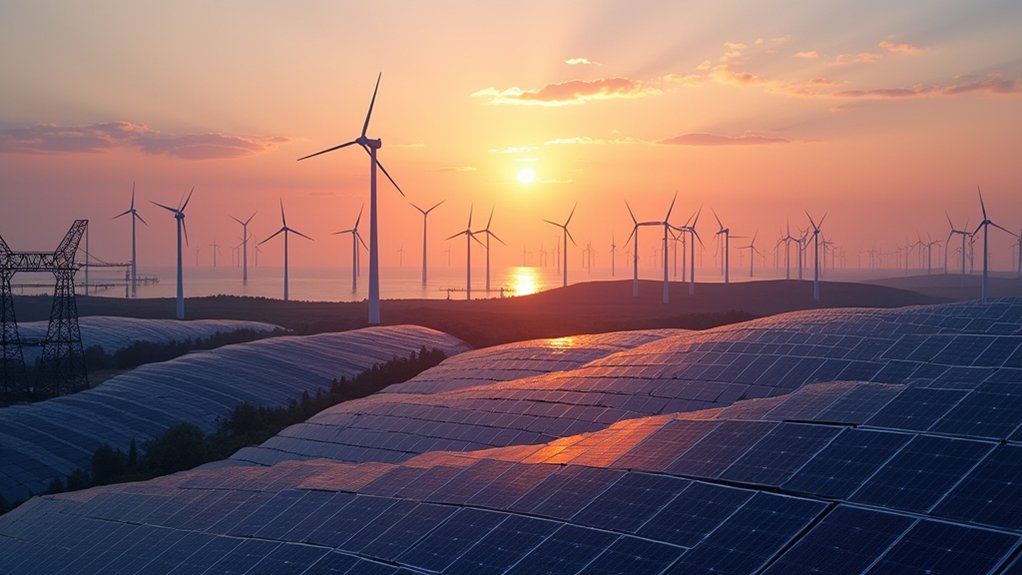
As China positions itself as the leader in renewable technology for global markets, this colossal turbine serves as both engineering marvel and strategic asset in the worldwide shift to sustainable energy. This achievement aligns with China’s broader energy strategy, as the country installed 77.1 gigawatts of wind energy capacity in 2023 alone. The message is clear – the future of offshore wind has arrived, and it’s massive.