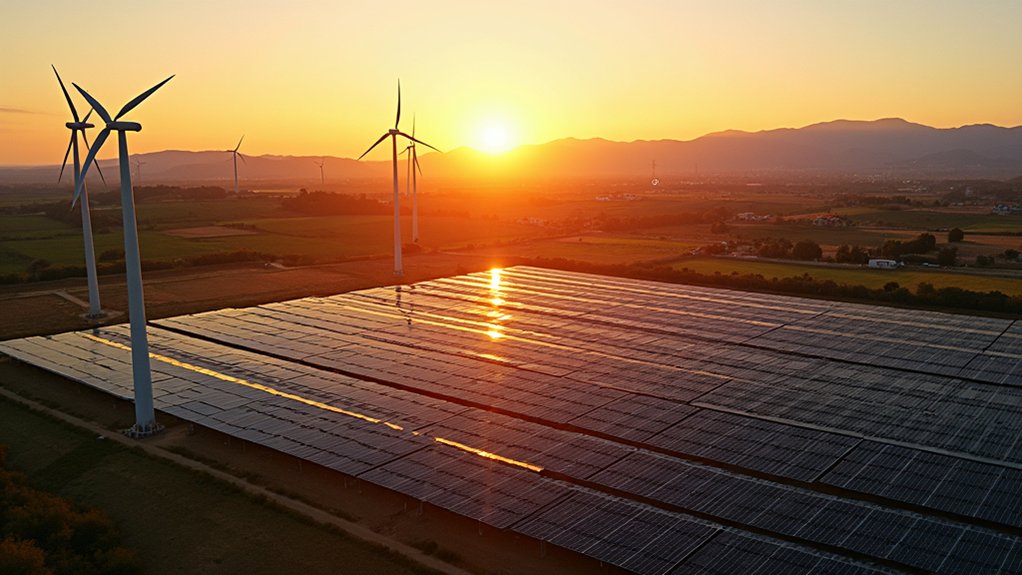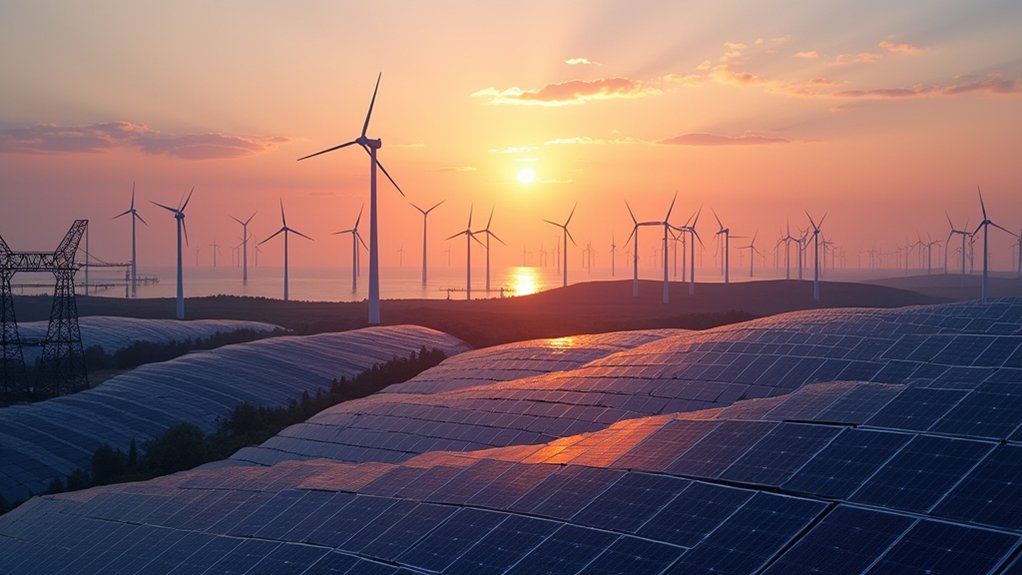
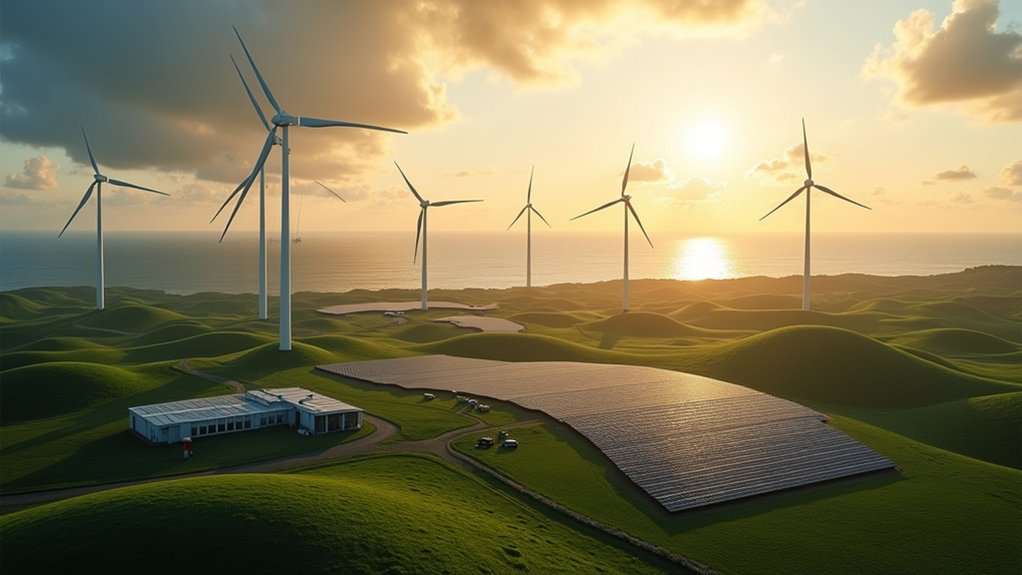
As the European Union prepares for unprecedented growth in its clean energy sector, officials have revealed plans to add a record-breaking 89 gigawatts of renewable capacity in 2025. This ambitious expansion, comprising 70 GW from solar installations and 19 GW from wind energy projects, represents the largest annual addition in EU history and underscores the bloc’s commitment to its climate objectives.
The massive deployment aligns with the EU’s Revised Renewable Energy Directive, which established a 42.5% renewable energy target by 2030. I’ve analyzed the trajectory needed to achieve this goal, and annual additions of at least 70 GW are absolutely vital. Sweden currently leads the pack with 66.4% of energy coming from renewables, demonstrating what’s possible with proper implementation. This represents a significant progression from the 23% share of renewables in EU energy consumption recorded in 2022.
Recent data shows concerning trends, however. Solar installation growth slowed dramatically to just 4% in 2024, down from over 50% in 2023. This deceleration couldn’t come at a worse time for EU energy planners banking on solar’s 70 GW contribution next year.
The turbines aren’t spinning trouble-free either—wind energy faces its own headwinds despite projected 35% growth. Supply chain bottlenecks, rising material costs, and bureaucratic permitting processes threaten to stall progress across both sectors.
The situation in France illustrates the policy risk, where recent cuts to rooftop solar feed-in tariffs have introduced market uncertainty. Industry heavyweights, including Orsted and SolarPower Europe, have vocalized serious doubts about meeting the projections.
The stakes extend beyond climate targets. This renewable push forms a vital component of the REPowerEU strategy to eliminate dependence on Russian gas by 2027. The EU’s growing focus on renewable energy has already yielded results as renewable energy became the largest source of energy production at 46% in 2023. Solar’s milestone of surpassing coal for electricity generation in 2024 shows the shift is gaining momentum, but sustained effort is required.
Without streamlined permitting procedures and stable policy frameworks, the 89 GW target looks increasingly ambitious. The coming months will reveal whether the EU can translate its clean energy rhetoric into gigawatts delivered or if 2025 will expose the gap between political aspirations and implementation realities.