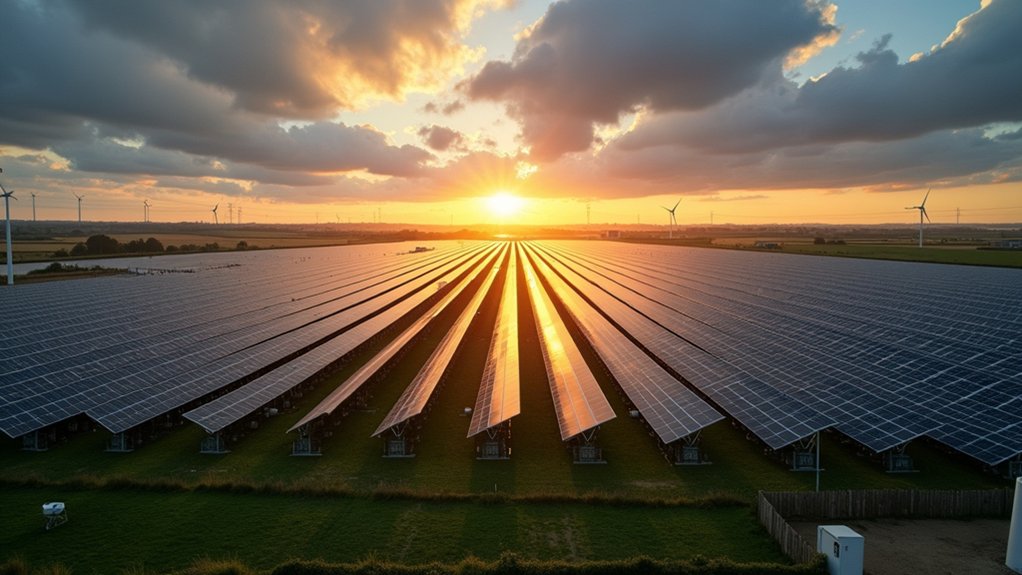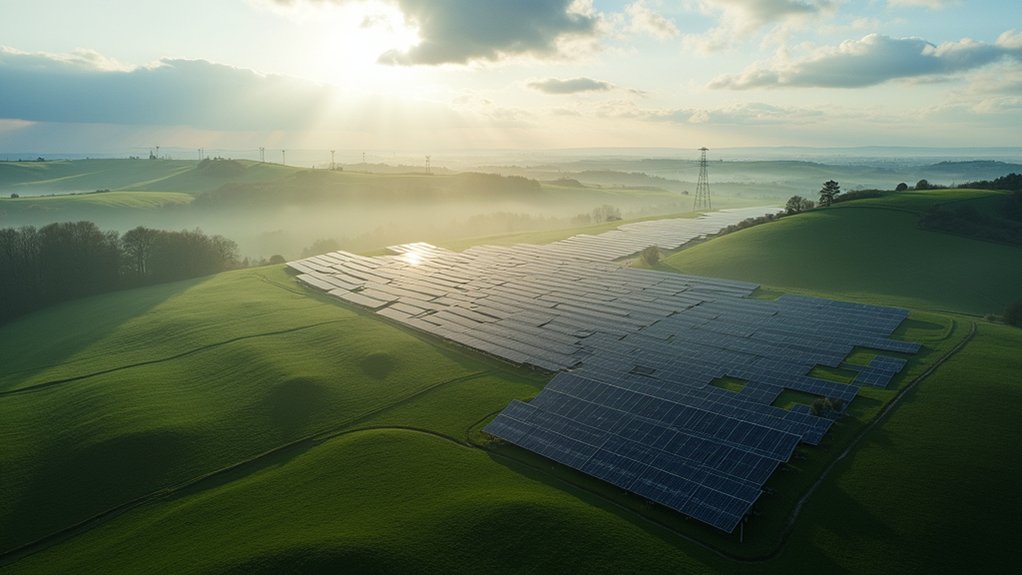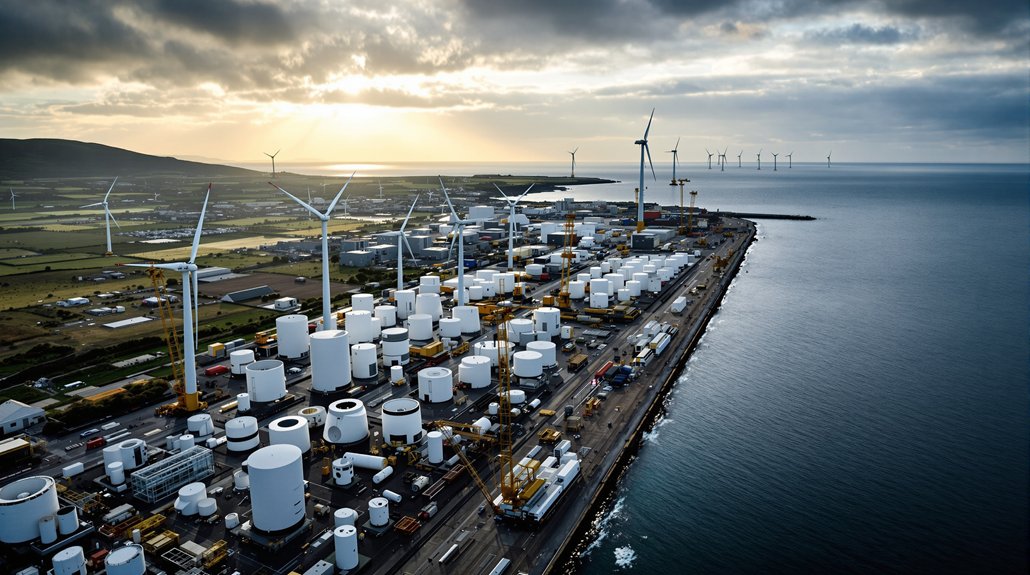

Numerous policy reforms and record-breaking renewable achievements are positioning the UK as a frontrunner in the global green energy shift. The government’s updated National Policy Statements strategically accelerate clean power delivery, aiming for complete decarbonization by 2050. This commitment isn’t merely aspirational—it’s becoming embedded in regulatory frameworks and investment strategies that prioritize renewable infrastructure development.
I’ve observed that the UK’s approach represents one of the most extensive policy overhauls in Europe. Record-breaking wind generation has established new benchmarks for renewable output, particularly in offshore capacity where the UK continues to lead. Solar deployment is following a similar trajectory, benefiting from streamlined planning processes under National Policy Statement EN-3. The public consultation closing on 29 May 2025 demonstrates the government’s commitment to stakeholder engagement in shaping these critical energy policies. The government has committed a £300 million investment for offshore wind supply chains through Great British Energy. The anticipated legislation for end-of-life management of solar panels and wind turbines demonstrates unusual foresight, addressing sustainability across the full lifecycle of renewable assets.
The UK’s comprehensive policy transformation and record renewable achievements establish unparalleled leadership in Europe’s clean energy landscape.
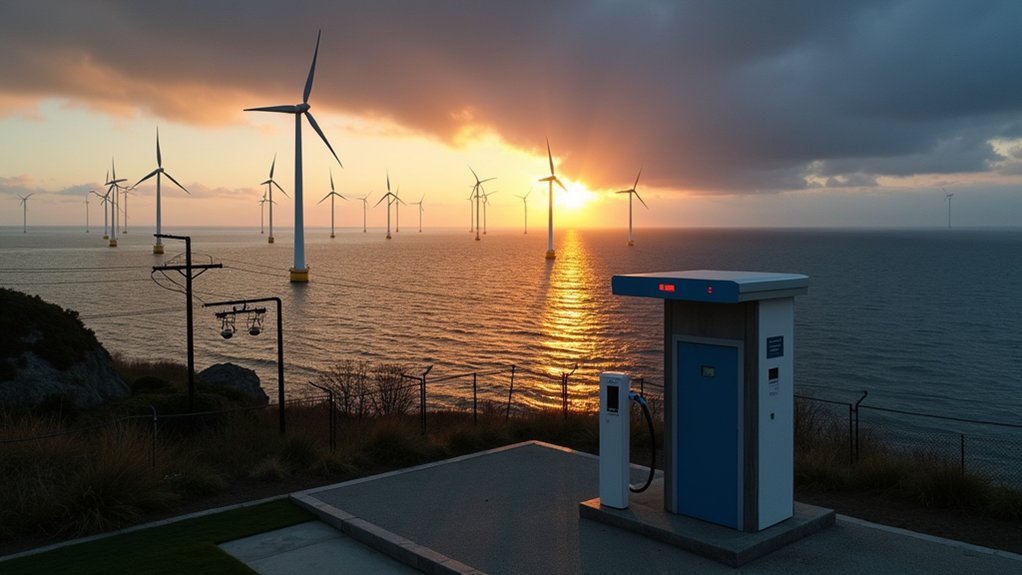
Investment projections suggest an ambitious £40 billion annually will flow into clean energy projects, driven by grid reforms and policy incentives designed to attract green finance. Large corporations face mandatory emissions reporting and reduction targets starting in 2025, creating substantial compliance markets. The economics increasingly favor renewables, with technology cost curves continuing their downward trend, making the business case increasingly compelling. Smart grid technologies are being implemented to handle the increasing electricity demand from EVs, which currently account for 23% of emissions globally.
Battery storage deployment is accelerating to provide essential grid stability as intermittent generation expands. Emerging technologies like nuclear microgrids and traffic-generated energy recycling systems represent intriguing diversification strategies. The EV ecosystem is maturing rapidly, supported by synchronized infrastructure development.
However, American energy strategists have expressed concerns that an exclusive focus on renewables could create vulnerabilities. The UK’s Energy Security and Net Zero Department acknowledges these challenges, working to balance renewable expansion with resilience considerations.
Grid modernization efforts include significant digital enhancement to manage fluctuating supply patterns, with market-wide half-hourly settlement improving system responsiveness. Despite international caution, the UK maintains its position that properly integrated renewable systems deliver both climate and security benefits—a stance increasingly supported by performance metrics.