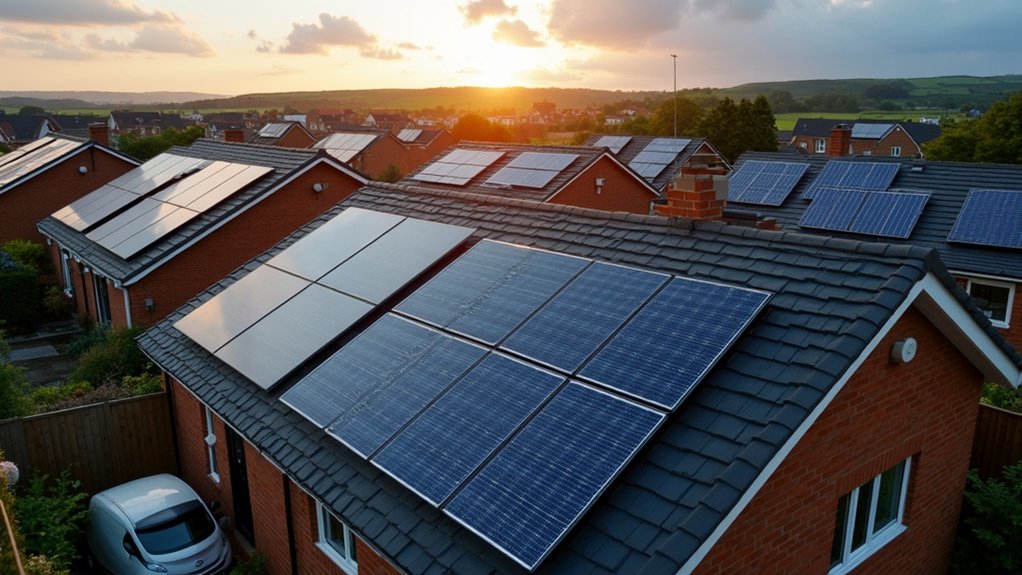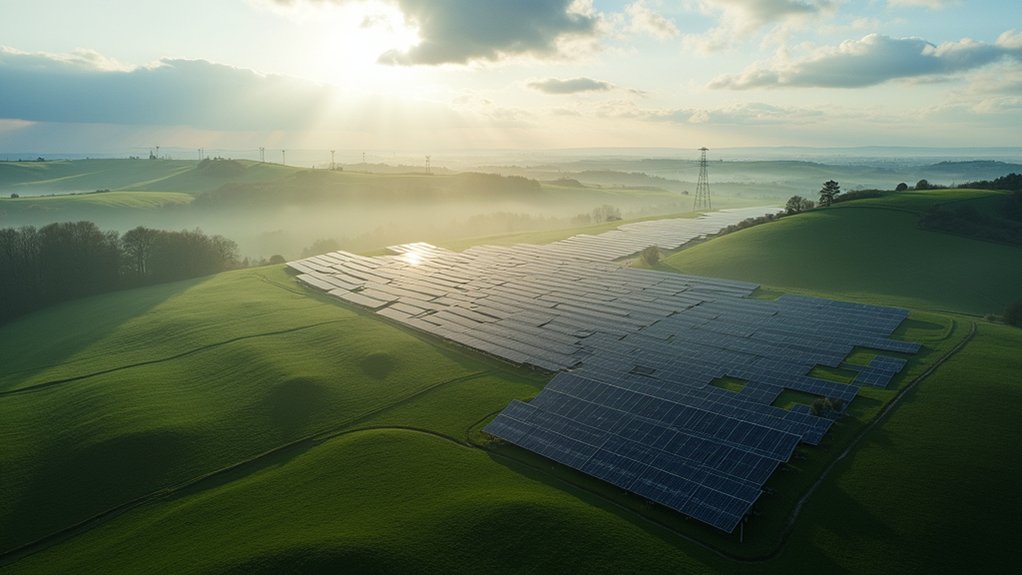
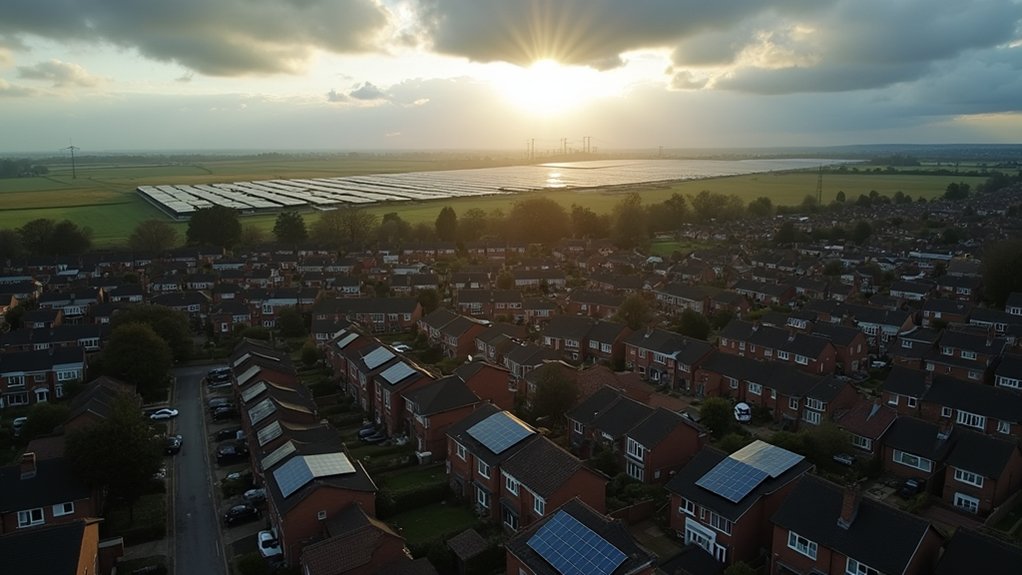
While the UK’s solar capacity has steadily expanded to reach 17.9 GW by January 2025, the pace of deployment remains insufficient to meet the government’s ambitious 45 GW target for 2030. Official data from DESNZ reveals the country added approximately 1.3 GW during 2024, marking the fifth highest annual addition in the sector’s history. The January 2025 figures show a modest increase of 69 MW, considerably lower than the 241 MW added during the same month last year.
The current trajectory presents a mathematical challenge. With roughly 18 GW currently deployed and a target of 45 GW in just five years, the UK must accelerate its annual installation rate to approximately 5.4 GW—more than five times the recent average. I’ve analyzed the historical data, and this acceleration would require unprecedented growth compared to any previous period in UK solar development. This ambitious target represents a significant portion of the UK’s renewable energy strategy, as solar currently comprises 3.38% of renewables in the country’s energy mix.
Meeting the UK’s 45 GW solar target requires a fivefold acceleration in deployment—an unprecedented scale-up against historical patterns.
Recent positive signs include the upward revision of 2024 statistics by 200 MW and the streamlining of approvals through the Nationally Significant Infrastructure Project process. England continues to host the majority of installations, with several gigawatts of capacity added to the future pipeline during 2024. This represents substantial progress from the 12.8 GW recorded in 2017, when solar accounted for just 3.4% of UK electricity generation.
The grid integration of large-scale solar developments remains a critical constraint. Secretary of State approvals for major projects throughout 2024 should begin materializing in deployment figures soon, potentially boosting the annual installation rates. The latest deployment statistics are regularly published with monthly updates dating back to December 2015, providing a comprehensive view of the sector’s growth patterns.
Government policy now focuses on removing deployment bottlenecks, particularly around grid connections and planning permissions. The robust project pipeline suggests capacity for growth, but the statistics speak for themselves—the current 1 GW annual pace falls drastically short of what’s needed for 2030 decarbonization goals.
Without considerable acceleration in utility-scale deployments and continued policy support, the 45 GW target will remain a distant aspiration rather than an achievable milestone.