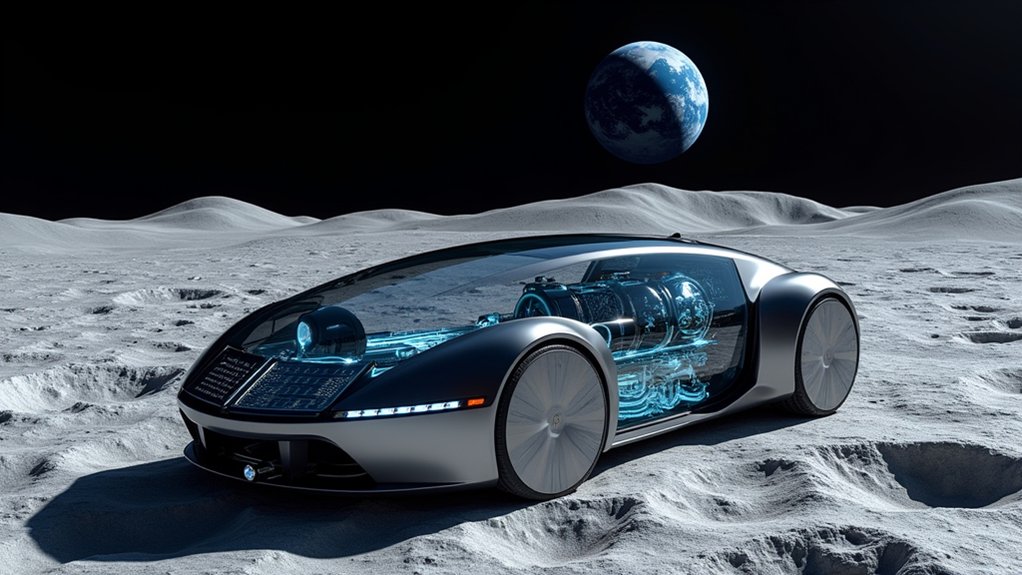
Honda has launched an ambitious initiative to develop a circulative renewable energy system originally designed for space exploration. The innovative system aims to sustain human life in space by generating hydrogen, oxygen, and electricity through a closed-loop design that maximizes resource efficiency.
Honda’s groundbreaking circulative energy system transforms space exploration through ingenious hydrogen-oxygen cycling, promising sustainable habitation beyond Earth.
I’ve seldom seen such ambitious crossover between automotive engineering and aerospace applications, particularly one with such promising real-world implications.
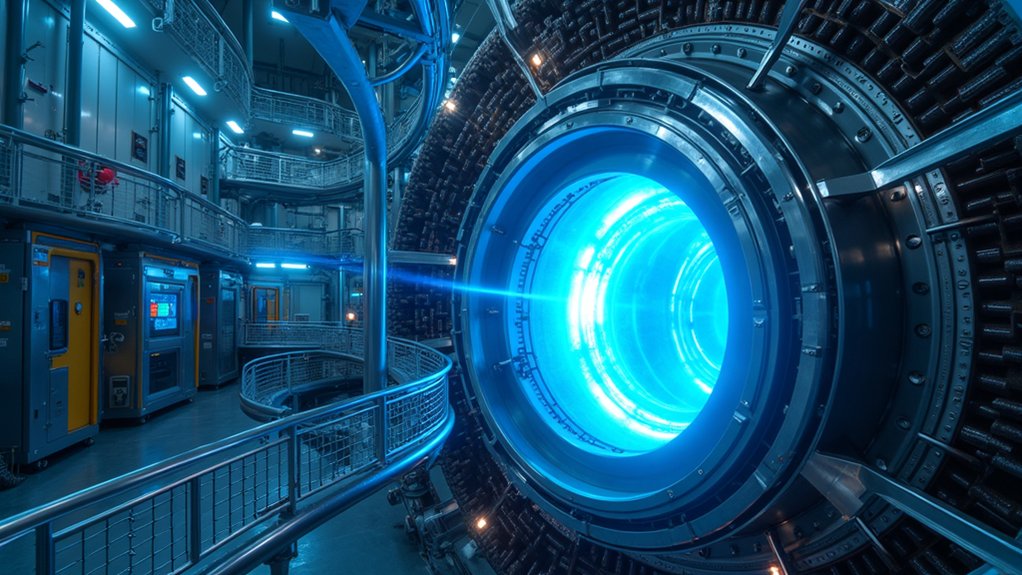
The core technology leverages Honda’s expertise in high-differential pressure water electrolysis, splitting water molecules using solar energy during the two-week lunar daytime periods. During the equally long lunar nights, regenerative fuel cells kick in, generating electricity from stored hydrogen and oxygen while conserving a portion of the oxygen for astronaut respiration.
This dual-phase operation creates a 28-day cycle perfectly suited to lunar conditions.
Testing will commence aboard the International Space Station through strategic partnerships with Sierra Space and Tec-Masters, ensuring the system functions properly in microgravity. The technology requires special testing to validate its efficiency in microgravity before deployment to lunar environments. Honda’s collaboration with JAXA under the Artemis program demonstrates the growing convergence between automotive engineering prowess and space exploration goals.
The system’s ingenuity lies in its closed-cycle architecture, recycling water continuously without resource depletion. Found in lunar soils, water becomes the primary input for this perpetual energy machine, dramatically reducing the need for Earth-based supply chains that currently make lunar habitation prohibitively expensive.
Honda’s renewable technology represents a quantum leap in sustainability for both space exploration and terrestrial applications. The company’s newly established Space Development Division in the U.S. will further enhance collaboration on this cutting-edge lunar technology. The scalable design could eventually support entire lunar settlements while the underlying tech might revolutionize Earth-based energy storage solutions.
The 100% renewable footprint and minimal environmental impact align perfectly with global sustainability initiatives.
This bold step into aerospace represents a fascinating pivot for Honda, leveraging decades of fuel-cell experience to solve one of space exploration’s most persistent challenges: creating self-sustaining habitats beyond Earth’s protective embrace.