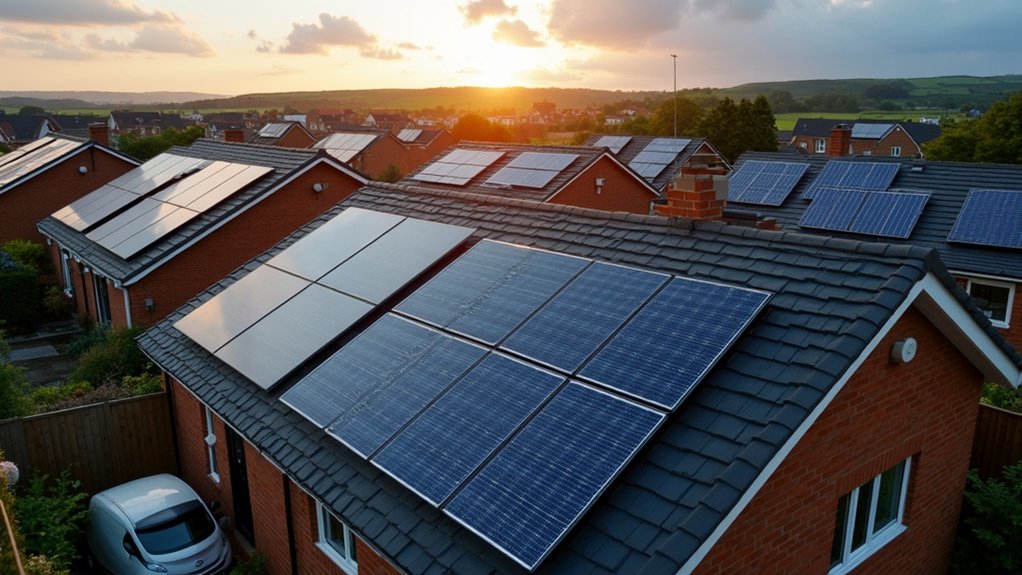
Thousands of British homeowners are embracing solar power at an unprecedented rate, transforming the nation’s residential energy landscape. The numbers tell a compelling story—with total UK solar PV capacity reaching 18GW as of February 2025, and a remarkable 1.5 million homes now equipped with solar panels. This surge represents a 6.8% increase in capacity over the past year alone, demonstrating substantial momentum in residential solar adoption.
The financial sector has recognized this change, pouring significant capital into facilitating residential installations. Investment firms are backing solar providers and financing solutions that make upfront costs more manageable for average homeowners. The results are evident in February 2025’s figures, which show 15,000 new solar units registered—part of 20,427 total installations adding 80MW of capacity that month.
I’ve observed that while this represents a slight decline from January’s 18,000 new registrations, it remains substantially above the 2016-2022 average of just 5,250 installations monthly. Historical data available from the Department of Energy Security dating back to December 2015 provides valuable context for analyzing these long-term growth patterns.
Perhaps most telling is the dramatic increase in new build integration. A striking 42% of new homes in England were built with solar power in Q4 2024, a more than threefold increase from the 13% figure one year earlier. This remarkable growth stems from tightened energy efficiency regulations, with financial institutions developing specialized mortgage products for energy-efficient homes.
Energy-efficient housing is no longer optional—it’s becoming standard, revolutionizing both construction practices and mortgage offerings nationwide.
Regional variations remain significant, with Scottish building regulations driving solar panel installations on 80% of new homes there. Capital flows have adjusted accordingly, with investment firms targeting different UK regions based on regulatory environments and adoption rates. The South East and South West regions lead the country with over 215,000 installations each, highlighting geographic preferences for solar investment.
The residential solar boom faces potential headwinds, however. Monthly installation figures have declined from 19,500 in December 2024 to 15,000 in February 2025, and the upcoming general election introduces policy uncertainty.
Nevertheless, the financial community remains bullish on residential solar’s growth trajectory through 2025, particularly as Building Regulations adaptations complete. With substantial financing continuing to flow into the sector, Britain’s residential solar revolution appears poised for continued expansion.