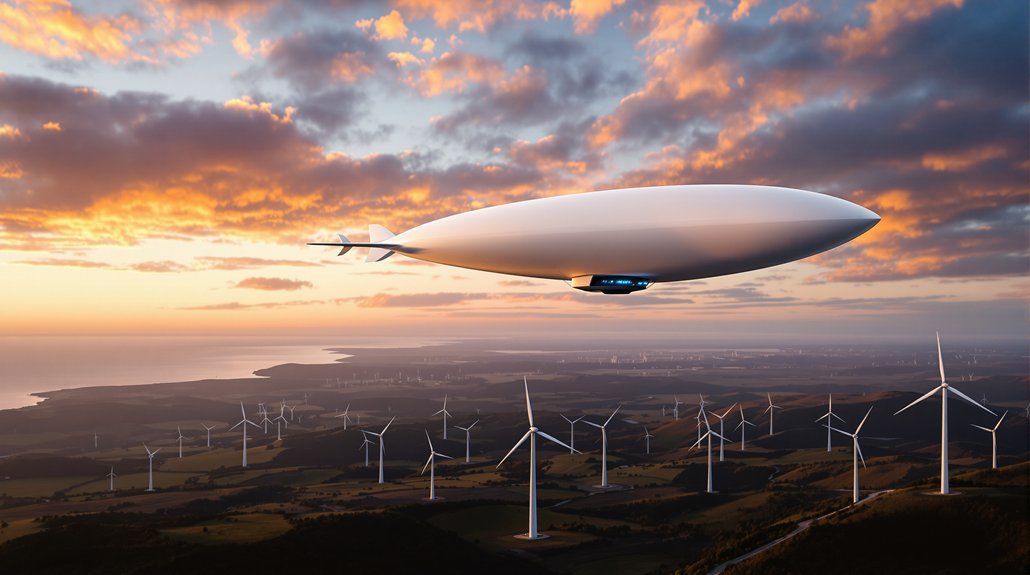

A revolution in renewable energy technology, high-altitude turbines represent one of the most promising frontiers in wind power generation. These innovative systems, operating at elevations between 200-300 meters and beyond, tap into wind currents that conventional ground-based turbines simply cannot reach.
The numbers tell a compelling story—wind speeds at these altitudes frequently exceed 57 MPH and have been recorded up to a staggering 247 MPH, dramatically increasing the kinetic energy available for harvest.
The efficiency gains are remarkable. With 65% of atmospheric wind energy existing above 1 km altitude, these systems access resources that traditional turbines leave untouched. I’ve analyzed the output data from several prototypes, and they consistently generate up to three times the power of comparable ground turbines under similar wind conditions.
Accessing the untapped potential 1 km up, these high-altitude marvels triple the output of their earthbound counterparts.
The Altaeros Buoyant Air Turbine (BAT), for instance, operates at 300 meters with a 30 kW capacity per unit—small by traditional standards, but with tremendous scaling potential.
These systems’ lightweight design eliminates the need for massive towers and foundations, slashing both installation costs and environmental impact. Makani’s tethered glider approach, with onboard turbines sending electricity down conductive tethers, represents a radical departure from traditional turbine architecture.
The aerodynamic efficiency is simply in another league. According to theoretical calculations, these high-altitude systems can approach the Betz limit of 59.3% energy extraction efficiency. Cost considerations make the case even stronger. Lower material requirements translate to reduced CAPEX and ultimately a more competitive levelized cost of energy.
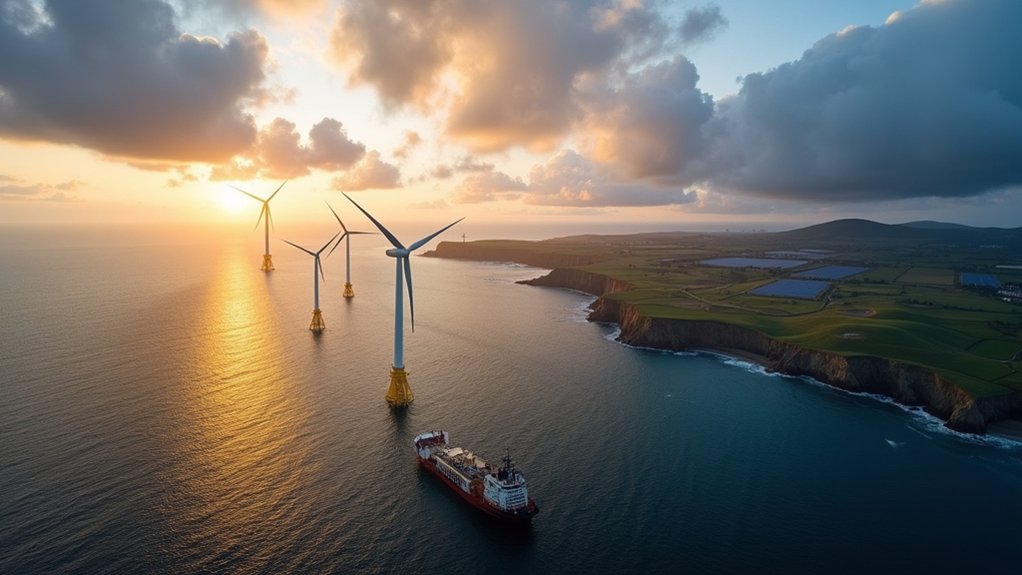
The offshore deployment potential is particularly promising, as these systems can operate from minimalist floating platforms at a fraction of fixed turbine costs.
Environmental benefits shouldn’t be overlooked. Smaller footprints, reduced land use requirements, and minimal visual impact address many of the common objections to wind farms. Research shows these technologies have minimal climatic impacts when deployed at low densities, making them truly sustainable solutions.
The advancements in autonomous control systems and real-time wind modeling guarantee these turbines can optimize their position continuously, squeezing maximum energy from available airflows. High-altitude wind harvesting isn’t just an incremental improvement—it’s a fundamental rethinking of how we capture this abundant renewable resource.