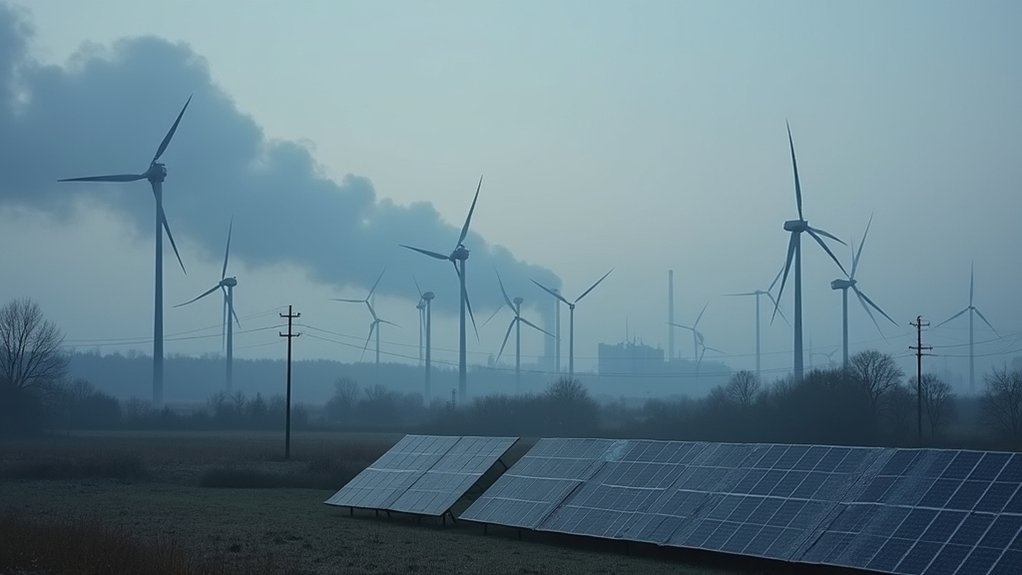
Despite years of ambitious green energy expansion, Germany’s renewable electricity generation has fallen below the symbolic 50% threshold, accounting for just 47% of national consumption in Q1 2025. This notable decline interrupts a pattern of consistent growth in the renewable sector, which had regularly exceeded the 50% mark in previous quarters. Weather conditions proved particularly unfavorable for green energy production, creating a challenging scenario for grid operators and energy planners alike.
Wind power, traditionally Germany’s renewable powerhouse, experienced a dramatic 42% year-on-year reduction. February averages plummeted to just 14 GW hourly output compared to 23.8 GW during the same month in 2024.
Wind power output collapsed by 42% compared to last year, with February generation falling to nearly half of 2024 levels.
Solar generation failed to pick up the slack, handicapped by reduced sunlight hours during the winter months. I’ve analyzed similar seasonal patterns in previous years, but this decline appears especially steep given recent infrastructure investments.
The renewable shortfall necessitated increased reliance on conventional power sources. Coal and gas plants ramped up production markedly, with gas generation costs surging to over 100 EUR/MWh. This shift toward fossil fuels temporarily reverses progress on emissions targets that had been central to Germany’s Energiewende policy framework.
Market dynamics reflected these supply constraints, with Q1 electricity prices averaging EUR 111.94/MWh amid substantial volatility. The price spikes were most pronounced during February’s low-wind periods, creating cascading effects throughout the industrial sector.
Import dependency reached concerning levels, with net imports averaging over 2,100 MW, representing a 260% increase compared to Q1 2024. The closure of Germany’s final nuclear plants in April 2023 has evidently increased vulnerability to renewable fluctuations. The combination of reduced wind generation and cold winter temperatures led to sustained draw on reserves throughout the quarter.
The newly formed CDU/CSU and SPD coalition is prioritizing energy market reforms in response. Proposed measures focus on tax reductions, intelligent metering expansion, and battery storage integration. This situation contrasts sharply with other European countries where significant funding has been secured for hydrogen projects in Germany as part of broader renewable energy initiatives.
These structural approaches aim to improve system resilience while maintaining Germany’s long-term commitment to renewable energy despite this temporary setback.