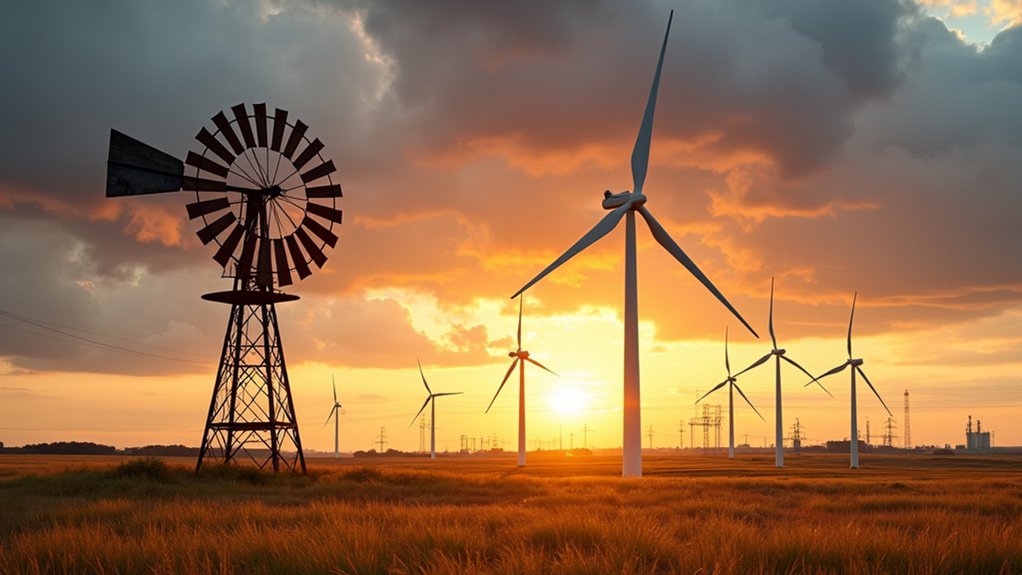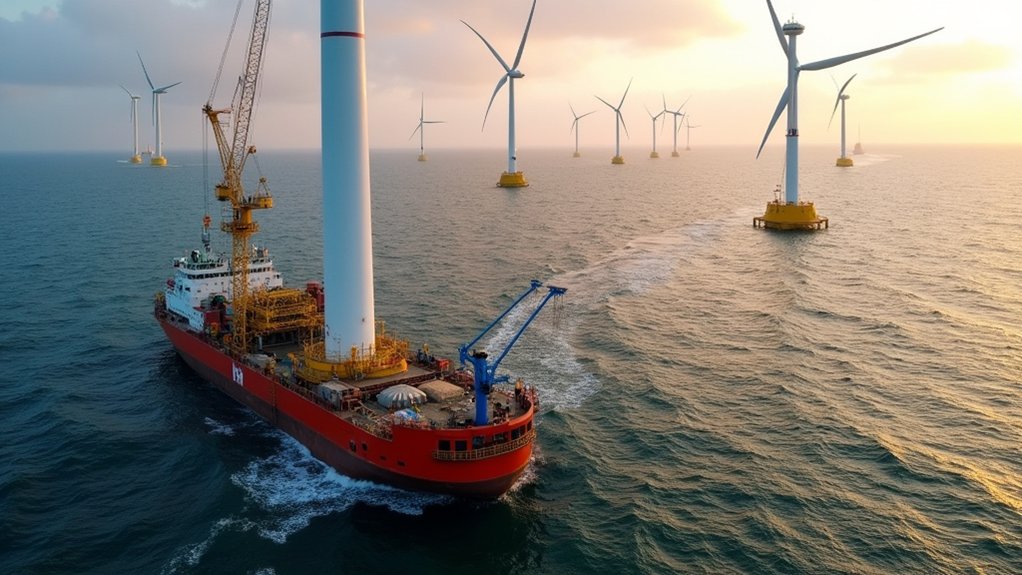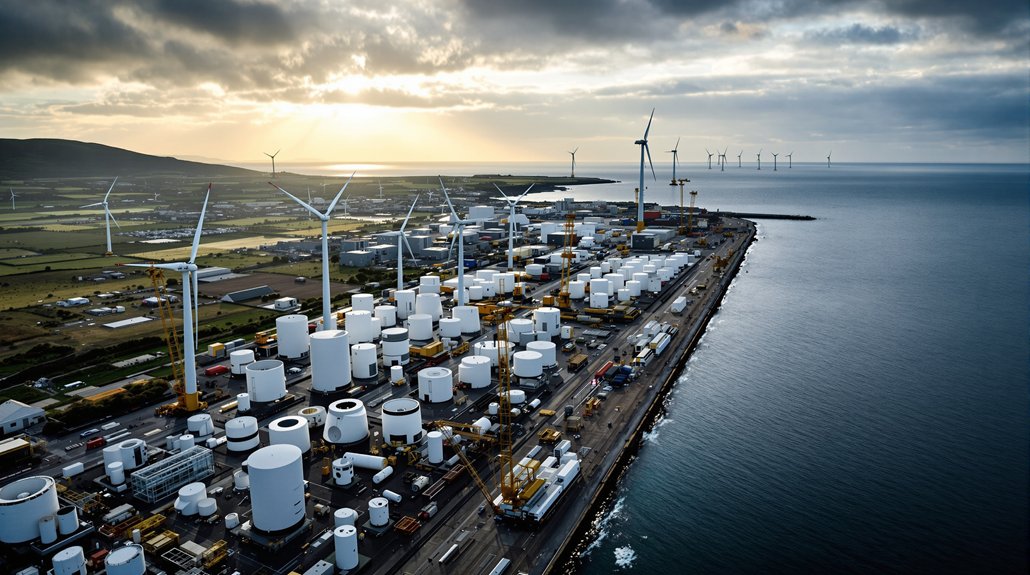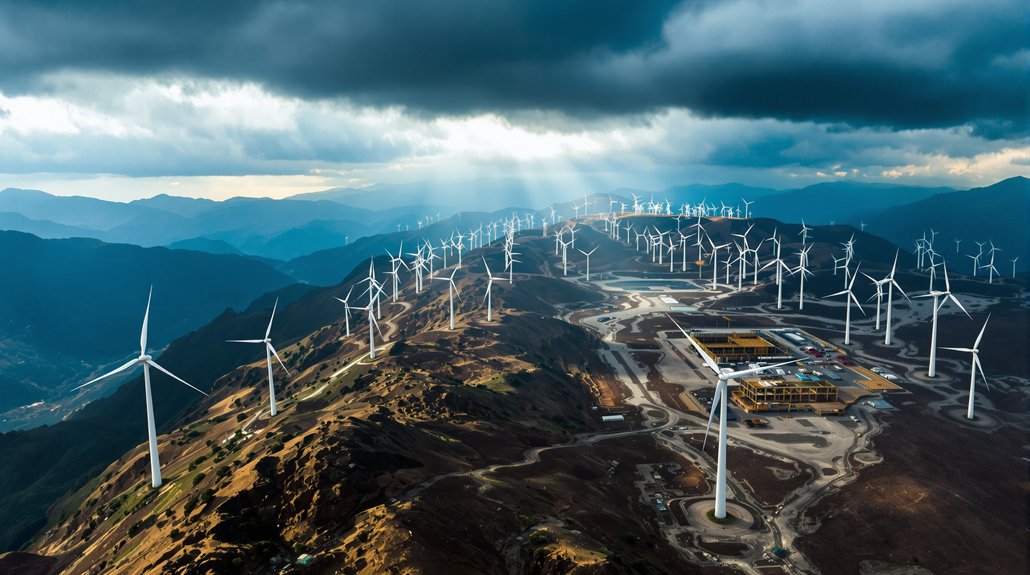

While renewable energy continues its march toward global prominence, wind power installations reached a significant milestone in 2024, with global capacity surpassing 1,174 GW—equivalent to 1.17 terawatts—for the first time. This achievement represents an 11.5% growth rate, slightly down from 13% in 2023, with wind power now supplying more than 10% of global electricity generation.
China dominates the landscape with staggering numbers, installing 86.7 GW of new capacity—72% of all global additions—and exceeding 500 GW total installed capacity. Their 18.3% growth rate outpaces nearly all competitors and contributes well above 11% to their domestic electricity needs. The Chinese wind industry operates at a scale and efficiency that most nations cannot match.
Brazil emerged as 2024’s surprise performer, adding 5.4 GW and achieving 19% growth to become the world’s second-largest market for new installations. Australia’s exceptional 27.5% growth rate also deserves recognition, though from a smaller installed base.
Meanwhile, several traditional wind powerhouses lost momentum. The United States installed just 4.2 GW, with growth plummeting to 2.8%—a worrying trajectory for what was once the sector’s innovation leader. Germany, Spain, and France all posted anemic growth below 5%, highlighting Europe’s broader struggles with market volatility and policy uncertainty.
Regional variations tell a compelling story. The Africa & Middle East region achieved remarkable 107% year-on-year growth, albeit from modest beginnings. Asia-Pacific managed 7% growth, while Latin America and North America saw declining installation rates compared to 2023.
Industry analysts cite permitting delays, grid constraints, and auction design flaws as persistent barriers to deployment. Ideologically motivated opposition in some regions has created investment uncertainty that threatens continued expansion. Denmark continues to lead globally with over 50% of its electricity generation coming from wind power. The stark disparities between China’s dominance and Western markets’ stagnation raises questions about industrial policy effectiveness. The industry is on track to reach approximately 150 Gigawatt of total capacity addition by the end of 2024.
Looking ahead, forecasts predict annual global additions accelerating to 180 GW by 2029, though achieving the global target of tripling renewable capacity by 2030 remains challenging without addressing systemic barriers to deployment.