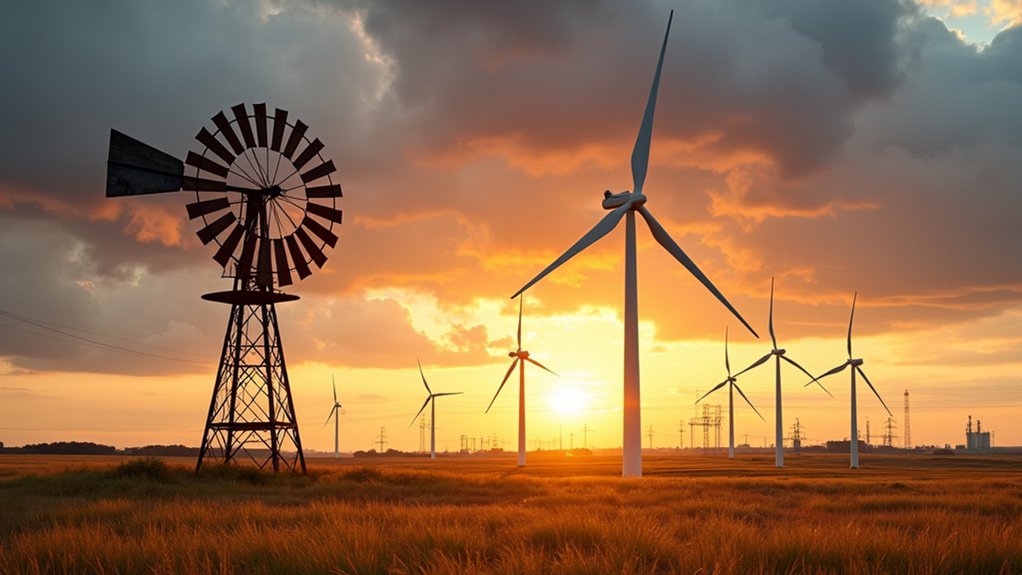

While humans have harnessed wind energy for millennia, the modern wind power industry has experienced both remarkable growth and significant challenges throughout its relatively brief history. Ancient civilizations utilized wind energy as early as 5,000 BC to propel boats along the Nile River, with simple wind-powered machines appearing by 200 BC. The technology remained largely unchanged for centuries, serving practical purposes like grain grinding and water pumping through direct mechanical conversion.
The 1970s energy crisis proved pivotal for wind power development. Faced with resource scarcity, the United States government initiated serious research into utility-scale wind energy applications. NASA backed substantial research programs while Congress passed the Public Utility Regulatory Policies Act in 1978, mandating electricity purchases from renewable sources. This legislation transformed windmills into modern turbines specifically engineered for electricity generation. The Wind Energy Technologies Office (WETO) played a crucial role by funding research that significantly improved turbine efficiency and environmental impact.
The 1970s energy crisis catalyzed wind power innovation, turning ancient technology into a modern renewable electricity source.
December 1980 marked a watershed moment with U.S. Windpower installing the world’s first wind farm in New Hampshire. The facility’s twenty 30-kilowatt turbines demonstrated commercial viability, though modest by today’s standards. Wind farm development accelerated through the 1980s, culminating in pioneering offshore installations like Denmark’s Vindeby project in 1991, which supplied 2,200 households with clean energy for over 25 years.
The first truly commercial wind turbine in America was built by Charles Brush in 1888, featuring an impressive 56-foot diameter design that provided electricity to his entire estate in Cleveland, Ohio.
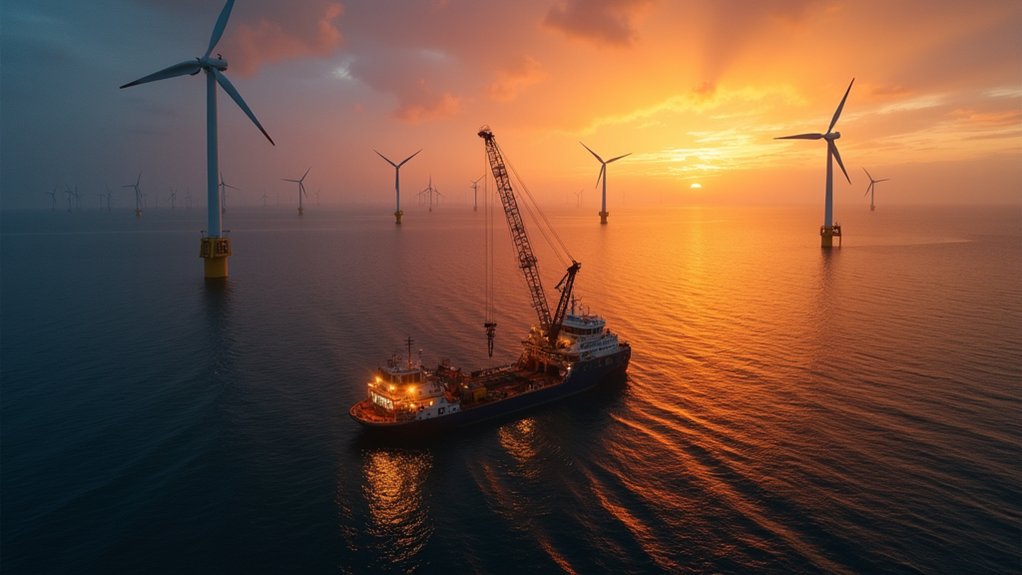
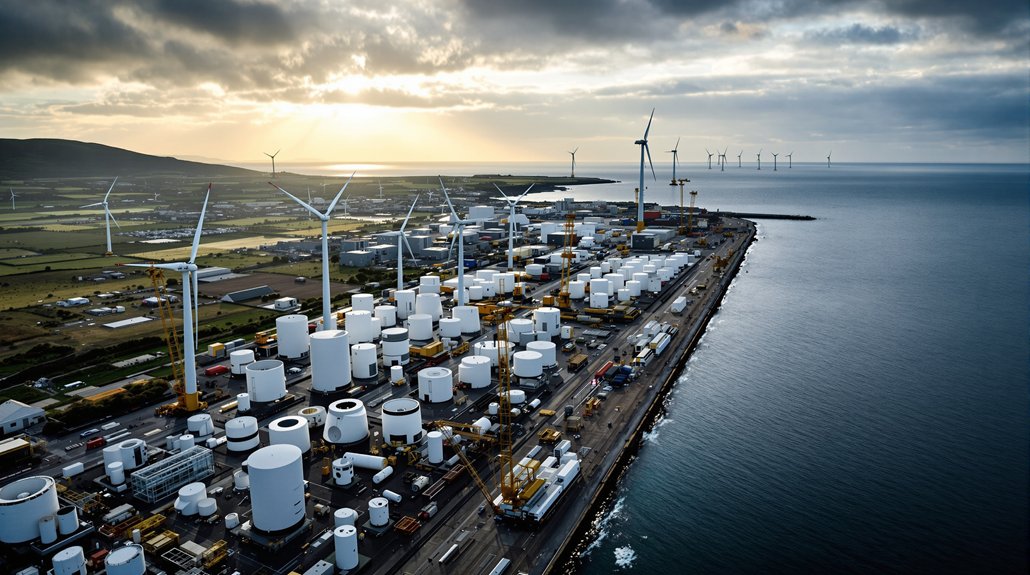
Offshore wind technology has progressed impressively since those early days. The 2009 deployment of the world’s first large-capacity floating turbine off Norway’s coast represented a significant engineering achievement, followed by America’s first grid-connected offshore turbine in 2013. These innovations extended wind power’s potential to deeper waters previously considered inaccessible.