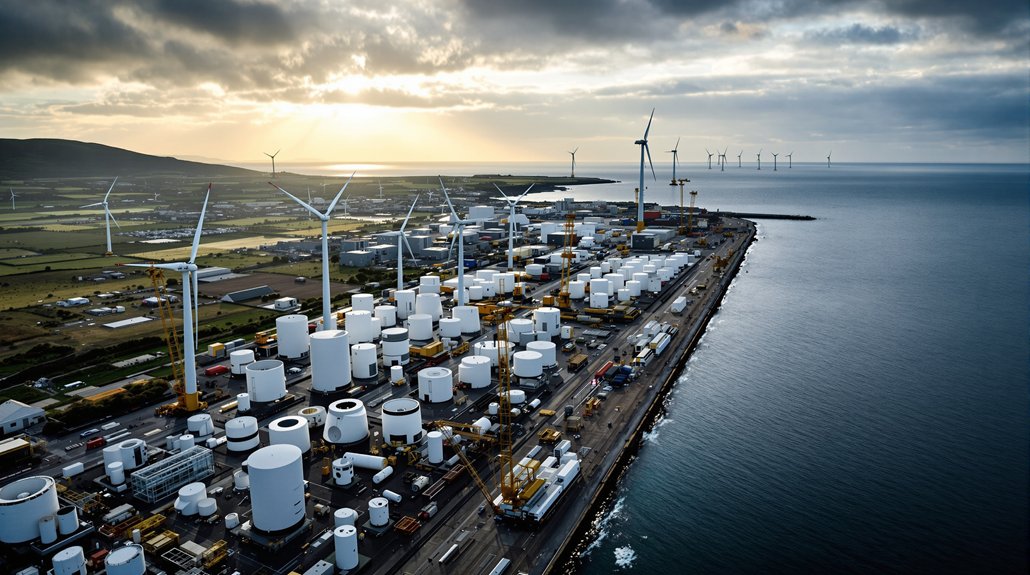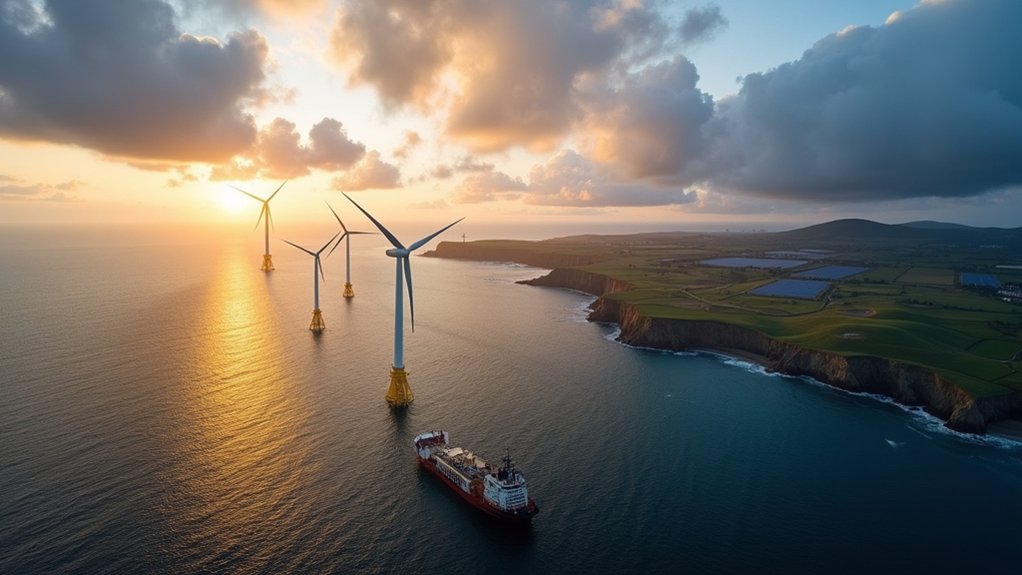

While the UK achieved a renewable energy milestone in 2024 with renewables (37%) outpacing fossil fuels (35%) for the first time in history, January 2025 presented a more complex picture of the nation’s energy evolution.
Zero-carbon sources accounted for just 43% of Britain’s electricity generation that month, the lowest January proportion in four years. Gas surged to 38% of the energy mix, claiming the highest contribution among all sources.
January’s energy mix revealed a concerning pattern: zero-carbon sources hit a four-year low while gas dominated the generation landscape.
Wind energy, typically a powerhouse in Britain’s renewable portfolio, delivered only 27% to the grid in January 2025—its weakest January showing in four years. The 11% gap between wind and gas generation highlights the continuing challenges in Britain’s progression away from fossil fuels. I’ve tracked these patterns closely, and such fluctuations often reflect seasonal variability rather than long-term trends.
Despite January’s setbacks, the broader trajectory remains promising. The rolling 12-month average for zero-carbon sources reached 51%, the highest in four years.
Solar generation continued its steady contribution at 2%, with annual production reaching 14.43 billion kWh in 2025—enough to power over 5 million homes. This aligns with the nation’s ambitious goal of reaching 100% zero-carbon electricity by 2035. Nuclear and imports each added 12% to the energy mix, both increasing by 3% compared to the previous year.
Carbon intensity measurements tell a similar story of progress amid monthly variations. January’s carbon intensity of 168 gCO₂/kWh was the second highest in four years, yet the rolling 12-month average fell to 125 gCO₂/kWh, representing a substantial 19% reduction year-over-year.
Economic factors are accelerating this advancement. Declining solar panel costs and government grant schemes have bolstered renewable installations, while domestic energy consumption rose by 2.9%.
The September 2024 complete phase-out of coal from UK electricity generation marked a historic milestone in the nation’s energy evolution. The contribution of biomass remained stable at 6%, providing consistent renewable power throughout seasonal fluctuations. These developments underscore why renewable energy giants are competing fiercely for market share in the UK’s evolving clean energy landscape.