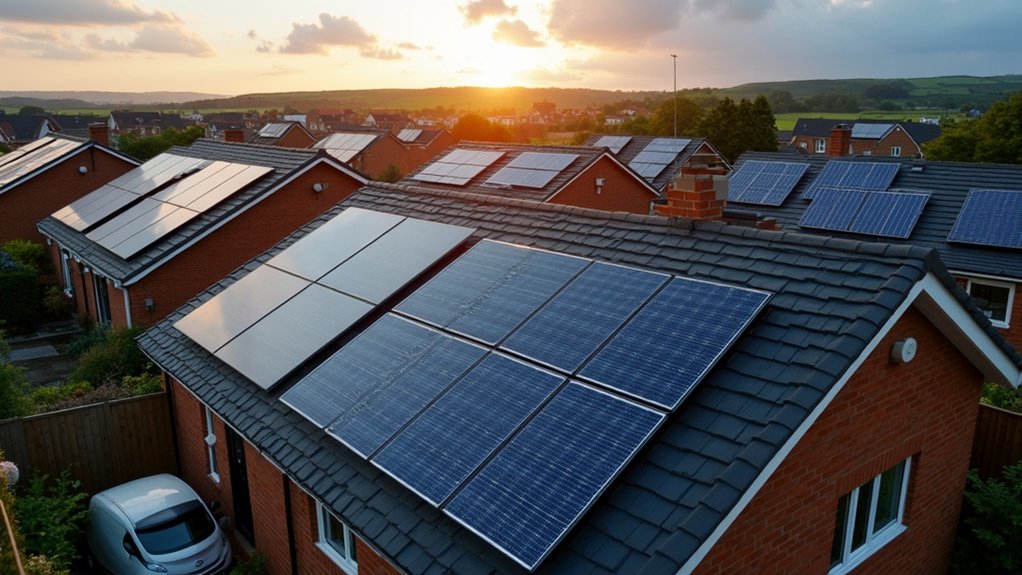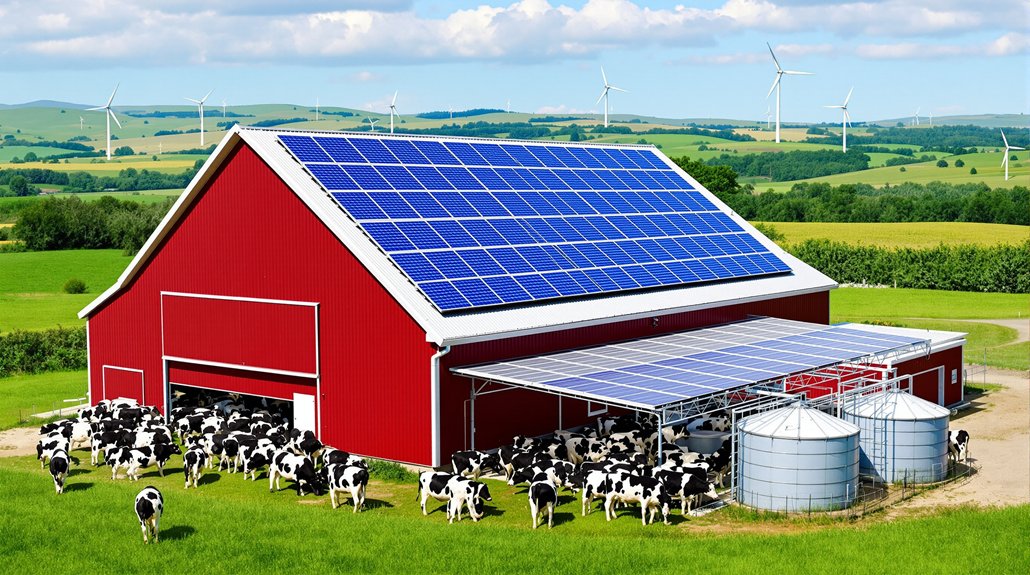
While traditional energy sources continue to strain farm budgets across Europe, solar power has emerged as a game-changing solution for dairy farmers seeking both economic stability and environmental sustainability. The numbers speak volumes—solar energy can slash electricity costs on dairy farms by up to 57%, creating an immediate impact on operational expenses.
Germany’s Renewable Energy Law has pioneered the movement, establishing a framework that transforms photovoltaic installations from mere accessories to essential farm infrastructure.
Germany’s visionary legislation elevates solar technology from optional equipment to core agricultural infrastructure, revolutionizing dairy farming economics.
The economics make perfect sense. Most solar PV systems recover their initial investment within just a few years, providing decades of reduced energy bills thereafter. I’ve observed numerous operations shift from energy consumers to net producers, fundamentally altering their business models. The SolarMilk initiative exemplifies this revolution, connecting sustainable energy production with daily farm operations in a seamless integration that benefits both the environment and the bottom line. Studies from Algeria demonstrate that hybrid renewable energy systems can achieve up to 98% renewable fraction while significantly reducing CO2 emissions. The ongoing Ukraine conflict has intensified the urgency for energy independence among European farmers, accelerating the transition to solar solutions.
Despite these advantages, implementation challenges persist across different regions. Grid capacity limitations, varying legal frameworks, and uneven policy support create a patchwork of adoption rates. Some farmers remain concerned about agricultural yields under solar installations—a legitimate worry that requires proper engineering solutions.
The current grid infrastructure wasn’t designed for distributed generation models, creating occasional bottlenecks in high-adoption areas.
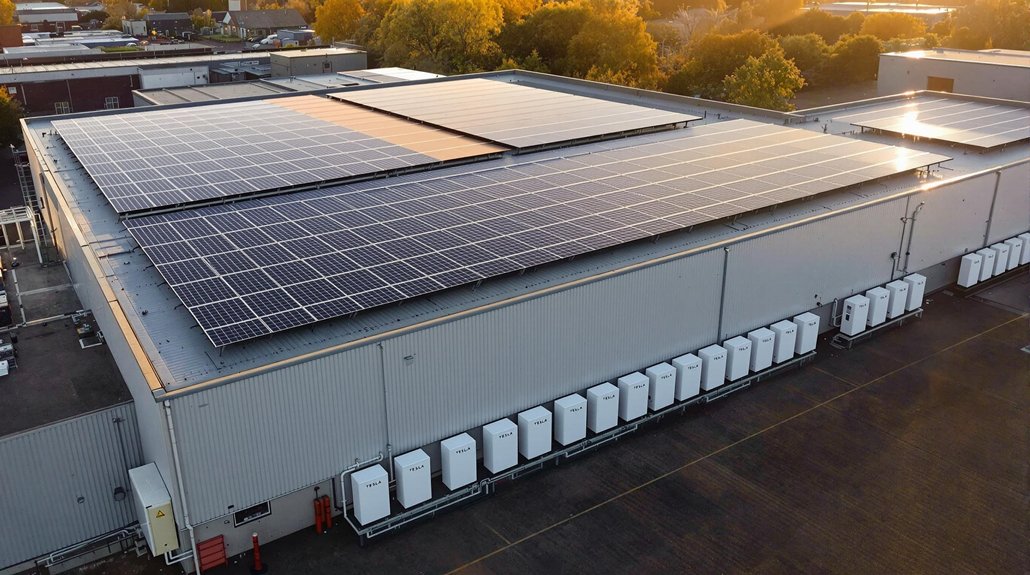
Technological innovations are rapidly addressing these concerns. Advanced agrivoltaic designs now allow for dual land use, maintaining forage quality while generating power overhead. Energy storage systems, once prohibitively expensive, have reached price points that make them viable for farm-scale operations. These systems optimize energy usage patterns, storing excess generation for peak demand periods.
Beyond mere cost savings, solar integration offers environmental benefits that position dairy farms as leaders in sustainable agriculture. Carbon footprint reductions, heat abatement for cattle welfare, and enhanced ecological balance represent advantages that transcend purely financial calculations.
The dairy sector’s embrace of solar technology represents a significant shift toward resilience—both economic and environmental—in an industry facing increasing pressures from multiple fronts.