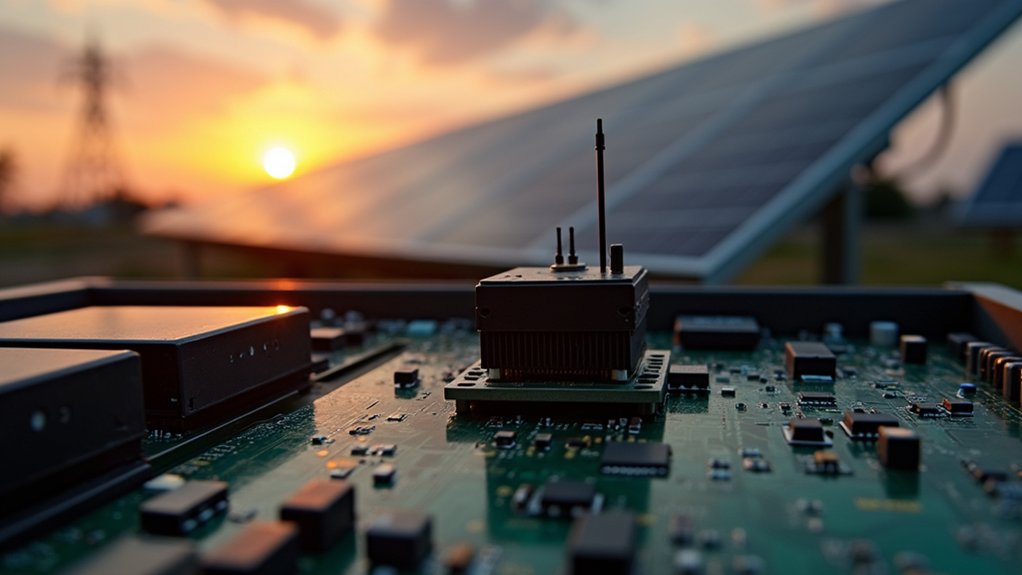

As investigators uncover alarming evidence of embedded “kill switches” in Chinese-manufactured solar inverters, energy security experts are sounding urgent warnings about vulnerabilities in Western power infrastructure. These covert communication modules, discovered during forensic examination of equipment currently deployed across American and European solar farms, were importantly absent from all product documentation and technical specifications. The findings reveal concerning backdoors that could enable remote manipulation or shutdown of critical power systems.
The implications for national security are profound. These hidden components potentially allow foreign entities to bypass security protocols, gaining unauthorized access to grid controls with devastating consequences. Experts warn that these components include built-in mechanisms that could physically disrupt power grid operations. One might compare this to finding an undocumented remote starter in your vehicle that someone else controls. The capability to remotely disable or damage energy systems threatens not just power generation but could trigger cascading failures across dependent sectors.
Technical analysis confirms these are sophisticated communication devices concealed within inverters—the essential components that convert DC power from solar panels into grid-compatible AC current. The disguised placement and undisclosed functionality suggest deliberate concealment rather than standard remote maintenance features. Grid operators now face the unenviable task of identifying and securing potentially compromised equipment without disrupting power delivery.
Government response has been measured but increasingly forceful. While the U.S. Department of Energy implemented restrictions against certain Chinese manufacturers as early as 2019, all-encompassing policy solutions remain under development. Proposed legislation like the Decoupling from Foreign Adversarial Battery Dependence Act aims to restrict procurement from designated manufacturers, though balancing rapid renewable deployment against security concerns presents significant challenges. In the UK, the shadow energy minister has called for a pause and review of the green energy transition amid these serious security concerns.
Industry dependency compounds the problem. China’s dominant position in manufacturing solar components creates difficult choices for Western nations racing toward renewable energy targets. Security analysts recommend rigorous vetting protocols, diversified supply chains, and domestic manufacturing incentives as essential defensive measures. Without such steps, the clean energy shift may inadvertently create new national vulnerabilities through over-reliance on potentially compromised foreign technology.