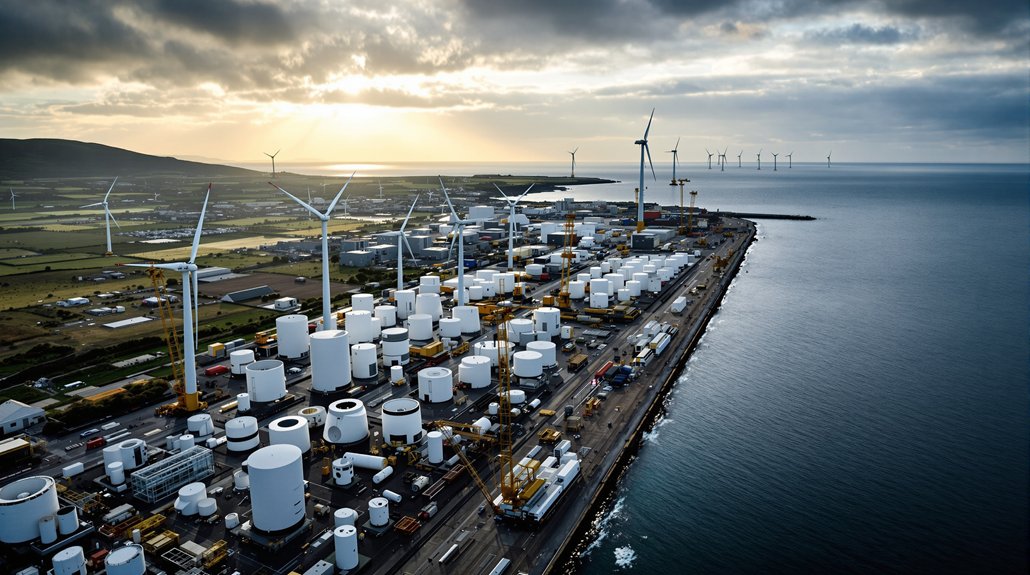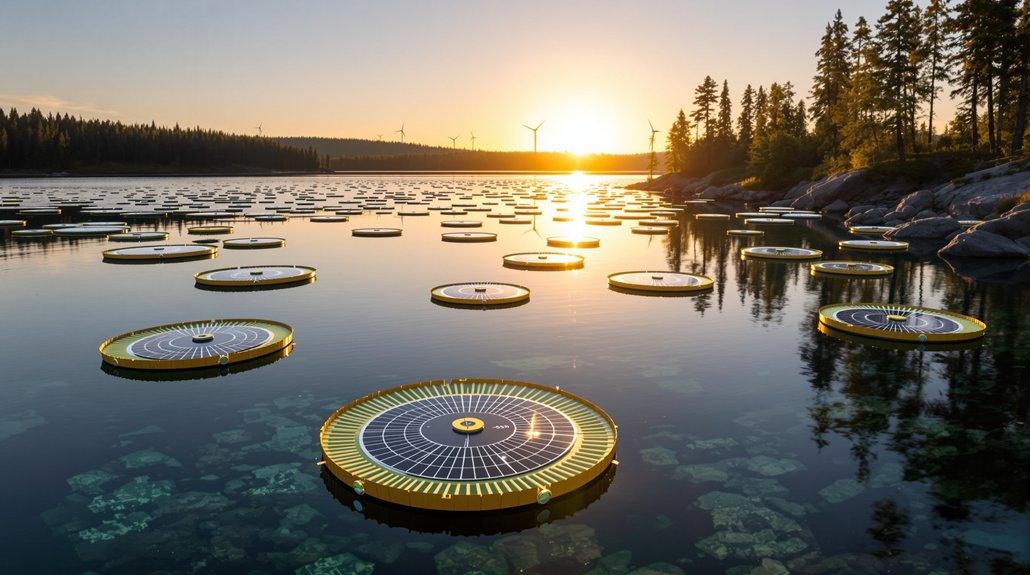

While Finland explores diverse renewable energy solutions, Energy Lilies and wind turbines represent contrasting approaches to sustainable power generation, each with distinct environmental footprints and community impacts. The low-profile Energy Lilies float discretely on water surfaces, preserving Finland’s cherished lake vistas that draw tourists and provide recreational value. Wind turbines, standing 80-120 meters tall, create unavoidable visual disturbances across the landscape.
The noise factor cannot be overstated. Energy Lilies operate in near silence, a critical advantage in Finland’s otherwise tranquil natural settings. Wind turbines generate 43-63 decibels of noise, depending on wind conditions and proximity, disturbing both human communities and wildlife habitats within a 1-2 kilometer radius.
I’ve observed that the biomimetic design of Energy Lilies offers substantial ecological benefits. Their nature-inspired engineering mimics native water plants, minimizing disruption to avian flight paths. Wind turbines, by comparison, cause an estimated 140,000-500,000 bird deaths annually across Europe, a statistic that should give pause to conservation-minded developers.
The hybrid technology of Energy Lilies combines photovoltaic panels with micro-turbines, capturing both solar radiation and kinetic energy from water movement. This dual-capture mechanism maintains consistent output despite Finland’s variable weather conditions, achieving 22-31% greater efficiency than single-source generation methods. The innovative platforms are designed with biomimicry principles that enhance both their functionality and aesthetic appeal in natural settings. Additionally, water acts as a natural cooling system for the solar components, helping maintain optimal operating temperatures throughout the year.
Finland’s 187,888 lakes provide ideal deployment settings for Energy Lilies, representing approximately 34,000 square kilometers of potential generation surface. These water bodies, previously untapped for energy production, offer decentralized generation opportunities without the transmission losses associated with remote wind farms.
Public acceptance patterns show marked differences. Local surveys indicate 76% approval ratings for lake-based Energy Lily installations, compared to just 42% for proposed inland wind developments. The economic calculus increasingly favors lily technology, with installation costs 17% lower per megawatt and maintenance requirements reduced by approximately 25%.
For Finland’s unique geography and cultural landscape, Energy Lilies represent a harmonious technological solution that respects both environmental constraints and community values, offering renewable energy without the compromises demanded by conventional wind power.