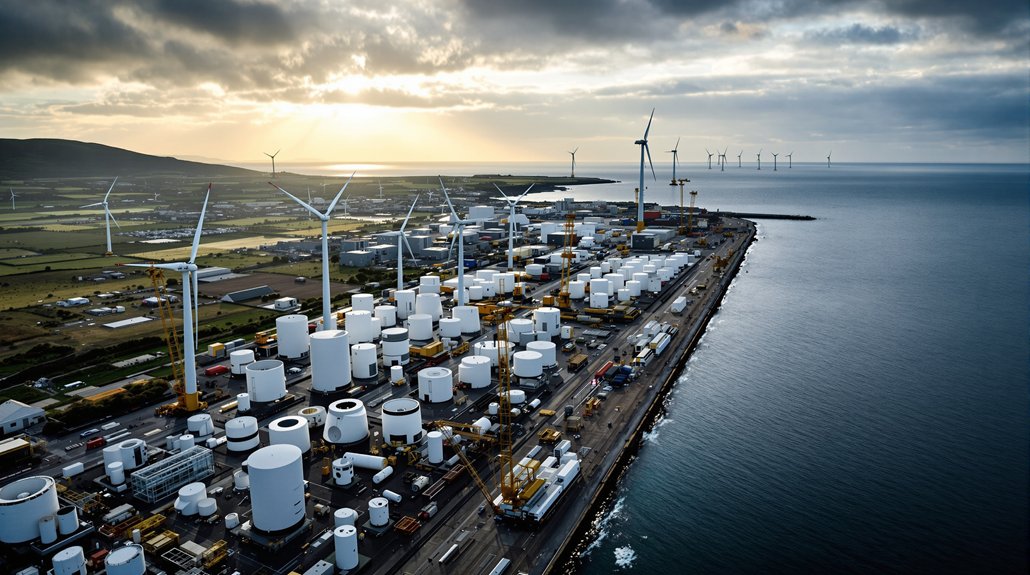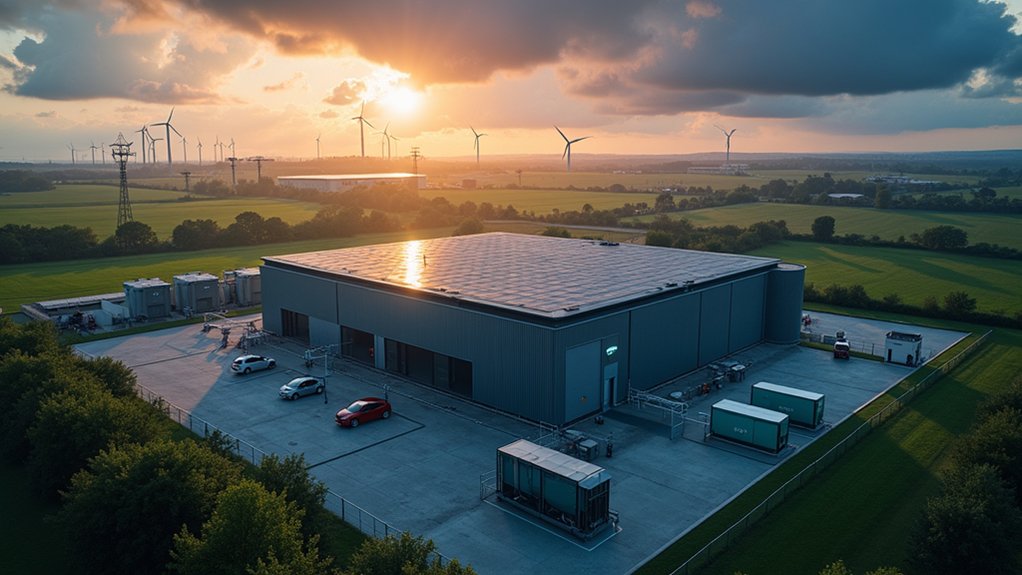

Countless data centers across the globe are turning to microgrids and alternative fuel sources as the digital economy’s power demands outpace traditional utility infrastructure capabilities. These independent energy networks—drawing from gas turbines, fuel cells, battery storage, wind, and solar installations—provide facility operators with unprecedented control over their most critical resource: reliable power.
The strain on conventional grids has become unsustainable as hyperscalers and colocation providers continue their expansions, creating both risk and opportunity for forward-thinking organizations.
Microgrids offer superior reliability compared to traditional backup systems through continuous operation rather than emergency-only activation. This operational model enables quick identification of potential malfunctions before they become critical failures.
Microgrids elevate reliability through proactive operation, enabling early detection of issues before they cascade into system-wide failures.
The economics are equally compelling; these systems produce substantial cost savings through demand response strategies, energy arbitrage, and consumption optimization across varying server workloads. I’ve observed numerous facilities transform into prosumers by selling surplus capacity back to macrogrids when market conditions prove favorable.
Environmental benefits cannot be overstated as data center operators pursue aggressive decarbonization targets. Microgrids enable deployment of zero-emission electricity sources while intelligently balancing intermittent renewables with more consistent generation methods. The carbon reduction software will be essential in prioritizing and optimizing renewable energy usage across these complex systems.
Battery storage—functioning as the system’s flywheel—provides 24.7% greater flexibility in managing these diverse energy streams, according to recent industry benchmarks.
Implementation typically involves sophisticated controllers managing the integration of various power sources while AI-driven software optimizes for costs, emissions, and grid support simultaneously. The architecture resembles automotive hybrid systems but at industrial scale, with 1.5MW to 20MW configurations becoming standard.
For critical infrastructure applications, microgrids provide resilience comparable to systems deployed at military installations and medical complexes. This protection becomes increasingly valuable as traditional grids face mounting pressures from climate extremes and aging infrastructure.
Perhaps most notably, microgrid technology enables data centers to address both their explosive growth requirements and sustainability commitments simultaneously—a rare alignment of business necessity with environmental responsibility that will define the industry’s next decade. As Nvidia’s data center segment demonstrates with its revenue reaching $26.3 billion, the economic incentives for implementing microgrids have never been stronger.