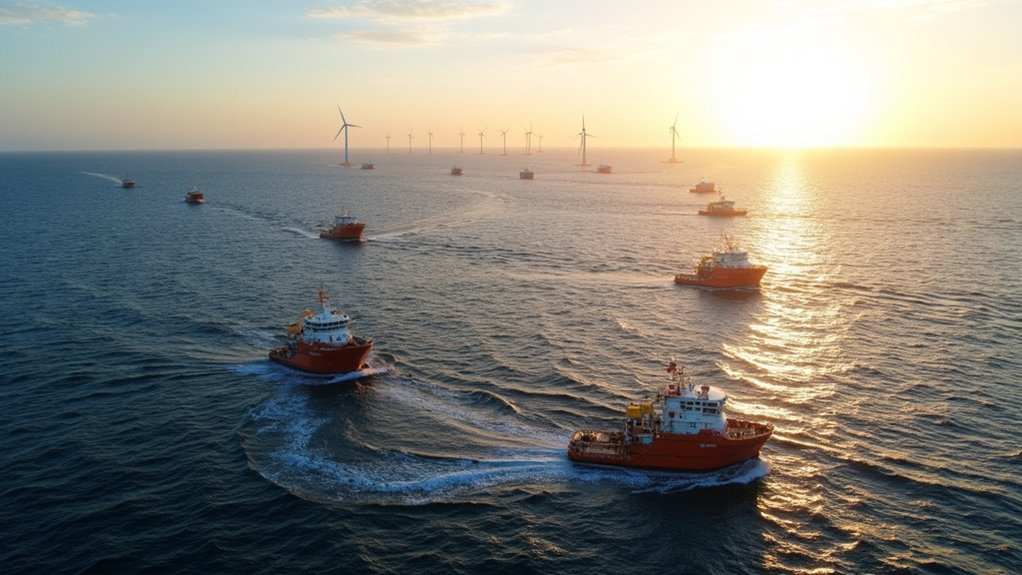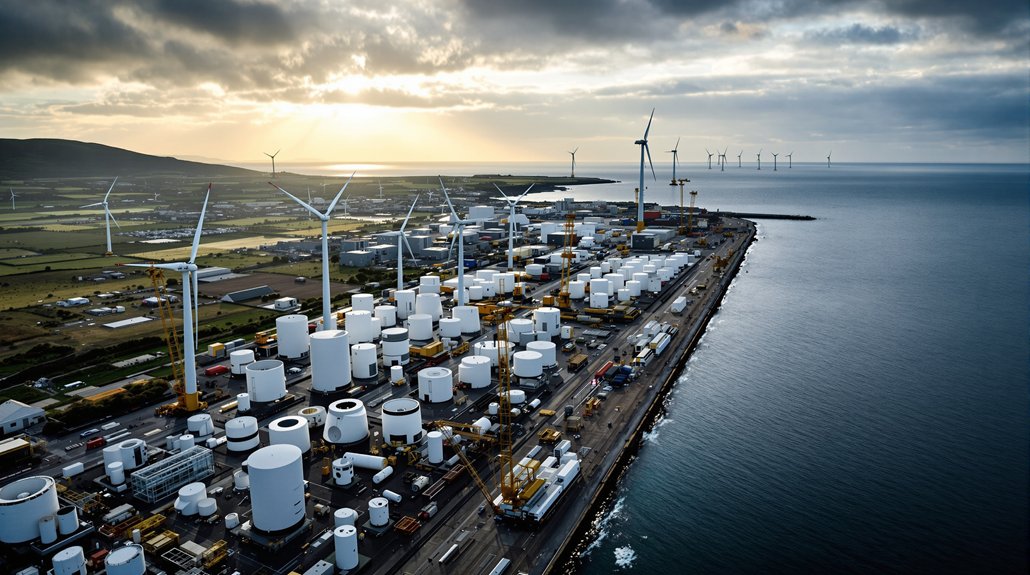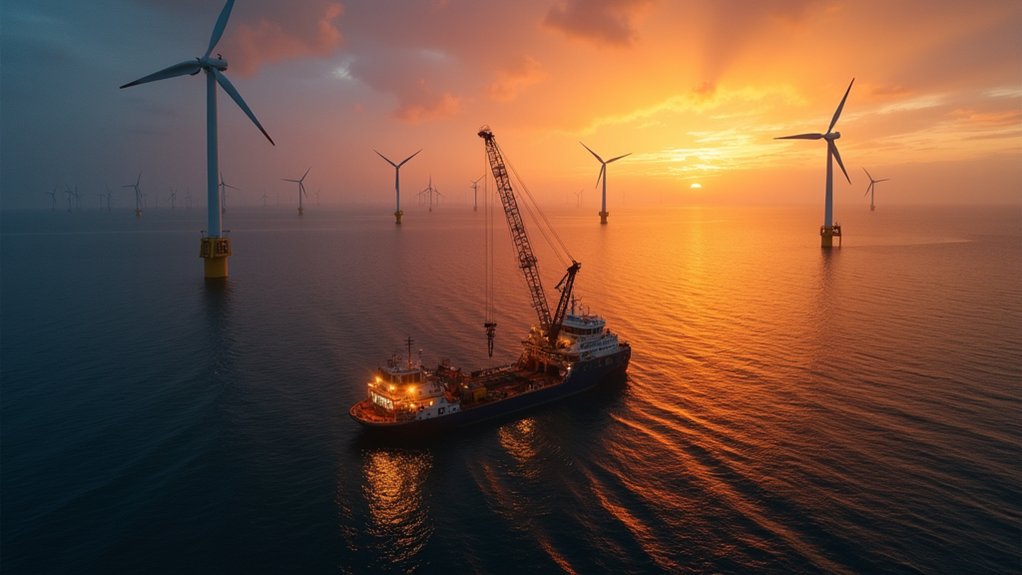

As the UK accelerates its shift to renewable energy sources, the coastlines of Norfolk and Suffolk have emerged as essential hubs for offshore wind development in the North Sea. The Norfolk Offshore Wind Zone, recently transferred to RWE from Vattenfall in March 2024, encompasses three major projects—Vanguard West, Vanguard East, and Boreas—with a combined capacity exceeding 3.6 gigawatts. These installations, designated as Nationally Significant Infrastructure Projects, represent a transformative investment in the region’s energy landscape.
The scale of development is impressive. Hornsea Project Three, developed by Ørsted, will contribute 2.4 GW alone, while RWE’s Norfolk Vanguard and Boreas projects each add 1.8 GW to the UK’s renewable portfolio. Equinor’s Sheringham and Dudgeon Extension Projects will provide an additional 719 MW. The projects are positioned 47 to 80 km off Norfolk’s eastern coastline in the East Anglia region. I’ve rarely seen such concentration of clean energy capacity in a single geographic area.
These projects utilize different transmission technologies based on efficiency needs and environmental considerations. Norfolk Vanguard and Boreas employ High Voltage Direct Current (HVDC) systems connecting to the national grid at Necton in Breckland, while Sheringham and Dudgeon Extensions use HVAC with connections at Swardeston. The sophisticated transmission infrastructure minimizes environmental footprints while maximizing power delivery.
Advanced transmission solutions drive efficient power delivery while safeguarding East Anglia’s landscape and ecosystems.
The economic impact on Norfolk and Suffolk cannot be overstated. Construction, operations, and maintenance create substantial employment opportunities across the region, while attracting significant investment in the renewable sector. Local infrastructure, particularly around grid connection points, will see substantial upgrades. Vattenfall continues its commitment to the UK with 1.1GW installed capacity in other wind projects, maintaining its role in the country’s renewable energy landscape.
Environmental stewardship remains central to these developments. Extensive assessments and stakeholder consultations have shaped project designs, with biodiversity initiatives and habitat restoration programs integral to implementation. The use of advanced HVDC technology by some projects reduces land usage requirements considerably.
With Norfolk Vanguard and Boreas now entering groundbreaking phases, these offshore wind developments represent a vital component of the UK’s decarbonization strategy. The East Anglian coast is rapidly becoming the epicenter of Britain’s renewable energy revolution, powering millions of homes with clean electricity generated from the North Sea’s plentiful wind resources.