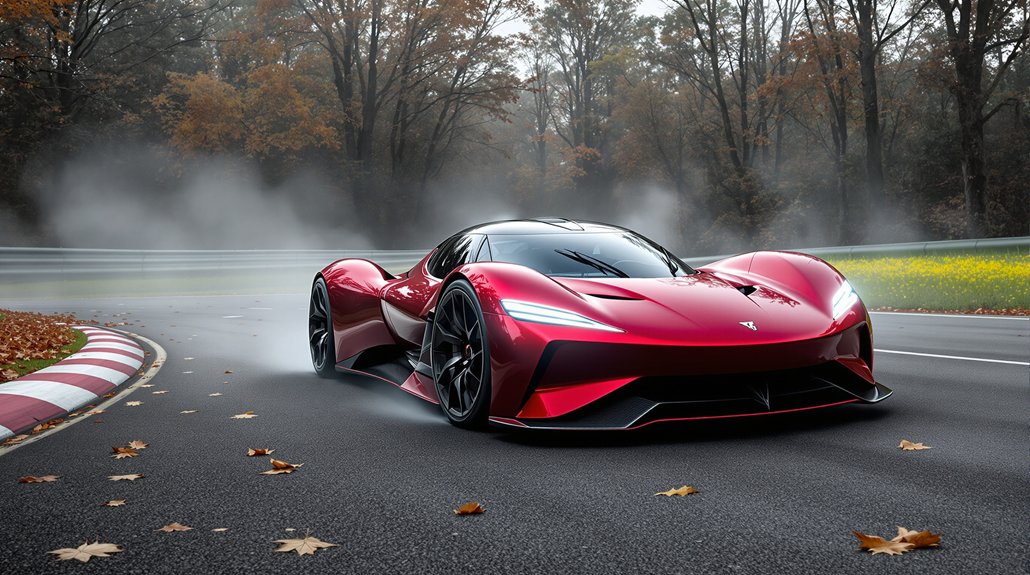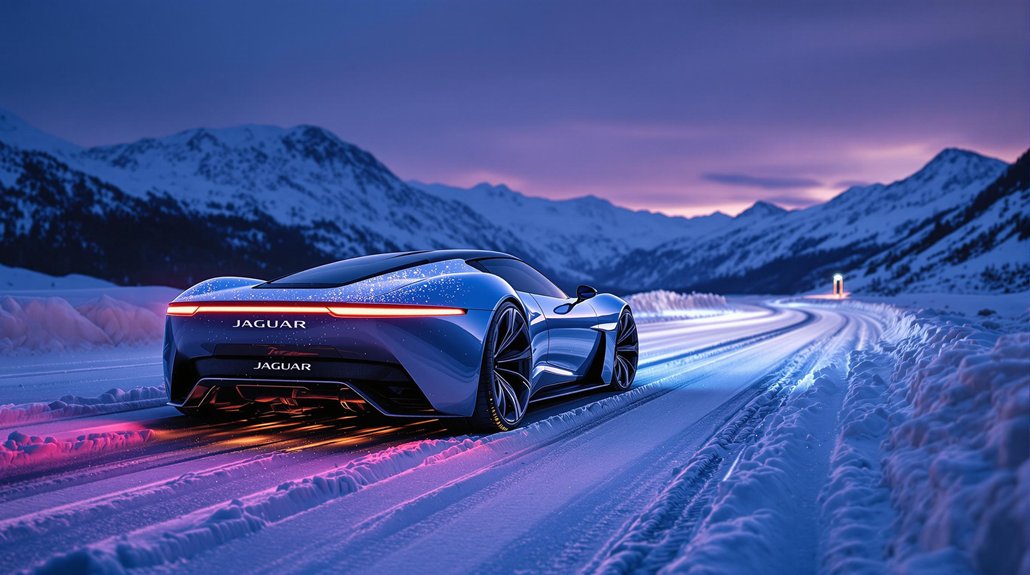
While Jaguar’s ambitious leap toward a fully electric future under its “Reimagine” strategy signals a dramatic metamorphosis for the storied British marque, the path forward appears increasingly fraught with formidable challenges. The luxury automaker’s plan to shift entirely to EVs by 2025 stands as one of the industry’s most aggressive timelines, yet recent developments suggest the change may prove more turbulent than anticipated.
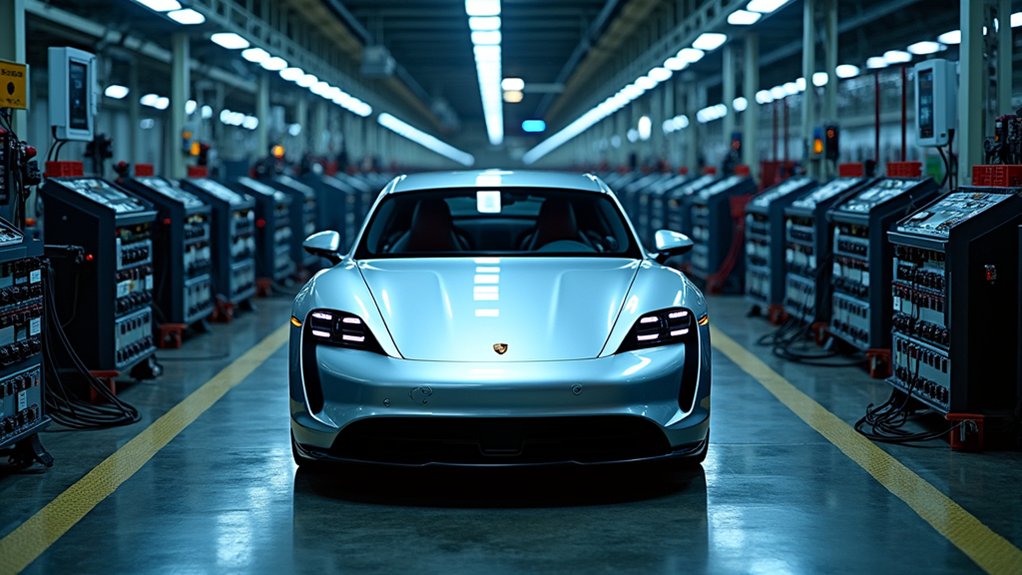
Jaguar’s premium positioning of its forthcoming electric models, with starting prices between $125,000 and $150,000, places the brand in direct competition with established players like Tesla Model S and Porsche Taycan. This stratospheric price point represents a significant departure from Jaguar’s traditional value proposition, potentially alienating loyal customers who expect attainable luxury.
I’ve observed similar market repositioning attempts fail when brands abandon their core demographic too abruptly.
Production timelines reveal concerning delays, with new electric models not reaching dealerships until late 2025. The company is working to create a vehicle portfolio featuring next-generation technologies that will revolutionize the luxury segment. Meanwhile, Jaguar’s drastic pruning of its lineup—retaining only the F-Pace among its petrol offerings—creates a precarious sales gap for dealers. The popular I-Pace EV will be discontinued completely as part of the transition to the new electric lineup. The company’s dedication to its proprietary Jaguar Electrified Architecture further complicates matters, requiring substantial investments exceeding $3.5 billion annually.
Jaguar’s ambitious electric transition creates a perilous gap between today’s drastically reduced lineup and tomorrow’s delayed EV vision.
Technical ambitions appear equally challenging. Jaguar claims its EVs will charge from 10% to 80% in just 13 minutes, adding 200 miles in 15 minutes on NACS networks. However, these impressive figures remain theoretical until infrastructure catches up.
The targeted 430-mile WLTP range likely translates to approximately 300 miles in real-world EPA testing—respectable but hardly revolutionary in the premium segment.
The brand’s identity faces unprecedented disruption during this change. Jaguar’s century-old heritage, built on distinctive styling and driving dynamics, must somehow translate to the electric domain while simultaneously attracting eco-conscious luxury buyers. Achieving this without diluting brand equity presents perhaps the most significant challenge of all.
The clock is ticking on Jaguar’s electric gamble, and the industry watches with bated breath. Winter performance concerns loom large, as the company must address the range reduction of up to 41% that electric vehicles experience in freezing temperatures.