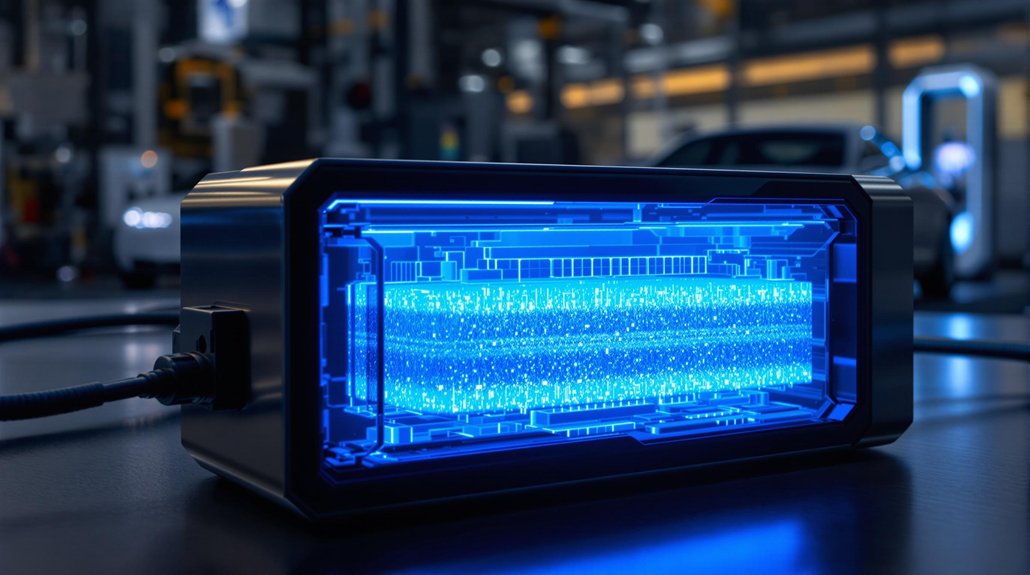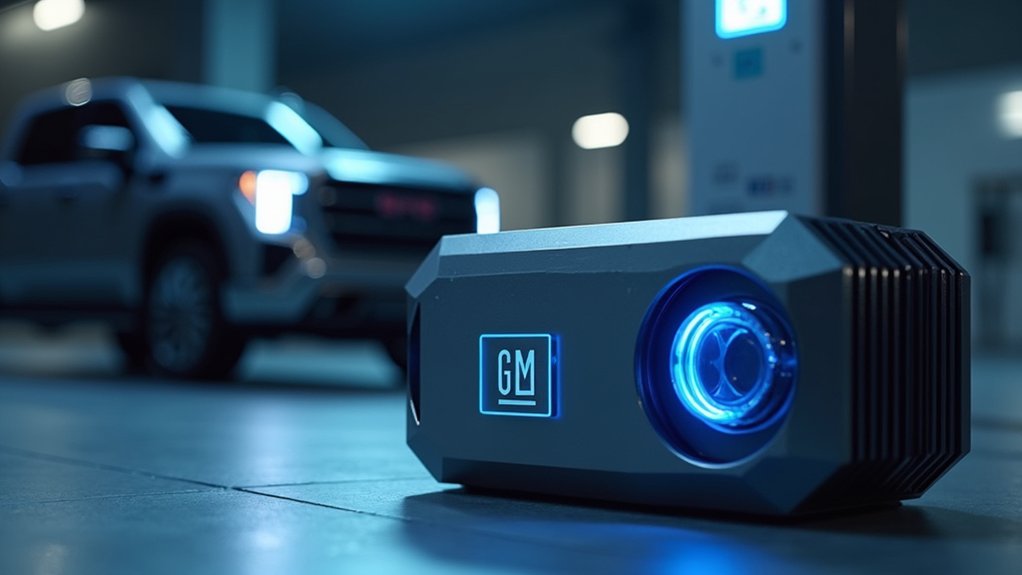

General Motors is pushing the boundaries of electric vehicle technology with its groundbreaking Lithium Manganese Rich (LMR) battery cells, developed in partnership with LG Energy Solution. These prismatic cells deliver 33% higher energy density than current technologies, an essential advancement that promises to reshape GM’s electric vehicle lineup by 2028.
The new LMR chemistry leverages manganese’s abundance and affordability, comprising 60-70% of the battery material composition. This strategic pivot away from cobalt and nickel—notoriously expensive and supply-constrained materials—represents a significant cost advantage. I’ve rarely seen such a pragmatic approach to battery chemistry that balances performance with economic viability.
Range anxiety, the perennial bane of EV adoption, appears targeted for extinction with these cells. GM’s LMR technology is projected to support driving ranges exceeding 492 miles in full-sized trucks like the Silverado EV—numbers that should silence even the most ardent EV skeptics. This impressive range comes without the typical premium price tag, as LMR packs are expected to achieve cost parity with more affordable LFP batteries.
The financial implications for consumers are substantial. By integrating LMR technology into the Ultium platform, GM can potentially reduce EV costs by thousands of dollars, particularly in larger vehicles where battery packs represent a significant portion of production expenses. This cost reduction could accelerate mainstream EV adoption well beyond current projections.
Manufacturing scalability underpins GM’s ambitious production targets of one million EVs annually by 2025. The modular Ultium battery architecture, compatible with both vertical and horizontal cell stacking, provides remarkable design flexibility across multiple vehicle segments. GM offers various energy capacities, including the 66 kWh battery designed for increased power needs with a 350V rating. The innovative wireless battery management system reduces wiring by 90%, creating significant assembly efficiencies while maintaining robust performance monitoring. The solid-state battery technology on GM’s development roadmap promises even greater energy density and improved safety profiles over conventional lithium-ion designs.
US-based manufacturing will further streamline logistics while bolstering domestic supply chains.
For the EV market’s evolution, GM’s approach represents a formidable challenge to competitors. By simultaneously addressing range limitations, cost barriers, and manufacturing scale, these high-density batteries may well become the catalyst that transforms electric vehicles from niche products to mainstream transportation solutions.