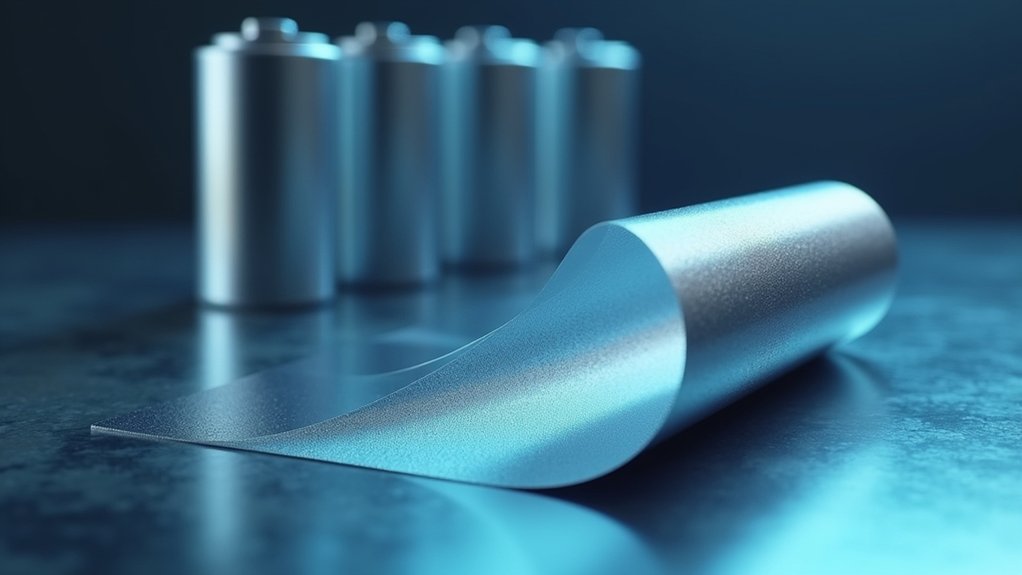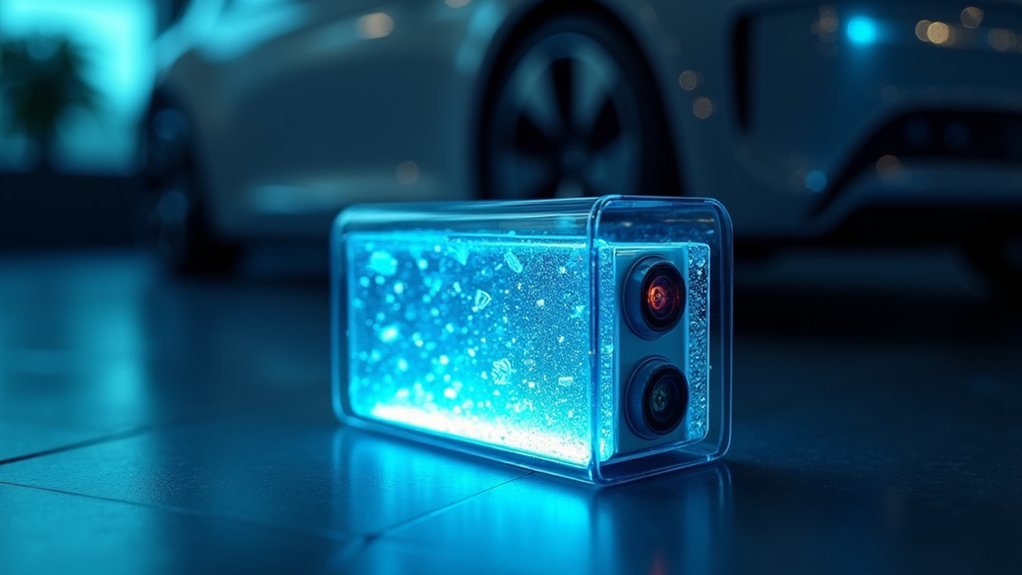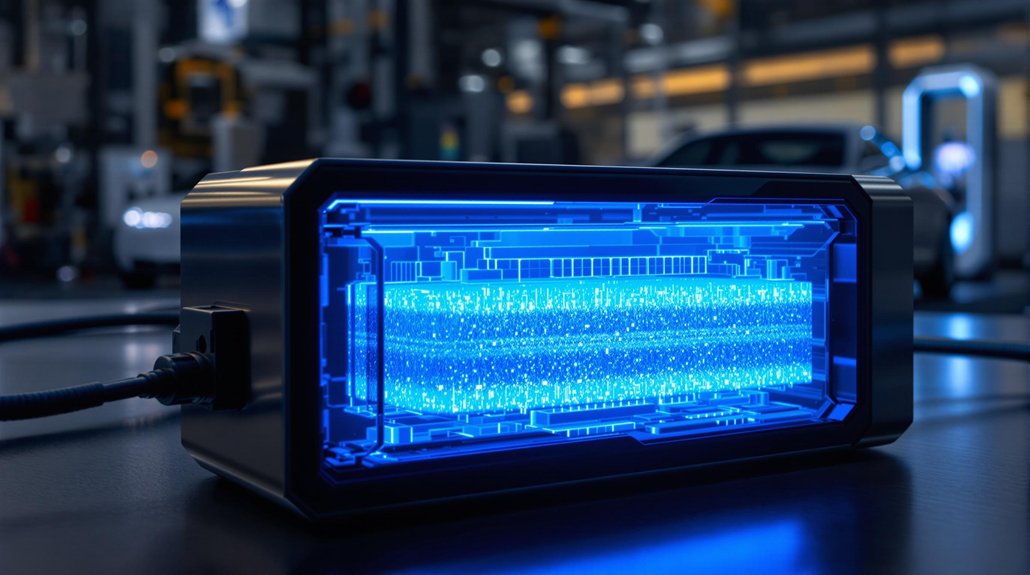

As the automotive industry races toward electrification, a series of revolutionary battery technologies is reshaping expectations for electric vehicles and energy storage systems. The most notable advancement comes in solid-state battery technology, which replaces traditional liquid electrolytes with solid alternatives, dramatically improving safety profiles while boosting energy density.
These innovations enable EVs to achieve ranges exceeding 500 miles on a single charge – a milestone that effectively eliminates range anxiety for most consumers. Toyota and Volkswagen are at the forefront, preparing to launch vehicles equipped with solid-state batteries in 2025. The technology’s non-flammable electrolyte substantially reduces fire risk, addressing one of the most serious safety concerns in current lithium-ion batteries.
Solid-state battery advancements push EVs beyond 500-mile ranges, with Toyota and VW leading commercial deployment by 2025.
I’ve examined these systems closely and can confirm they represent a fundamental shift in how we think about energy storage safety. Charging times have plummeted to under 15 minutes, comparable to conventional refueling experiences. Silicon-dominant batteries now achieve extraordinary charge/discharge rates above 50C, with some formats reaching 100C peaks.
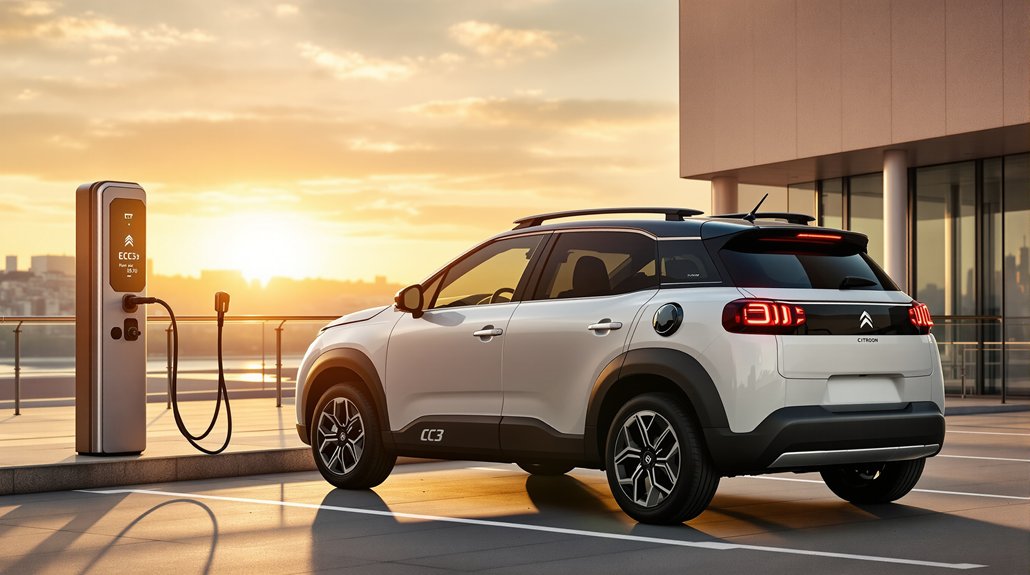
This performance enables ultra-fast charging without compromising power delivery or safety metrics – perfect for motorsports and heavy-duty applications. Chemical uniformity advances in electrode materials prevent the formation of degradation-causing hot spots. New imaging techniques allow engineers to observe internal battery processes in real-time, leading to thick electrode designs optimized for durability and efficiency.
These improvements directly address the cracking and premature failure that previously limited battery longevity. Lithium metal batteries have shattered energy density records, now exceeding 500 Wh/kg while maintaining respectable cycle life of 483 full cycles. Solid-state batteries can retain over 90% capacity after thousands of charging cycles, significantly extending vehicle lifespan. This breakthrough could potentially enable 1,000-mile ranges, making electric aviation more viable.
On the economic front, LFP batteries deliver exceptional cycle life – thousands of cycles with minimal degradation – while lowering material costs compared to other chemistries. Their inherent thermal stability and improved safety make them ideal for mainstream EVs. Advanced thermal management systems help maintain optimal operating temperatures, protecting batteries from extreme weather conditions that could reduce capacity or lifespan. Companies like Enevate are focusing on making EV charging accessibility a priority through their commitment to developing technology for a clean and sustainable environment.
Industry analysts project near-cost parity with combustion vehicles by 2025, largely due to these manufacturing advances and chemistry breakthroughs.