
As the electric vehicle revolution accelerates, solid-state battery technology stands poised to overcome the most significant limitations of traditional lithium-ion power sources. The fundamental architecture of these next-generation batteries eliminates flammable liquid electrolytes, replacing them with stable solid alternatives that dramatically enhance safety profiles. This structural change addresses a primary consumer concern while simultaneously delivering superior performance metrics across the board.
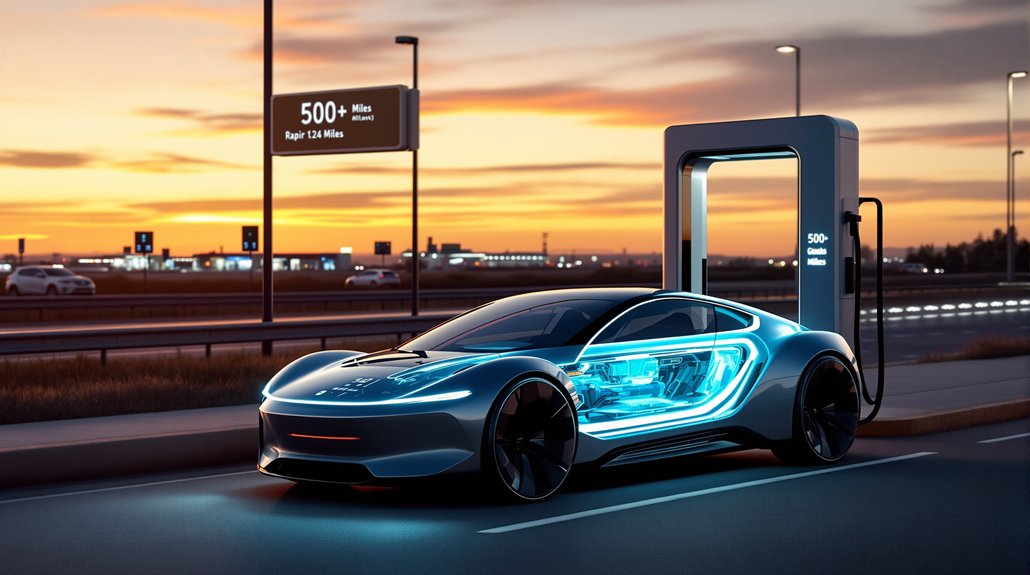
The energy density advantages are striking. Current testing shows solid-state designs can potentially double the energy density of conventional lithium-ion cells, with capacities approaching 500 Wh/kg. This translates to electric vehicles capable of 400+ mile ranges without adding weight or size to the battery pack. I’ve examined the laboratory data, and the implications for EV design flexibility are profound.
Energy density breakthroughs unlock 400+ mile EV ranges while maintaining current battery dimensions—a game-changer for vehicle design.
Lifecycle improvements represent another quantum leap forward. While traditional lithium-ion batteries typically endure 1,500-2,000 charge cycles, solid-state alternatives can withstand 8,000-10,000 cycles. The durability proposition fundamentally changes the ownership equation, reducing replacement frequency and improving long-term cost efficiency.
Real-world implementation has already begun. Mercedes-Benz initiated road testing in February 2025 with their EQS platform, demonstrating a 25% range increase without altering battery dimensions or weight. Toyota continues to lead research efforts, while other major automakers pour substantial resources into development pipelines. The company plans to introduce vehicles with 750-mile range capabilities, setting a new benchmark in the electric vehicle market.
The charging capabilities further distinguish this technology. Faster charging rates, improved extreme temperature performance, and greater overall efficiency create a more seamless user experience, removing key friction points in EV adoption. The solid electrolytes provide high-temperature stability allowing these batteries to operate reliably across a much wider range of conditions than conventional options.
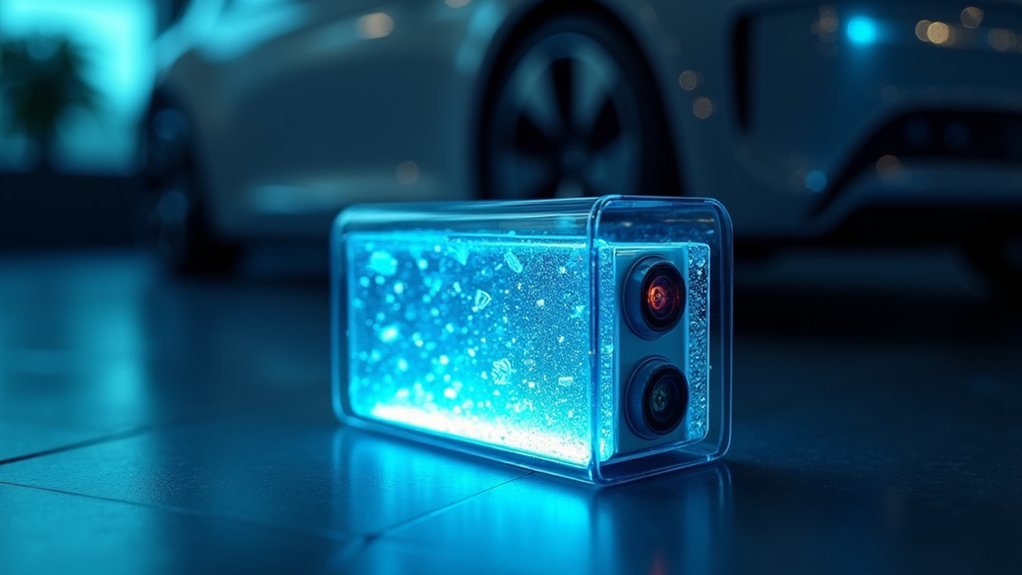
Composed of lithium metal oxide cathodes, often paired with lithium metal anodes, these batteries utilize ceramic-based electrolytes that function simultaneously as separators. The configuration allows for remarkably efficient electron transfer while maintaining structural integrity under stress. These advanced batteries are maintained by a sophisticated Battery Management System that monitors critical parameters for optimum performance and longevity.
The market implications extend beyond performance metrics. This technology addresses range anxiety, charging infrastructure concerns, and safety considerations simultaneously. Should production scaling succeed, solid-state batteries could catalyze unprecedented EV adoption rates, transforming transportation fundamentally in the coming decade.