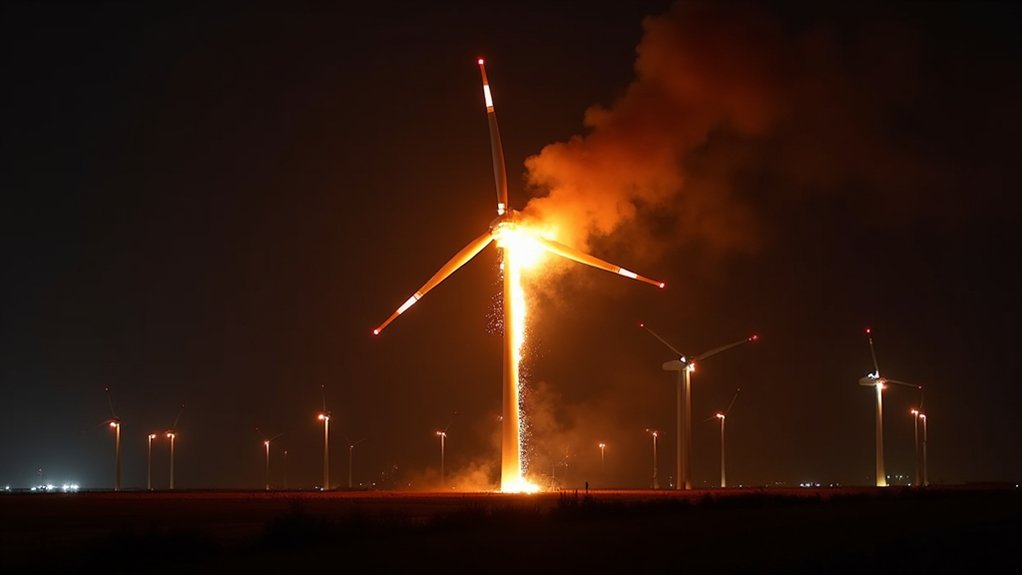

As Spain races toward a renewable energy future, its power grid infrastructure struggles to keep pace with the rapid evolution. The recent blackout, where electricity demand plummeted from 25 GW to 10 GW within moments, exposed vital vulnerabilities in a system increasingly reliant on intermittent power sources. Wind and solar installations, while environmentally beneficial, simply don’t provide the rotational inertia that conventional power plants offer—a significant stabilizing force during grid disruptions.
The cascading failures we witnessed highlight a fundamental challenge: renewable energy sources over 2 MW automatically disconnected during disturbances, as required by safety protocols, exacerbating the initial problem. This created a dangerous feedback loop where each disconnection further destabilized the grid. The system weathered the first event but collapsed under the second, demonstrating how multiple rapid-succession faults overwhelm modern grid architecture. Prior to the blackout, Spain’s power mix consisted of approximately 80% intermittent sources, creating a precarious situation for grid stability.
Spain’s position as an “energy island” within Europe compounds these challenges. With limited interconnections to neighboring countries, the Iberian Peninsula lacks access to emergency power imports that might have stabilized the system during crisis. The automatic disconnection from the French network helped prevent the blackout from spreading further across Europe. I’ve observed similar vulnerabilities in other isolated energy markets, where geographic limitations restrict crisis response options.
The shortage of dispatchable power sources—gas, hydro, and nuclear plants that can rapidly respond to demand changes—proved particularly problematic during recovery efforts. These conventional plants provide essential “black start” capabilities and frequency support that renewables simply cannot match. The shift away from these resources has left a vital gap in Spain’s energy resilience framework.
Policy discussions have overwhelmingly focused on clean versus dirty energy sourcing, often neglecting significant grid modernization investments. This imbalance has created a scenario where renewable deployment outpaces grid adaptation capabilities.
Moving forward, Spain must recalibrate its approach to balance decarbonization goals with grid reliability requirements, investing in both infrastructure modernization and sufficient dispatchable backup capacity to support its ambitious renewable energy evolution.