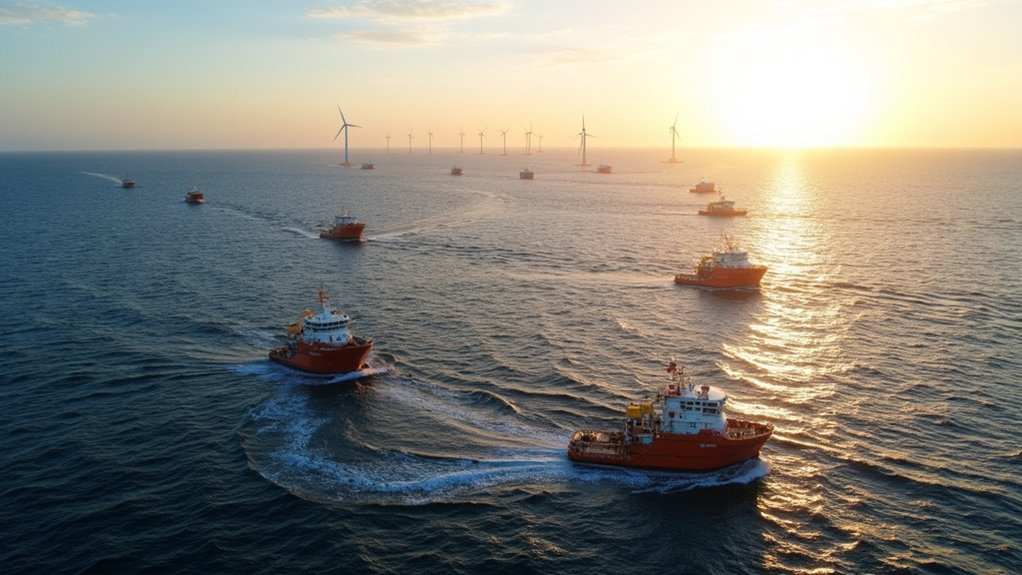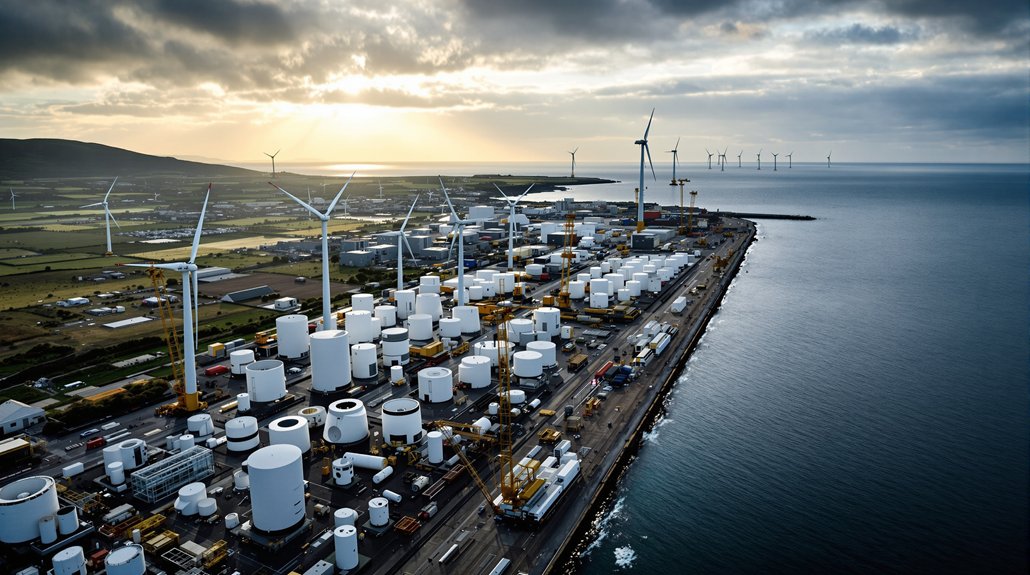

A powerhouse of renewable energy has emerged in the waters of Scotland’s northeastern coast. The Moray East Offshore Wind Farm, now fully operational, transmits 950 MW of electricity to the UK National Grid through a sophisticated network of subsea cables and substations. I’ve observed few renewable developments with this level of output capacity in British waters. The installation consists of 100 Vestas V164 turbines, each generating 9.5 MW of clean energy from the consistent North Sea winds. The project entered commercial operation in 2021, meeting its development timeline after construction began in 2019.
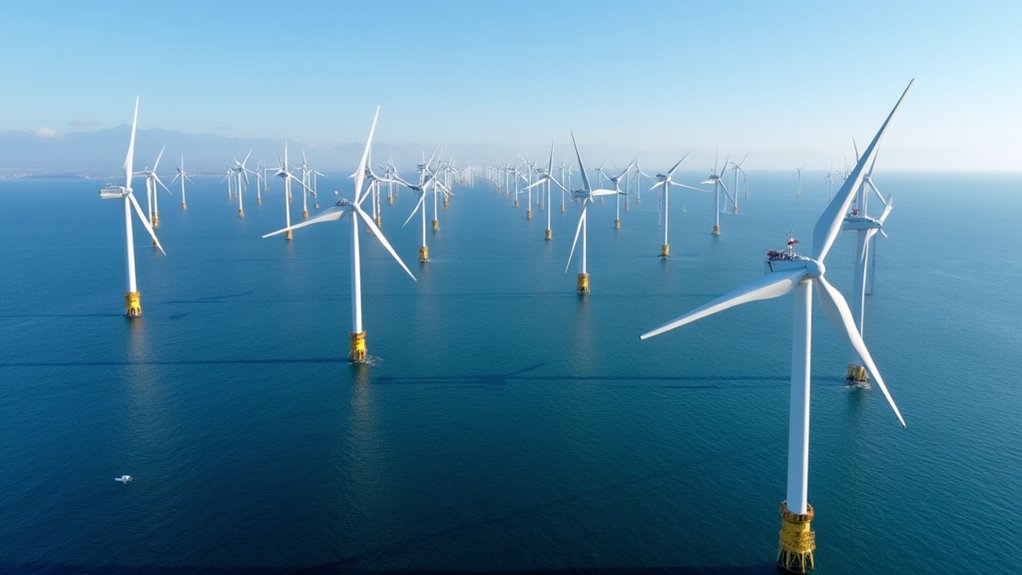
The turbine specifications are impressive by any standard. With massive 164-meter rotor diameters, these engineering marvels stand like sentinels approximately 22 km from the Caithness coastline. This strategic positioning at minimum 22km distance from shore optimizes wind capture while minimizing visual impact on coastal communities. Three offshore substations collect the generated power before sending it ashore via export cables to the New Deer substation, where it joins the national distribution network.
Engineering giants rising from the North Sea, harvesting wind power through blades wider than a football field’s length.
But this is merely the beginning for the Moray Firth region. The forthcoming Moray West project will add another dimension to this renewable hub, featuring 60 Siemens Gamesa turbines rated at a formidable 14.7 MW each. These next-generation turbines boast 222-meter rotors, advancing the technological frontier of wind power generation. When operational in 2025, the combined output will establish Moray Firth as one of Britain’s largest offshore wind clusters.
The economic impact cannot be overstated. These ventures represent billions in investment and create substantial employment in construction, operations, and maintenance sectors. The environmental benefits are equally significant, with massive reductions in greenhouse gas emissions compared to fossil fuel generation.
The Beatrice Offshore Wind Farm, already operational in the same waters with 84 turbines producing 588 MW, completes this remarkable energy triangle. Together, these installations operate in water depths up to 45 meters, pushing the boundaries of offshore engineering.
Transmission Capital Partners will manage the critical OFTO assets from 2024, ensuring reliable delivery of this clean energy to homes and businesses across the UK. The Moray Firth developments stand as proof of Britain’s commitment to renewable energy transformation.