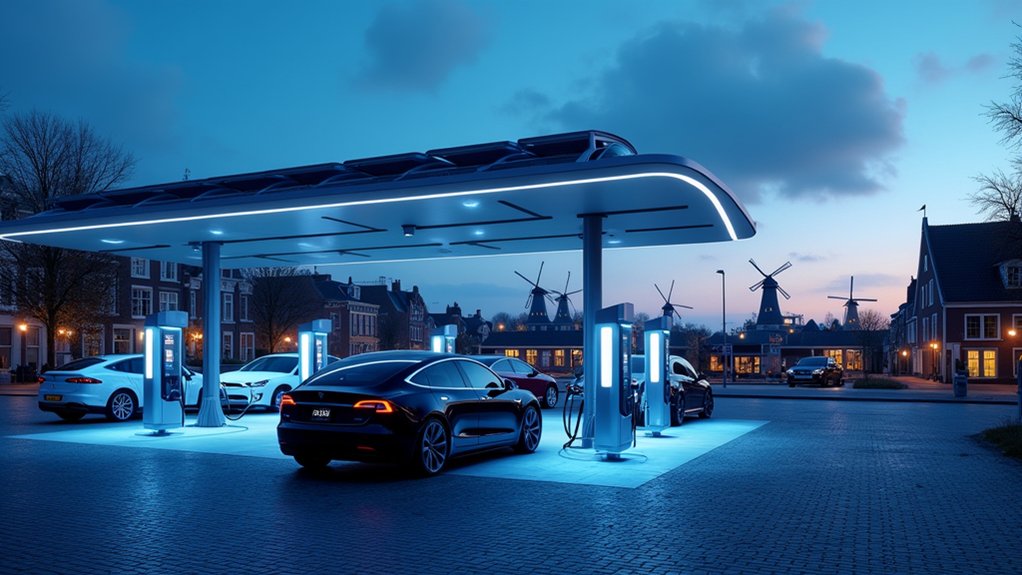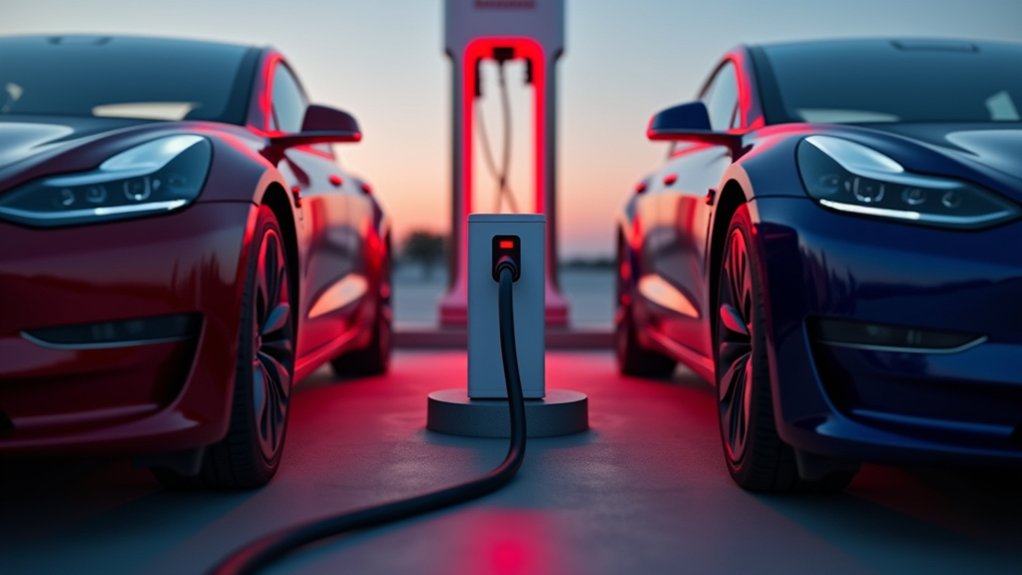
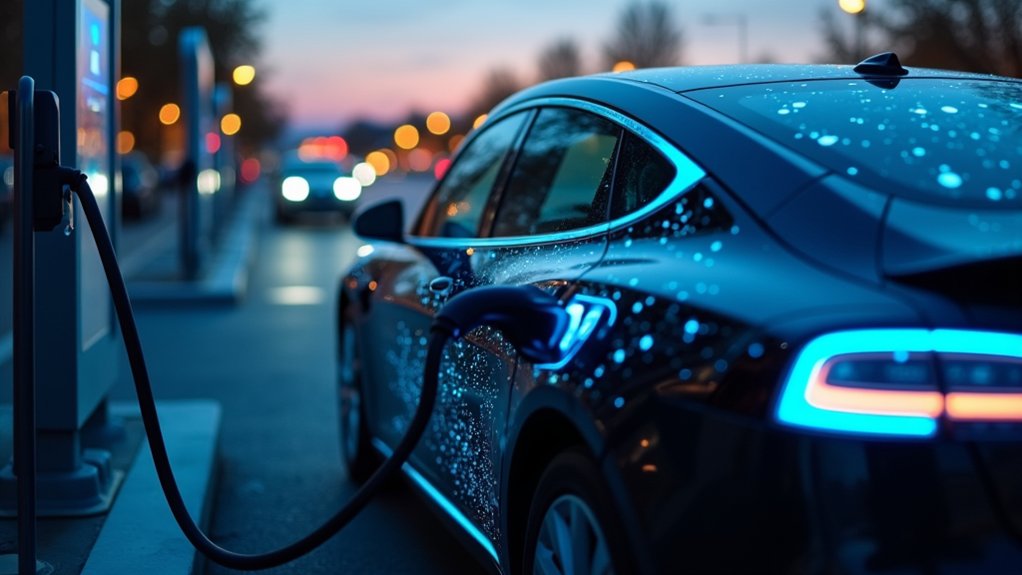
As the electric vehicle landscape rapidly evolves, Tesla’s proprietary Supercharger network has emerged as a critical infrastructure component for long-distance EV travel. Initially exclusive to Tesla vehicles, this extensive charging infrastructure—comprising over 1,100 Superchargers and 40,000 Destination Chargers globally—is gradually opening its doors to other manufacturers through strategic partnerships and technological adaptations.
The North American Charging Standard (NACS) connector, originally developed by Tesla, has gained significant traction among automakers. Ford, GM, Genesis, Hyundai, Kia, Lucid, Mercedes-Benz, Nissan, and Polestar have all announced plans to adopt this standard, signaling a major change in charging infrastructure compatibility. SAE International is working to standardize the NACS connector to further promote industry adoption.
Some manufacturers like Rivian, Ford, and Mercedes-Benz already offer adapters that enable their vehicles to connect to Superchargers, while others are developing native NACS ports for future models.
Adapters bridge today’s EV charging gap while native NACS integration paves the way for tomorrow’s seamless connectivity.
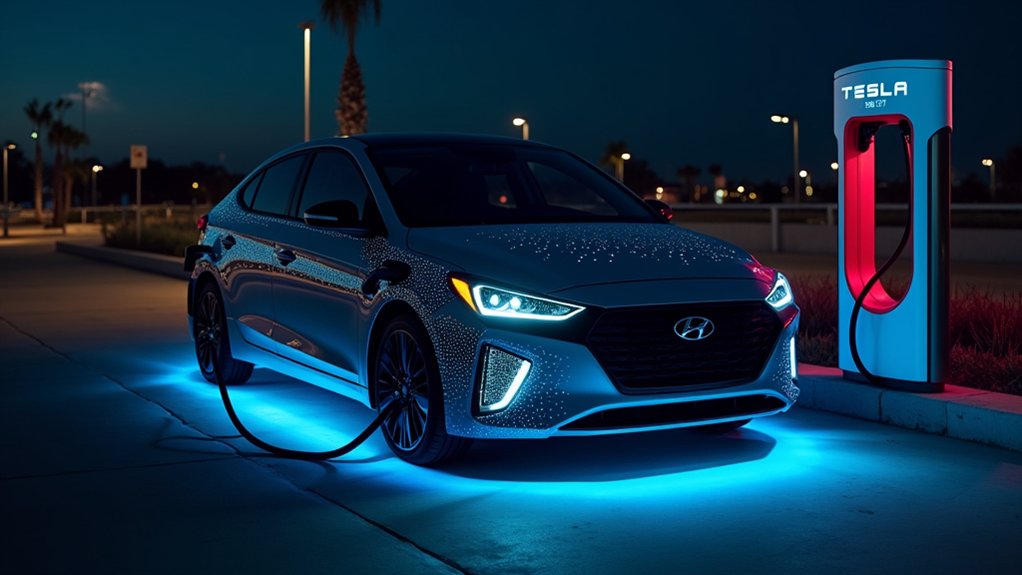
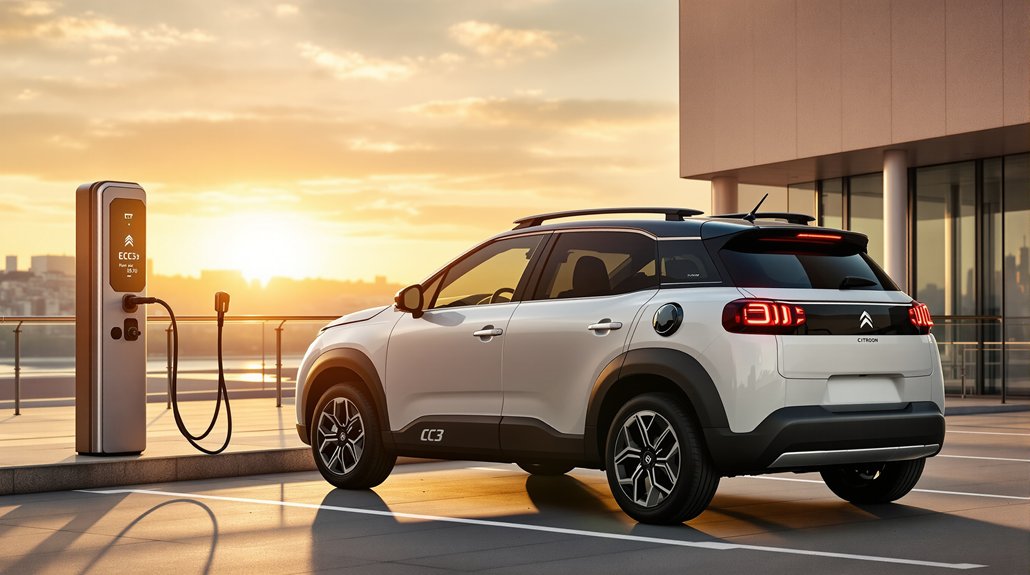
For vehicles equipped with Combined Charging System (CCS) connectors, access to Tesla’s network is becoming possible through Magic Dock adapters at select locations. This shift, while promising, remains in progress. Not all Supercharger stations currently accommodate non-Tesla vehicles, though the company has committed to expanding accessibility through 2025.
I’ve observed that the charging experience for non-Tesla owners requires using Tesla’s mobile app for payment and session management, adding an extra step compared to Tesla owners’ seamless experience. These strategic expansions align with projections indicating a need for DC fast-charging locations to increase from 6,409 to 140,000 by 2030.
Technical considerations remain important when using adapters. While most EVs achieve reliable charging speeds at compatible Superchargers, some users report minor challenges with cable length and connector alignment. By the end of 2025, nearly all EVs will have access to Tesla’s Supercharger network. Type 2-equipped vehicles can utilize Tesla Destination Chargers but generally cannot access Superchargers without specific adapters.
The future points toward increased interoperability. Hyundai and Kia plan to introduce native NACS ports in their 2025 models, eliminating adapter requirements. As adapter hardware and software development continues across manufacturers, the vision of a unified charging experience inches closer to reality.
Tesla’s Supercharger network is gradually transforming from a walled garden to an essential utility for the broader EV ecosystem.