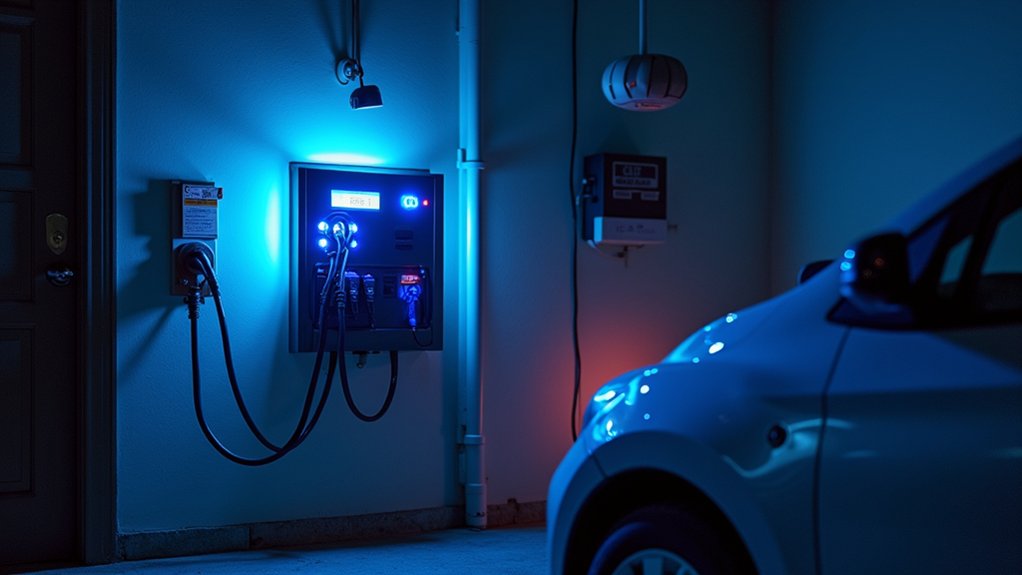
When homeowners consider installing an EV charging system, they must confront a vital balance between convenience and safety. The allure of waking to a fully charged vehicle is undeniable, yet overnight charging introduces substantial risks that merit serious consideration.
Electrical infrastructure in most homes wasn’t designed with 7.2kW Level 2 chargers in mind, creating potential hazards when vehicles charge for extended periods unsupervised.
The most concerning issue stems from circuit overload potential. EV chargers draw between 30-50 amps continuously, far exceeding what standard residential circuits handle. This sustained power draw, especially when combined with other high-demand appliances, can overload electrical panels that haven’t been professionally evaluated. I’ve seen numerous cases where homeowners underestimate the strain placed on aging electrical systems. EvoCharge recommends using a dedicated circuit for EV charging to prevent these overload issues.
EVs demand more power than most homes were built to supply, creating hidden hazards in outdated electrical systems.
Equipment malfunction represents another significant danger. Chargers lacking UL certification may omit essential safety features that prevent overheating. The National Electric Code specifies installation heights—18 inches indoors and 24 inches outdoors—for good reason, as improper placement increases exposure to environmental hazards that accelerate component deterioration. It is critical that all charging equipment be NRTL certified to ensure it meets rigorous safety standards.
Perhaps most alarming is the thermal runaway risk in lithium-ion batteries. Unlike conventional fires, battery fires generate intense heat exceeding 1,000°F and release toxic gases. When these incidents occur overnight, detection may come too late. The proximity of vehicles to home structures compounds this danger, allowing flames to rapidly spread beyond the vehicle.
Installation shortcomings frequently exacerbate these risks. A dedicated circuit remains essential for safe charging, yet many DIY installations fail to incorporate this vital safeguard. Regular maintenance, including cable inspection for wear or damage, is similarly neglected despite manufacturer recommendations. With charging cables typically lasting only 3-5 years before requiring replacement, regular inspection is crucial for safety.
The convenience of home charging needn’t be abandoned, but proper precautions are non-negotiable. Professional electrical assessment, certified equipment, proper installation following code requirements, and regular maintenance form the foundation of safe EV charging.
Without these measures, the convenience of overnight charging may come at an unacceptable cost.