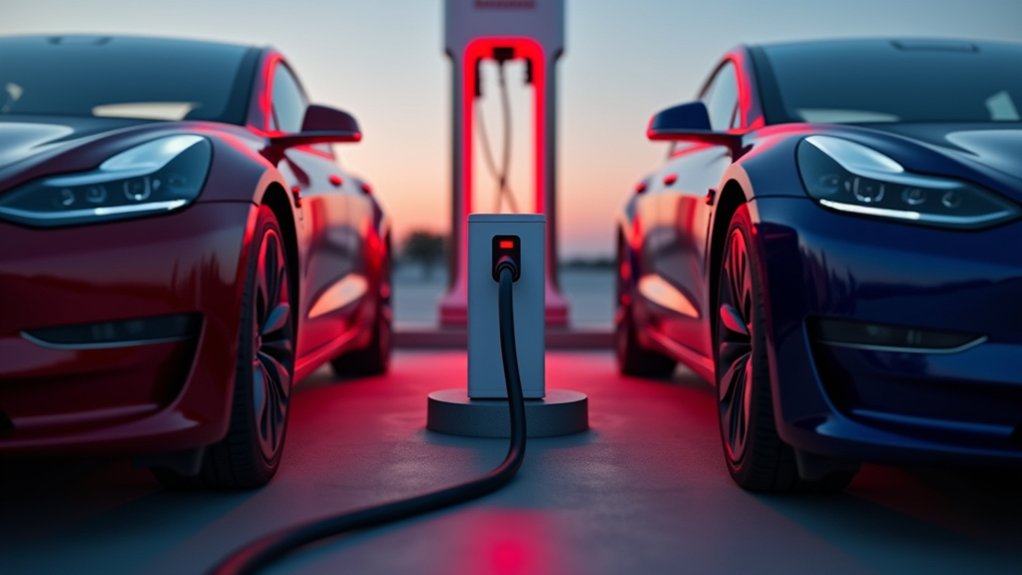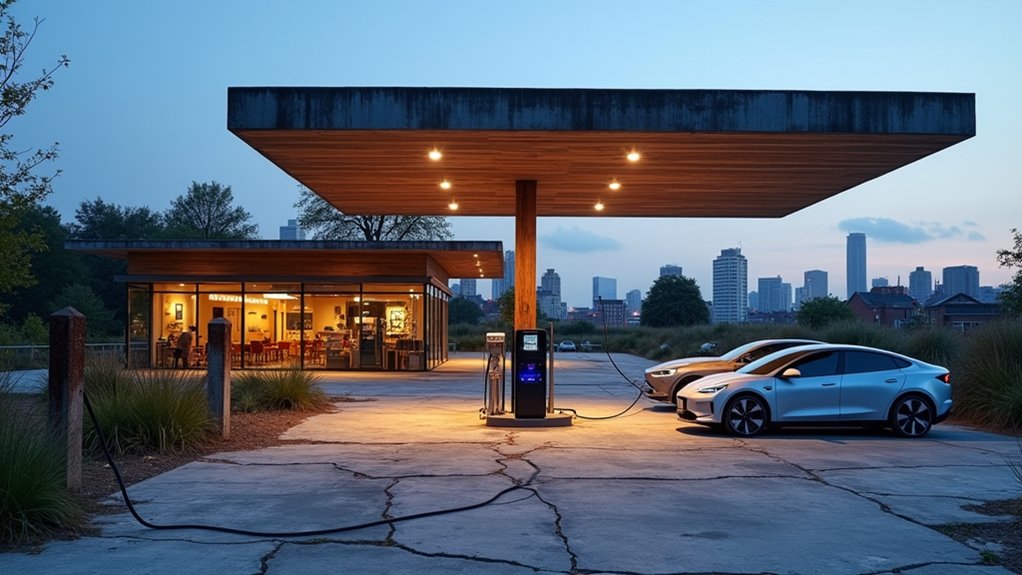

Brighton & Hove City Council has launched what officials describe as the UK’s largest on-street electric vehicle charging infrastructure project, with a substantial £130 million investment aimed at revolutionizing the city’s EV accessibility. The ambitious initiative will deploy over 6,000 charging points across the city, primarily focusing on kerbside solutions that address the needs of the 40% of households without off-street parking options.
Brighton’s groundbreaking £130 million EV project brings 6,000 charging points to residents without driveways, transforming urban mobility.
I’ve examined the proposal documents, and the scale is unprecedented for a city of Brighton’s size.
The funding structure combines a £2.8 million government grant with private sector investment, creating a sustainable financial model that won’t burden local taxpayers. Under the Local Electric Vehicle Infrastructure (LEVI) fund, £440,000 has been specifically earmarked for lamppost chargers, covering 60% of installation costs. The city has been awarded £2.865 million from the government to support this extensive charging network expansion.
The council’s partnership with operators like Char.gy and Blink Charging guarantees competitive rates while potentially generating revenue streams for municipal coffers.
Implementation begins in early 2025, with plans to install 500 charging points annually over three years. The initial phase targets high-density residential areas from Whitehawk to Moulsecoomb and Mile Oak, prioritizing neighborhoods with rental properties and limited private parking.
Traffic Regulation Orders will guide the phased deployment of both lamppost and fast-charging infrastructure.
User accessibility remains central to the rollout, with Char.gy’s PAYG Night Tariff offering affordable overnight charging at 39p/kWh. The comprehensive pricing structure promises to deliver charging costs a third cheaper than current market rates. The infrastructure mix includes both standard lamppost chargers and strategically placed rapid charging stations, providing flexible options for different charging needs. This project addresses the chicken-and-egg scenario that has historically slowed EV adoption by ensuring charging infrastructure is available before widespread vehicle purchases.
The environmental benefits are substantial. By removing barriers to EV adoption, Brighton positions itself at the forefront of sustainable urban transportation.
Kerbside availability eliminates range anxiety while overnight charging at discounted rates incentivizes off-peak electricity use. The project’s thorough approach establishes a blueprint for other UK municipalities facing similar challenges.
When complete, Brighton’s streets will showcase how thoughtful infrastructure planning can accelerate the shift to electric mobility.