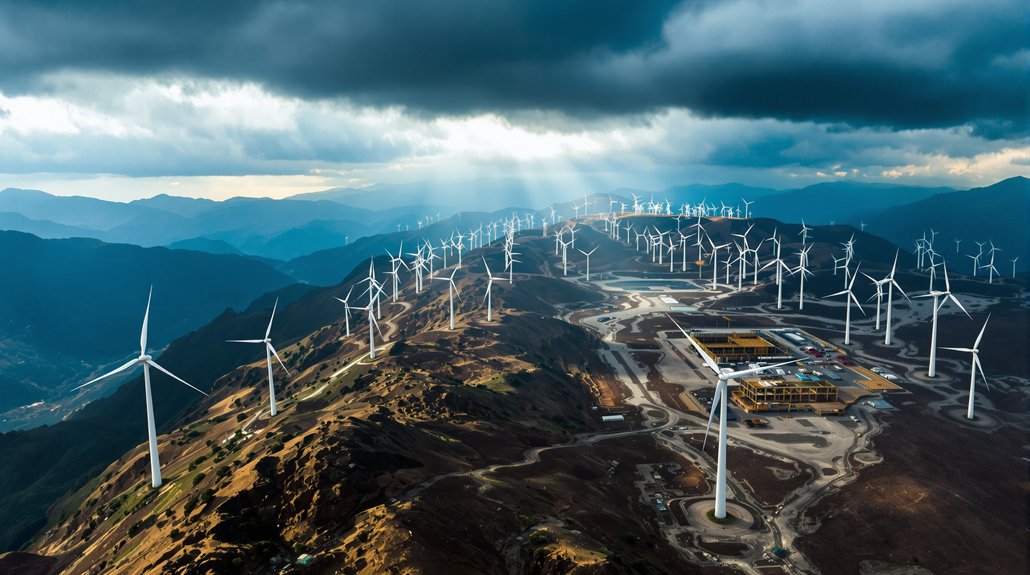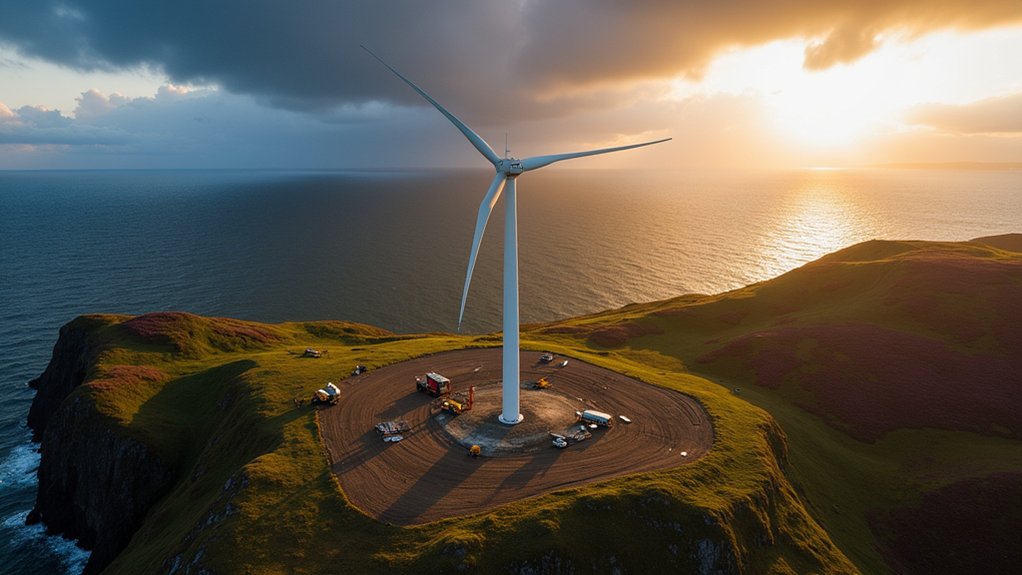

Scotland’s renewable energy landscape continues its dramatic transformation as the nation pushes toward its ambitious 20 GW operational onshore wind target by 2030. The £400 million wind farm project marks a significant advancement in the country’s green energy infrastructure, joining a robust pipeline of 904 projects with an estimated capacity of 65.4 GW. Current projections suggest Scotland will achieve approximately 15.2 GW of operational onshore wind by 2030, though developer-advised future projects indicate the full 20 GW target remains achievable.
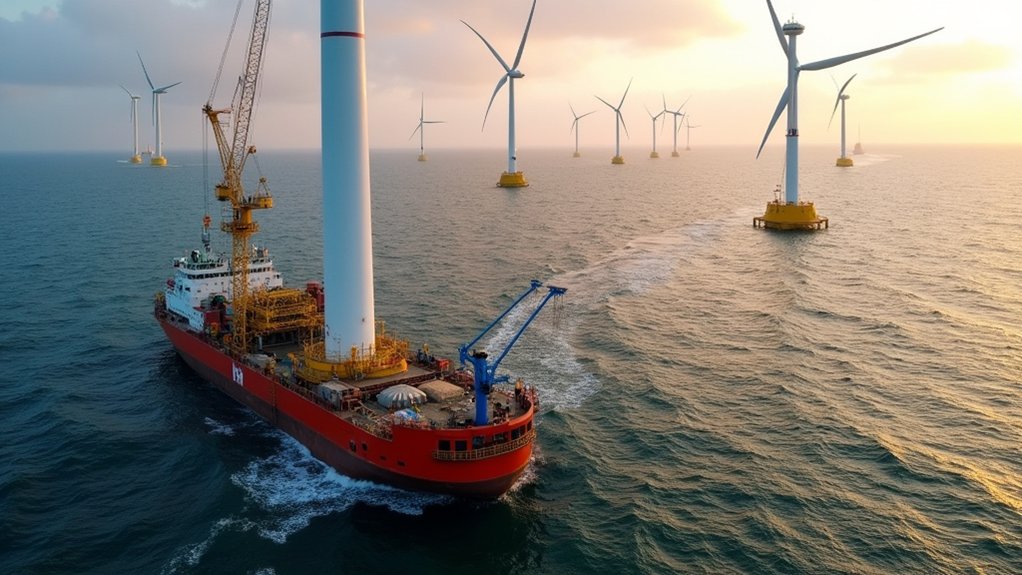
Pre-construction phases for wind developments have become increasingly sophisticated, as evidenced by the recent completion of a two-year wind data gathering campaign for a major offshore project. This meticulous approach to data collection is essential for optimizing turbine placement and output predictions, particularly for the innovative floating offshore installations being deployed in Scotland’s deeper waters. The project utilized two Floating Lidar buoys to measure wind speed and direction at various heights up to 300 meters. The collected data is critically important for accurately predicting energy yield and supporting overall project development decisions.
Sophisticated wind data analysis drives optimal turbine placement for Scotland’s pioneering floating offshore installations.
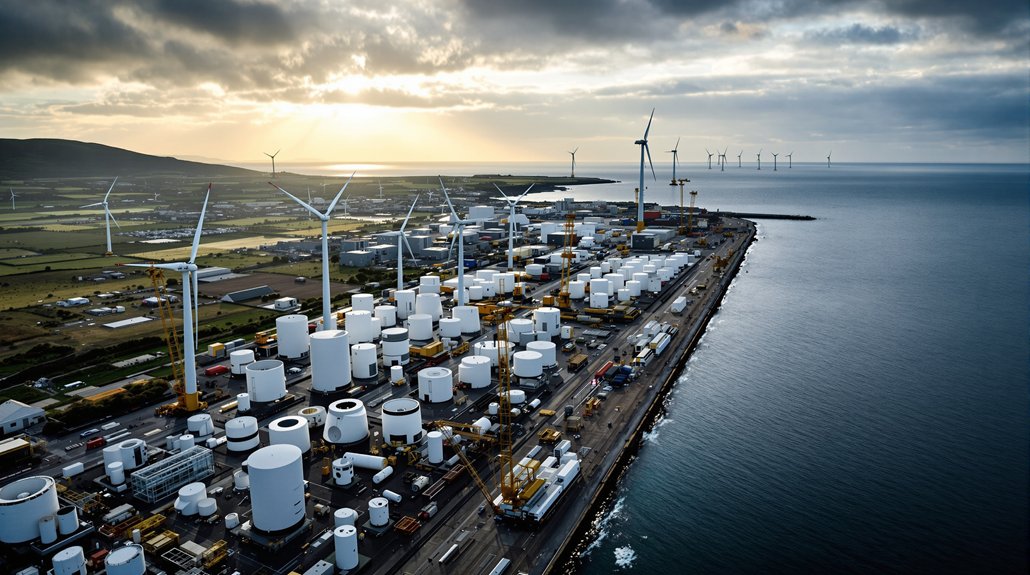
The timeline challenges for wind farm development have shown improvement. Planning and construction periods decreased during 2021-2025, allowing projects to move from concept to operation more efficiently. I’ve observed this acceleration firsthand in the industry, though it’s worth noting few projects have completed their full development cycle under these optimized timelines.
Despite promising growth, Scotland’s wind energy sector faces significant economic hurdles. In 2024, approximately 8.3 TWh of wind energy was curtailed at a direct cost of over £393 million to consumers. This represents a troubling 91% increase in discarded energy compared to previous periods, with indirect costs substantially higher.
Extensive consultation with twenty wind farm developers, representing 65% of the available pipeline capacity, has informed refined projections and identified potential projects not yet publicly announced. Their input has been invaluable in recalibrating expectations about repowering options and project timelines.
As construction begins on this £400 million installation, it joins Scotland’s impressive clean energy portfolio. The continued development of both onshore and offshore wind capacity demonstrates Scotland’s commitment to renewable energy leadership, though challenges in grid infrastructure and energy storage will need addressing to maximize the sector’s potential.