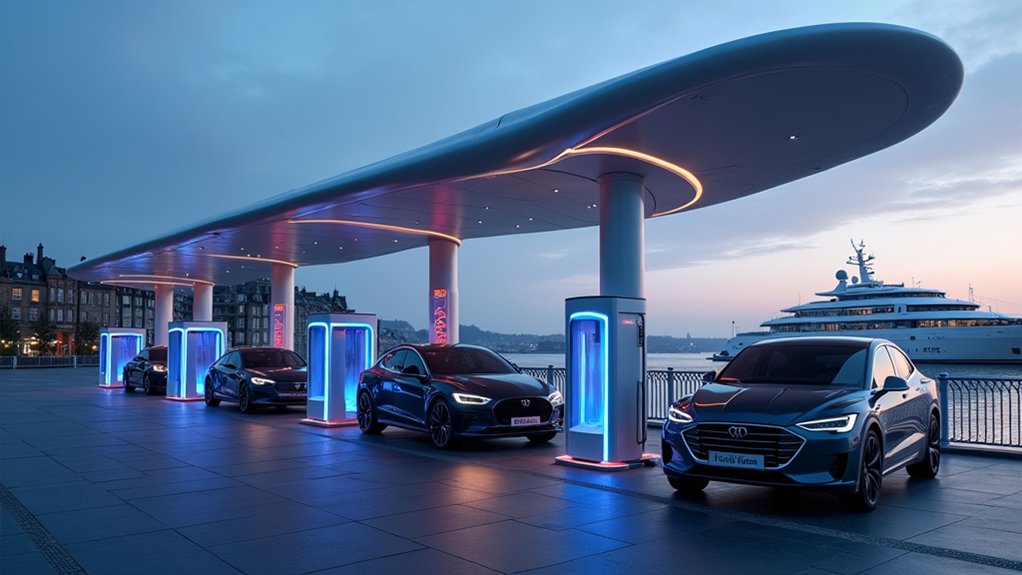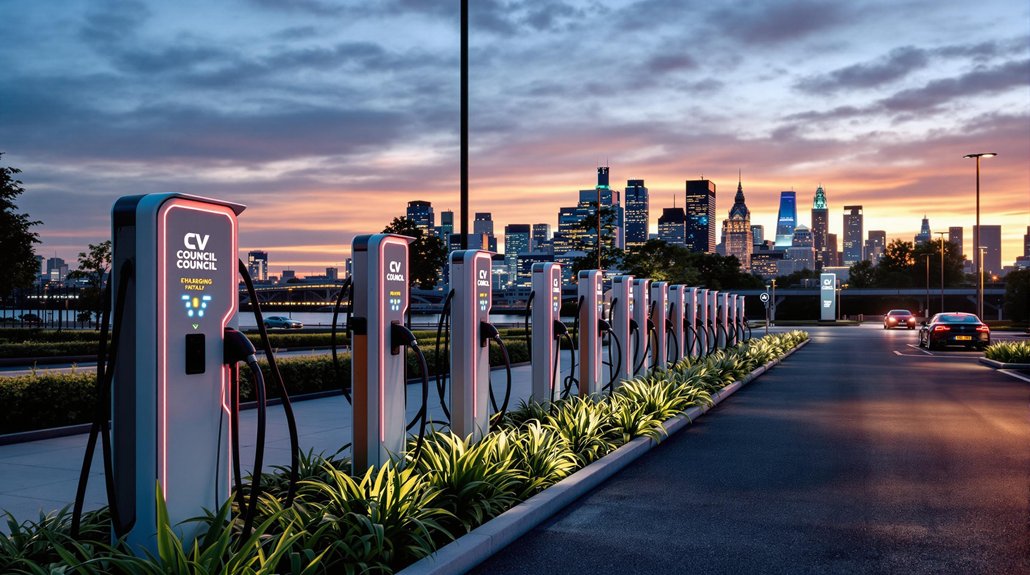

While the UK’s electric vehicle infrastructure has expanded considerably in recent years, the projected rollout of over 50,000 council-owned public EV chargers by 2027 represents an unprecedented acceleration in charging capacity nationwide. Local authorities are spearheading this transformation, with current charger totals expected to double within just two years. This expansion aims to lower barriers to electric vehicle adoption across the country.
The London Boroughs of Greenwich, Tower Hamlets, and Hounslow have each targeted 2,000+ charge points by 2027, while Newham, Barnet, and Enfield plan to install over 1,000 new chargers each within 24 months.
This municipal push complements the rapid growth in high-power charging infrastructure across Britain. The UK has witnessed a 33% year-on-year expansion, with total rapid and ultra-rapid devices increasing from 5,087 in 2021 to 16,698 by June 2025. The first half of 2025 alone saw 1,598 ultra-rapid chargers (150kW+) installed, bringing the nationwide total to 8,619 high-power units. Zapmap data shows a 45% increase in UK charge point installation in 2023, demonstrating the accelerating pace of infrastructure development. Smart charging technologies with load balancing capabilities are being integrated to optimize power distribution and ensure grid stability.
I’ve observed remarkable regional balance in this deployment—Scotland (+29%) and the North West (+21%) have shown particularly impressive growth rates.
Driving this infrastructure revolution is the ZEV mandate, which requires 22% of new cars sold in 2024 to be zero-emission, scaling to 80% by 2030. The Smart Charging Regulations have simultaneously transformed private charging, mandating off-peak scheduling capabilities and robust cybersecurity provisions for all new installations.
The UK’s charging revolution accelerates under dual forces: ambitious ZEV mandates driving adoption while Smart Charging Regulations optimize grid integration.
The financial opportunity is substantial. UK EV charging point revenue is projected at £149 million in 2024, climbing to approximately £210 million in 2025. Commercial property owners and Charge Point Operators (CPOs) stand to capture significant returns as the network expands.
With 70% of English households having access to off-street parking, the combination of private smart charging and extensive public infrastructure creates a robust ecosystem.
This coordinated approach to charging deployment—balancing council-led initiatives with commercial investment and home charging solutions—positions the UK to effectively support the accelerating shift to electric vehicles while advancing critical Net Zero objectives.