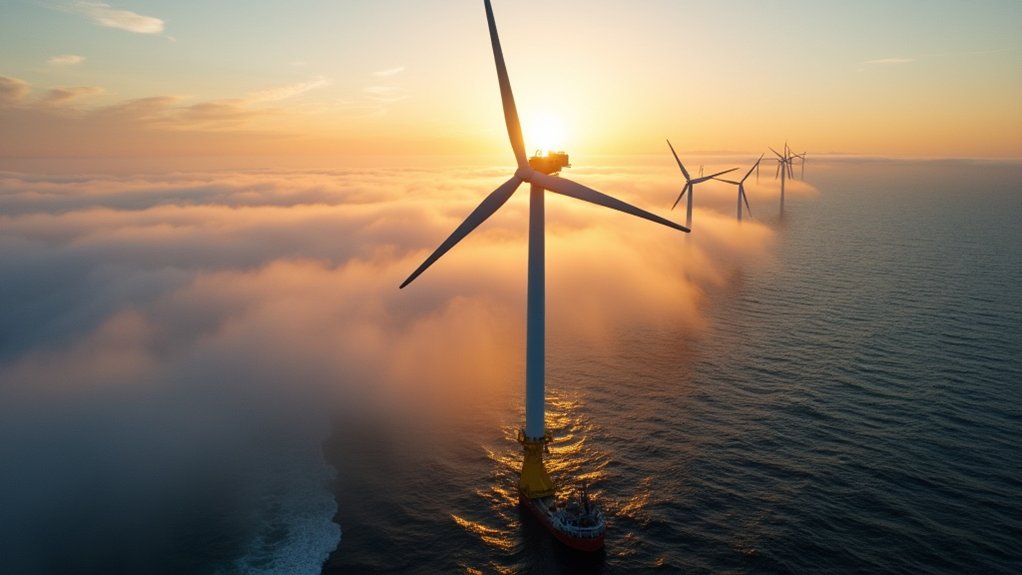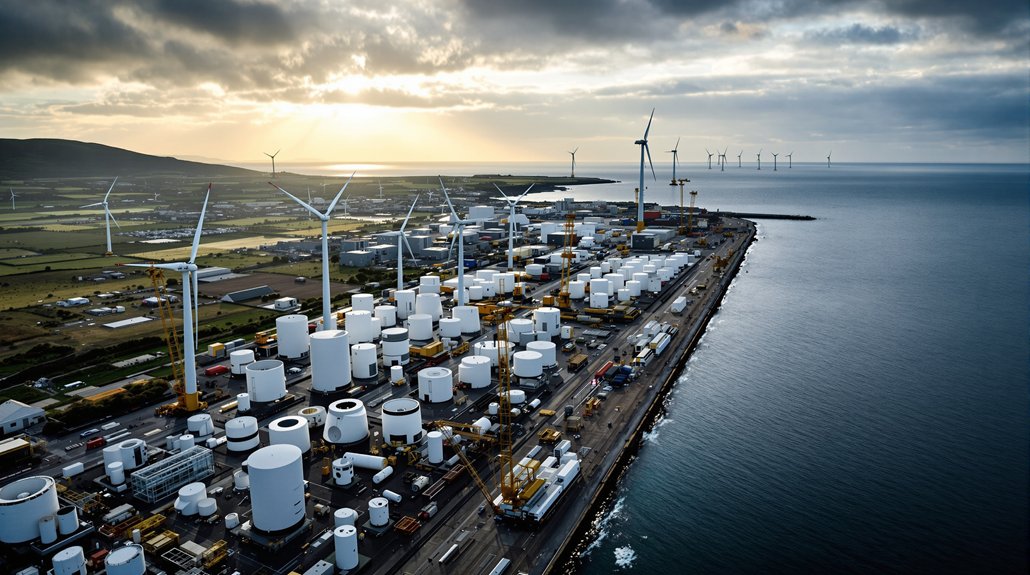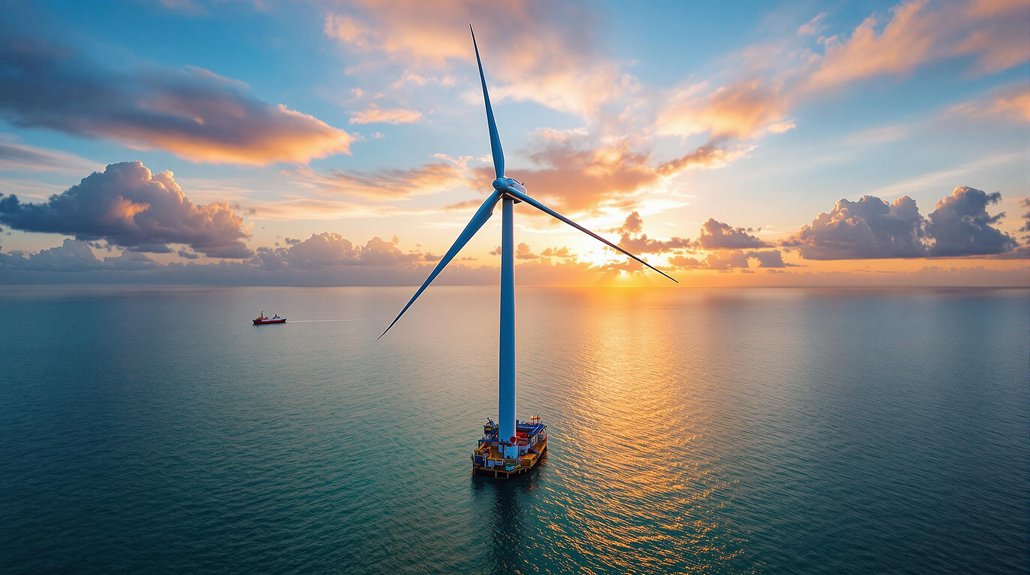

Three colossal wind turbines have catapulted China to the forefront of global renewable energy innovation, with the country’s engineers shattering previous records for both size and output capacity. The 26 MW offshore turbine by Dongfang Electric, 20 MW “Qihang” floating unit by CRRC, and 17 MW direct-drive floating model represent an unprecedented leap in renewable energy generation.
These engineering marvels dwarf their predecessors—Qihang’s 853-foot rotor diameter spans the equivalent of seven football fields, creating a swept area that captures wind with extraordinary efficiency.
What’s particularly impressive is the localization of critical components previously dominated by Western manufacturers. The 17 MW model utilizes domestically produced large-diameter main shaft bearings, while achieving full localization of blades, generators, converters, and transformers. This supply chain independence gives China remarkable flexibility in deployment and cost management.
The performance metrics are equally stunning. With time availability exceeding 99%, these turbines maintain generation through extreme conditions, withstanding level 17 super typhoons and waves exceeding 24 meters.
I’ve examined similar offshore installations, and nothing matches the Chinese units’ durability-to-output ratio. The Qihang alone can reduce CO2 emissions by 68,500 tons annually—equivalent to removing 14,000 cars from the road.
Technical sophistication extends to the drivetrain, where advanced permanent magnet direct-drive motors eliminate the maintenance-intensive gearbox components that plague earlier designs. Blade tip speeds rival high-speed trains, yet precision manufacturing guarantees reliable operation despite enormous centrifugal forces.
China’s wind energy sector has completed the shift from technology follower to undisputed leader. These mega-turbines outperform previous records from Envision Energy (16.7 MW) and other global competitors.
A single 17 MW turbine generates sufficient electricity for 40,000 households—approximately 68 million kWh annually. The turbines’ advanced design features superior motion adaptability that maintains power generation even when the floating platform experiences significant tilting. The rapid scaling of these technologies supports China’s “dual carbon” goals while positioning the country as the new epicenter of wind energy innovation, leaving Western manufacturers scrambling to catch up. Engineers equipped Qihang with over 200 test points to continuously monitor performance metrics in various marine conditions.