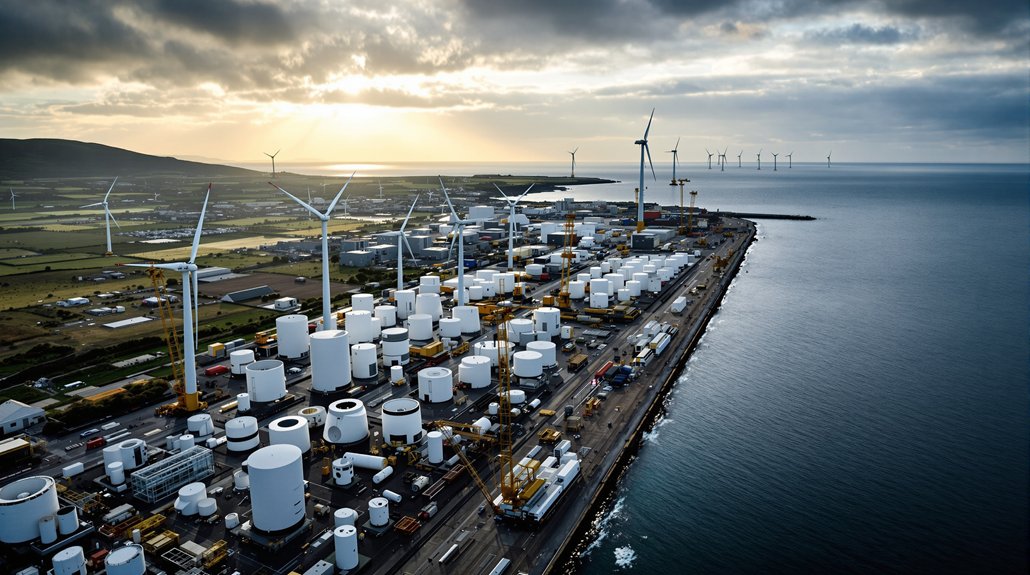

While the shift to renewable energy continues to gain momentum worldwide, the comparison between natural gas and wind and solar power reveals substantial economic and operational differences worth examining. Recent modeling shows offshore wind in New England could be up to twelve times more expensive than combined cycle natural gas by 2050 when reliability factors are included. This staggering cost differential stems from the substantial infrastructure investments and backup systems required to maintain grid stability.
The financial picture becomes even clearer when examining all-in costs. Wind and solar are projected to be six to twelve times more expensive than existing natural gas when accounting for reliability and necessary backup power sources. Achieving net-zero via renewables in New England alone would require an additional $815 billion by 2050, inevitably driving electricity prices upward for consumers and businesses alike. Western power grids are already showing signs of increasing instability due to growing dependence on intermittent energy sources. Natural gas plays a crucial reliability role during the renewable energy transition by providing flexible generation capacity that can rapidly respond to variable renewable energy fluctuations.
Reliability presents perhaps the most significant challenge for wind and solar. Their intermittent nature creates unpredictable generation patterns that current battery technologies cannot fully mitigate. Natural gas, meanwhile, provides dispatchable power on demand, regardless of weather conditions. I’ve observed that grid operators consistently rely on natural gas to maintain stability during low renewable output periods.
From an efficiency standpoint, the comparison isn’t straightforward. Natural gas achieves approximately 90% efficiency for heating applications but drops to around 30% when converted to electricity. Wind turbines reach roughly 45% conversion efficiency but suffer from availability limitations that natural gas doesn’t experience.
The environmental ledger shows mixed results. Wind and solar produce no direct emissions during operation, giving them a clear advantage in that category. However, their manufacturing and land-use requirements present environmental tradeoffs worth considering. Natural gas produces fewer emissions than coal or oil but still contributes to greenhouse gas accumulation.
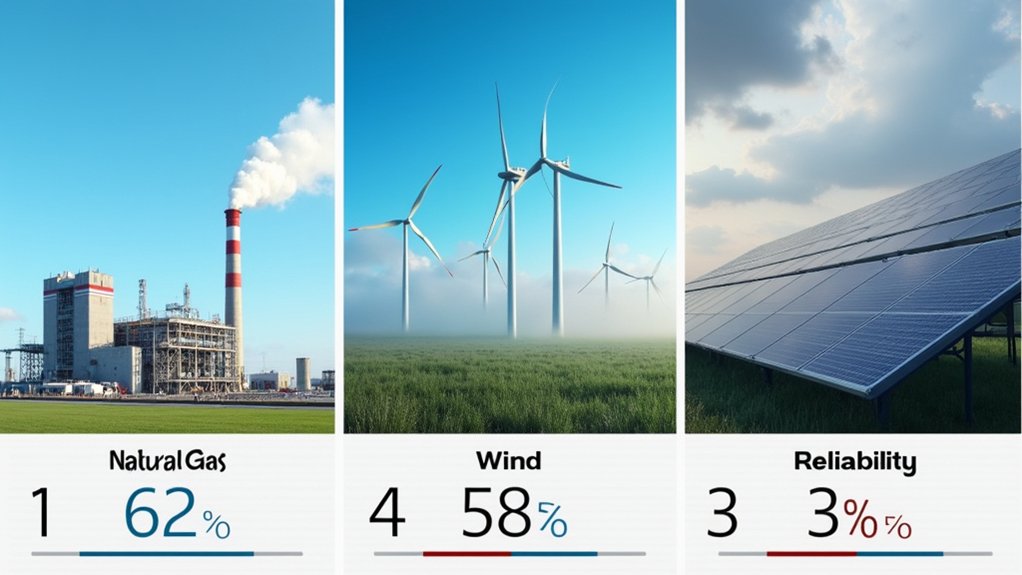
Ultimately, the scorecard presents natural gas as the current leader in affordability and reliability, while renewables offer superior emissions performance but struggle with intermittency and system-wide costs. These tradeoffs will continue shaping energy policy decisions for decades to come.