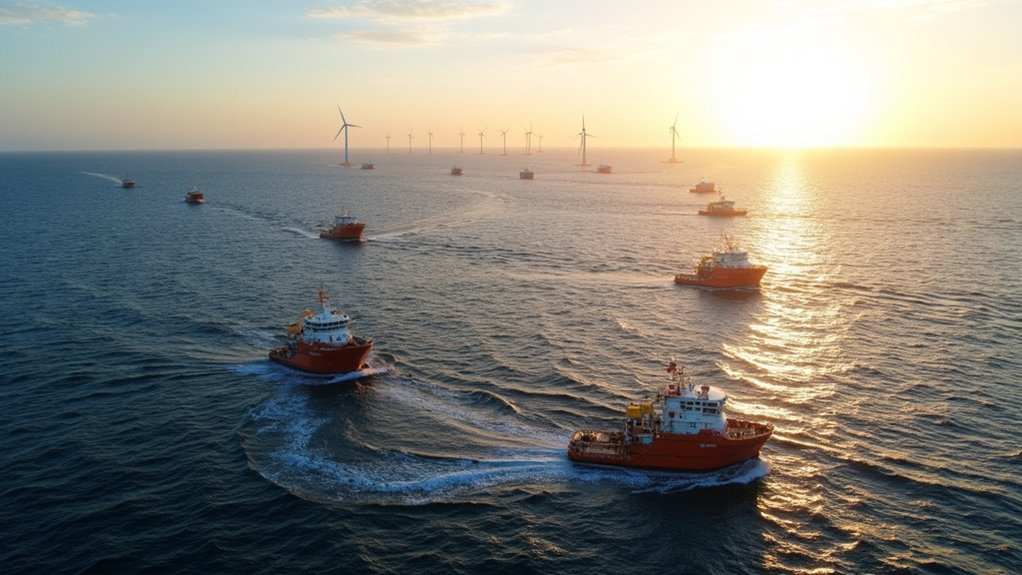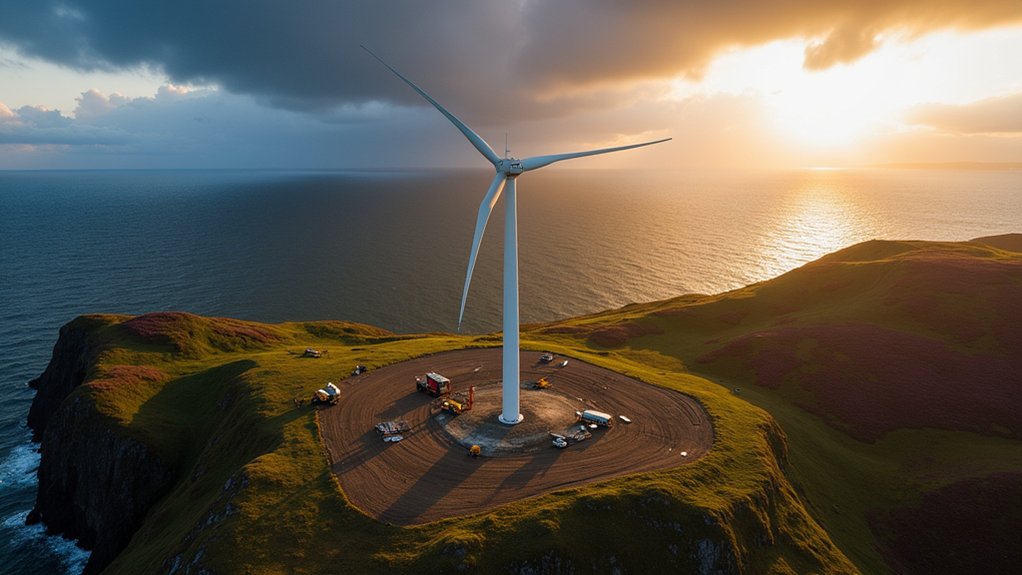

As global temperatures continue to rise due to greenhouse gas emissions, the intricate relationship between climate change and wind power generation is becoming increasingly crucial for energy planners worldwide. Climate models project considerable shifts in global wind patterns by 2100, with average annual wind speeds potentially declining by up to 10% globally according to IPCC forecasts. This presents a considerable challenge for a sector that’s rapidly expanding its footprint in our energy landscape.
Wind power currently contributes notably to electricity generation—29% in the UK, 18% across the EU, and approximately 10% of utility-scale electricity in the United States. With global installed capacity reaching roughly 1 terawatt and expected to double by 2030, the stability of wind resources has never been more critical. I’ve observed that these projections remain below what’s needed for net zero targets, and declining wind speeds could widen this gap further.
The climate-wind relationship varies markedly by region. Under low emissions scenarios (below 2°C warming), about 11% of global wind power plants may experience a 5% decrease in average wind speeds. This percentage jumps to 18% under high emissions scenarios exceeding 4°C warming. Arctic regions are warming faster than tropical areas, weakening temperature gradients that drive our planet’s wind systems. Recent data shows the Arctic is warming four times faster than the global average since 1979, exacerbating this gradient loss.
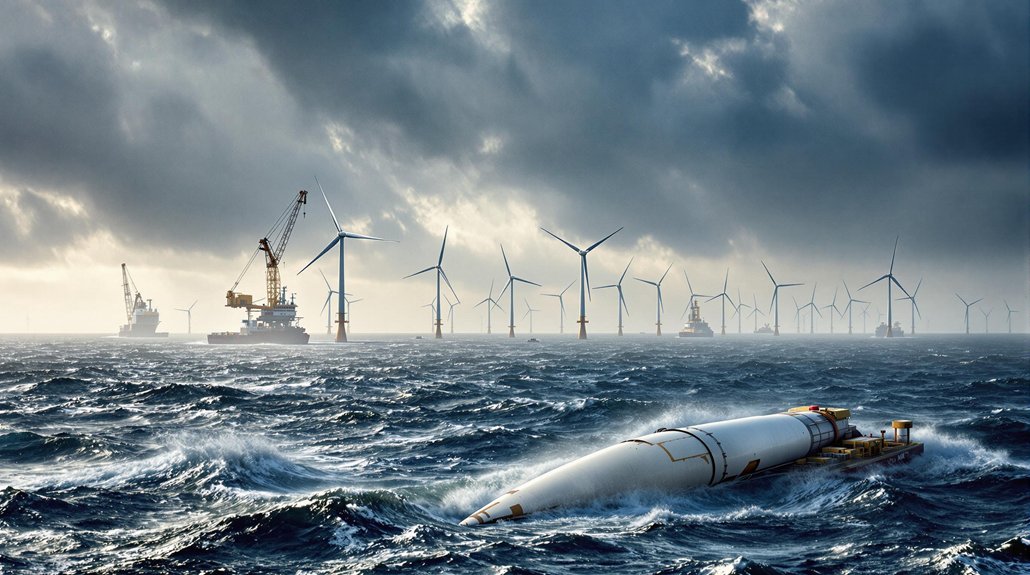
Compounding these challenges, climate change is intensifying extreme weather events that threaten wind infrastructure. Increased lightning strikes, severe storms, and heatwaves can reduce turbine lifespans, elevate repair costs, and extend operational downtimes. Texas wind farms, with their higher storm exposure, face particularly elevated risks. The EIA’s Environmental Impact Analysis of renewable energy sources shows that despite these challenges, wind energy still produces significantly fewer emissions than fossil fuel alternatives.
Grid stability concerns are mounting as wind’s contribution to the energy mix grows. Reduced and increasingly variable wind speeds could necessitate additional storage solutions and flexible backup systems. Without proper adaptation strategies, fluctuating wind output might lead to greater reliance on fossil fuel backups—ironically undermining climate mitigation efforts.
The renewable energy shift, while necessary, must account for these evolving atmospheric dynamics to guarantee resilient energy systems.