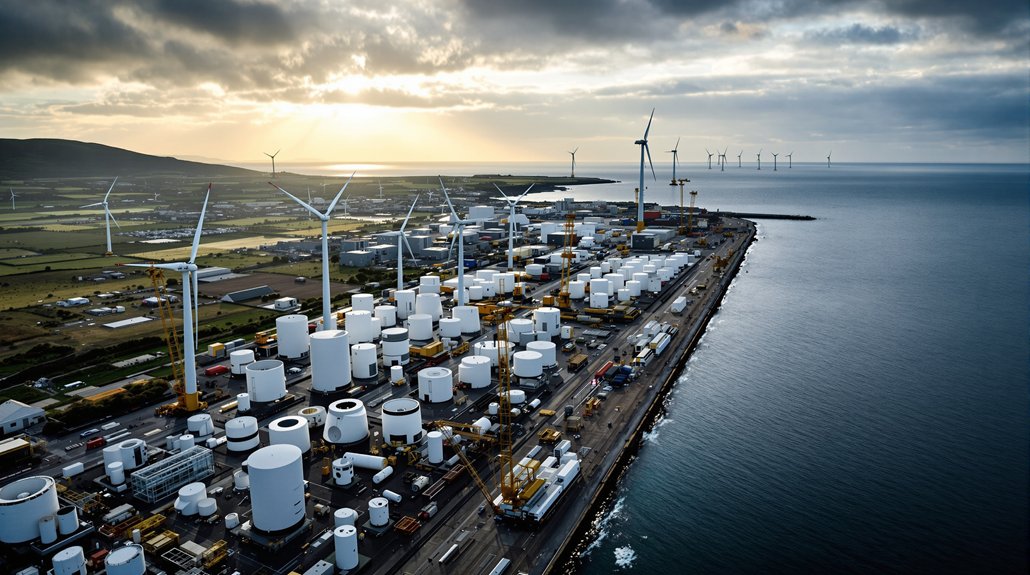

Despite ambitious initial projections, Dogger Bank A, a critical component of what will become the world’s largest offshore wind farm, has experienced significant delays pushing its grid connection timeline to the first half of 2025—a full year behind schedule.
Flagship offshore wind project faces year-long delays as North Sea realities overpower ambitious development timelines.
The entire 3.6 GW Dogger Bank complex may now require until the end of 2027 for complete turbine installation, according to equipment supplier GE Vernova, further extending the project’s commissioning timeframe.
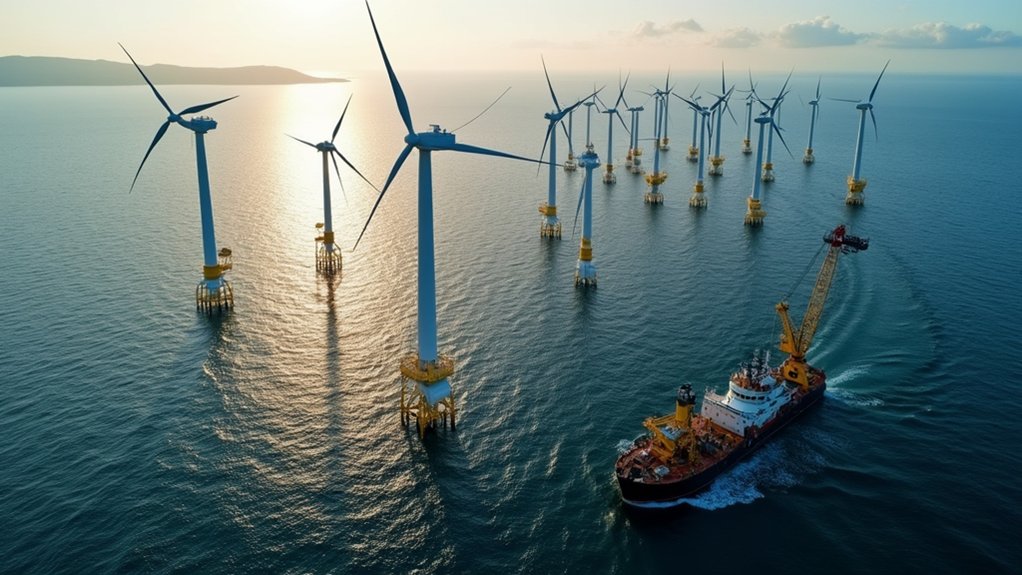
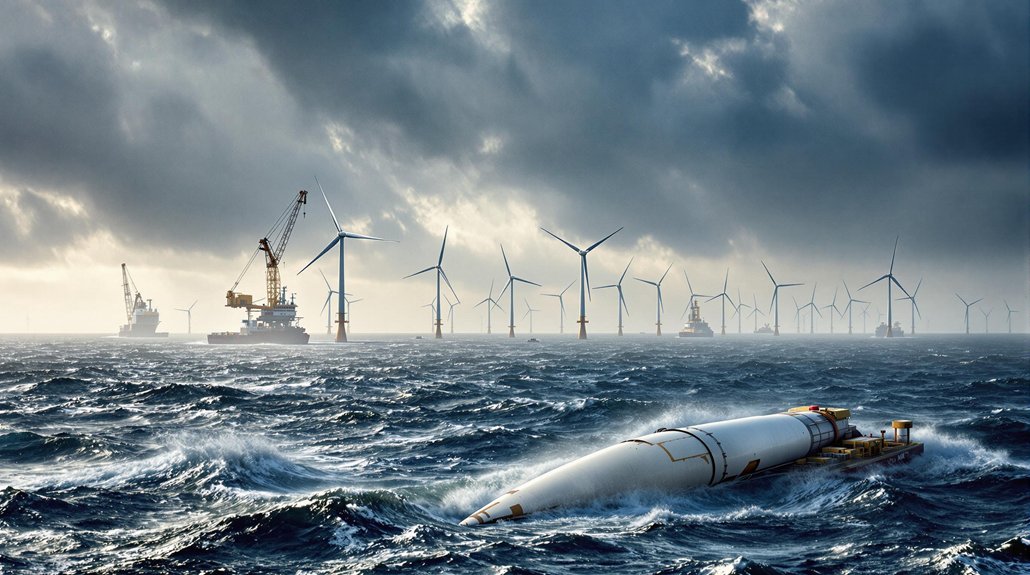
The North Sea‘s notoriously harsh weather conditions have emerged as a primary culprit behind these setbacks. Installation vessels, already in limited supply globally, have struggled to maintain operational windows in the challenging offshore environment.
These vessels—specialized platforms designed for precise turbine placement—simply cannot operate safely during extreme conditions, creating bottlenecks that ripple throughout the construction schedule.
Project developers have confirmed that all monopiles and interconnection pieces are now in place, with inter-array cable installation “well progressed.” However, a turbine blade damage incident earlier this year necessitated a temporary halt to installation activities, further compounding delays.
I’ve observed similar technical challenges across multiple offshore projects, though Dogger Bank’s scale magnifies their impact.
Financial implications remain significant yet manageable. SSE, a key stakeholder, anticipates substantial operating profit increases once Dogger Bank A begins even partial operation.
The company maintains that despite scheduling setbacks, long-term project returns should remain largely intact—a critical factor for maintaining investor confidence.
This delay mirrors broader industry patterns, where specialized vessel shortages, weather disruptions, and regulatory hurdles have created a domino effect across global offshore wind development.
Despite these challenges, the sector anticipates 19 GW of new capacity in 2025, suggesting resilience amid difficulties.
These challenges reflect a pattern seen across the industry, with Final Investment Decisions for several major European projects delayed until 2025.
For Dogger Bank specifically, the revised timeline represents a sobering reality check for the ambitious project.
Yet with foundation infrastructure in place and cable work advancing, the development continues its methodical progression toward eventual completion—albeit at a pace dictated more by North Sea conditions than developers’ original aspirations.
SSE expects installation activities to proceed without interruption over the summer months, with the installation vessel returned to the site to resume operations as weather conditions improve.