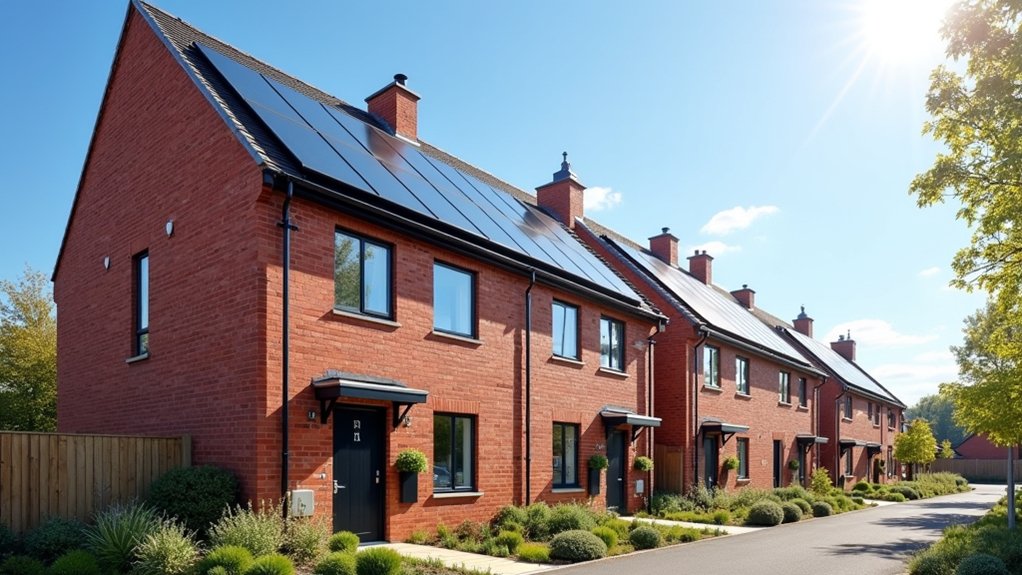

A revolution in sustainable housing is underway across the UK, with solar power installations on new homes surging to unprecedented levels. Recent statistics reveal a dramatic shift: 42% of new homes built in England during Q4 2024 now feature solar panels, compared to just 13% in the same period the previous year. This evolution represents over a threefold increase in solar-equipped housing within a mere 12 months, with industry estimates showing 18,954 solar installations among 45,070 new completions.
The catalyst behind this rapid adoption stems primarily from increasingly stringent energy efficiency requirements in Building Regulations. These government mandates have effectively driven developers to incorporate photovoltaic technology, without requiring new legislation. A proposed bill that would have explicitly required solar panels on all new homes was rejected, yet the market has responded to existing regulatory frameworks nonetheless. The revised ‘Part L’ rules on energy efficiency implemented in June 2023 have been particularly influential in driving this solar adoption.
Regulatory frameworks quietly transformed the housing market, achieving through incentives what direct legislation could not mandate.
I’ve observed that regulatory frameworks often achieve meaningful changes more effectively than direct mandates.
England still trails behind Scotland, where approximately 80% of new homes now incorporate solar technology due to even stricter building standards. The regulatory disparity explains the adoption gap between the nations, though England appears to be catching up rapidly. With solar energy now accounting for 4.9% of electricity in the UK’s national grid, the impact of residential installations continues to grow significantly. The forthcoming Future Homes Standard is expected to further accelerate this trend, potentially making solar installations a de facto requirement for most new construction.
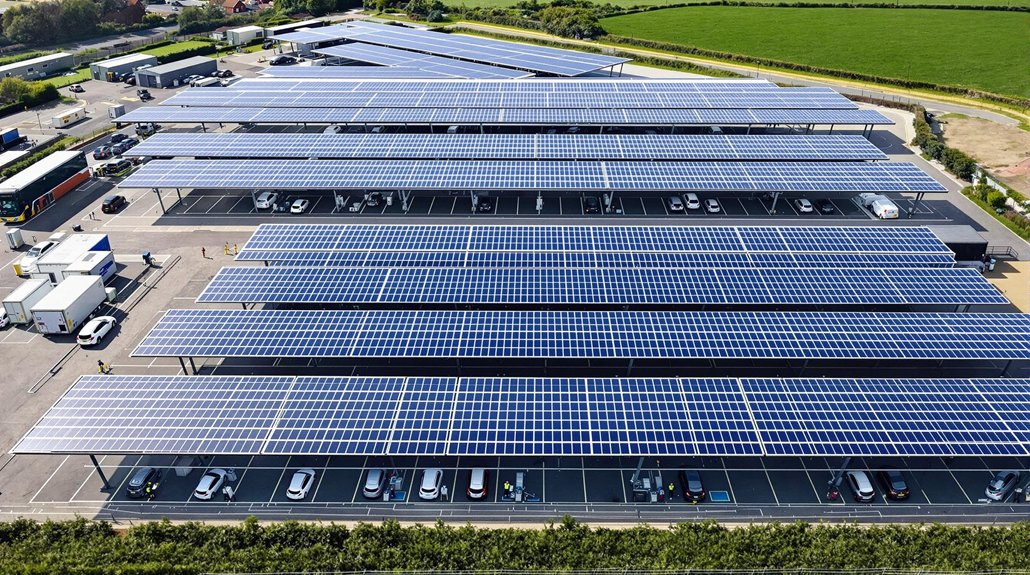
The broader impact is substantial. The UK now boasts over 1.5 million solar-equipped homes, a remarkable increase from just 28,211 in 2010. This expansion delivers tangible benefits: reduced energy bills, enhanced household energy security, and meaningful contributions toward national emissions targets.
For homeowners, the integration of solar technology as a standard feature rather than an expensive retrofit represents substantial value. The solar industry has successfully scaled to meet this surging demand, creating skilled jobs while simultaneously advancing sustainability goals.
As regulations continue to tighten, England’s solar adoption rates are expected to approach Scotland’s current levels, cementing photovoltaics as a standard feature in modern British housing.