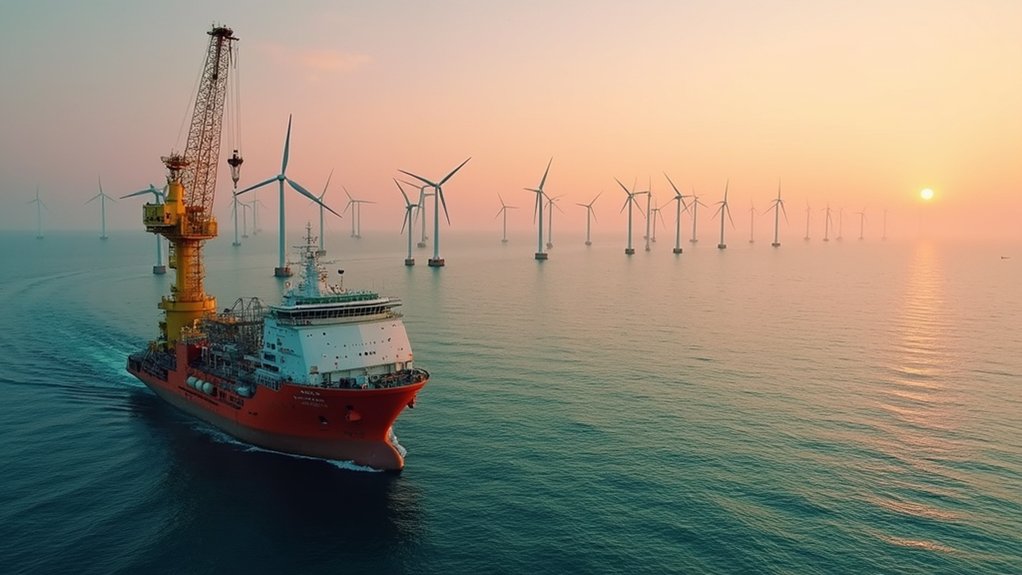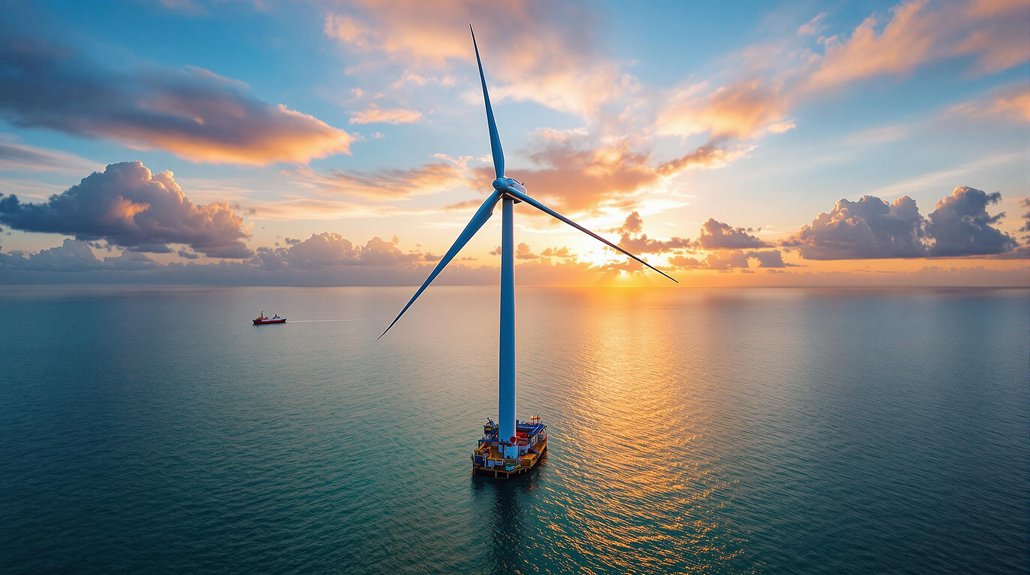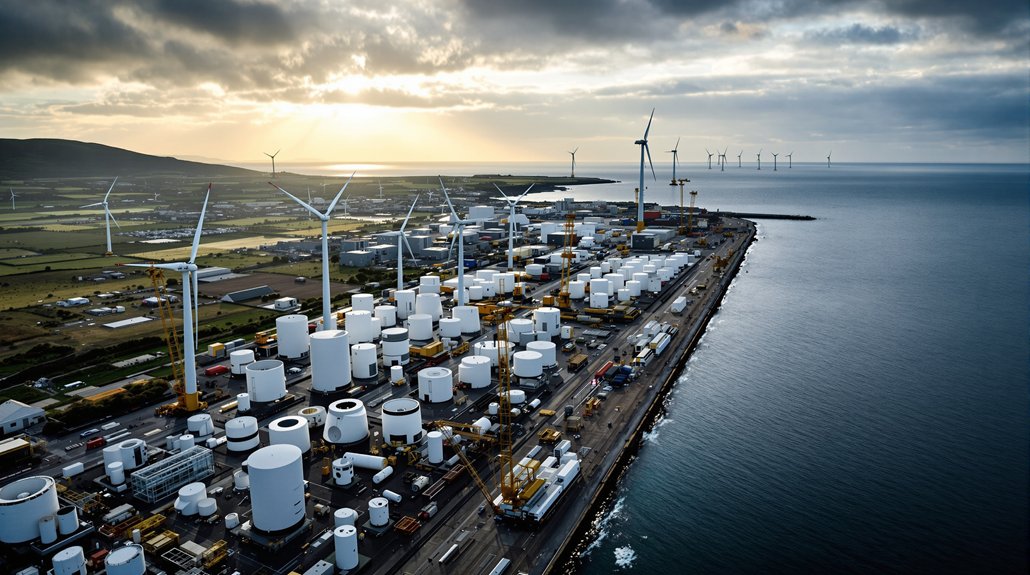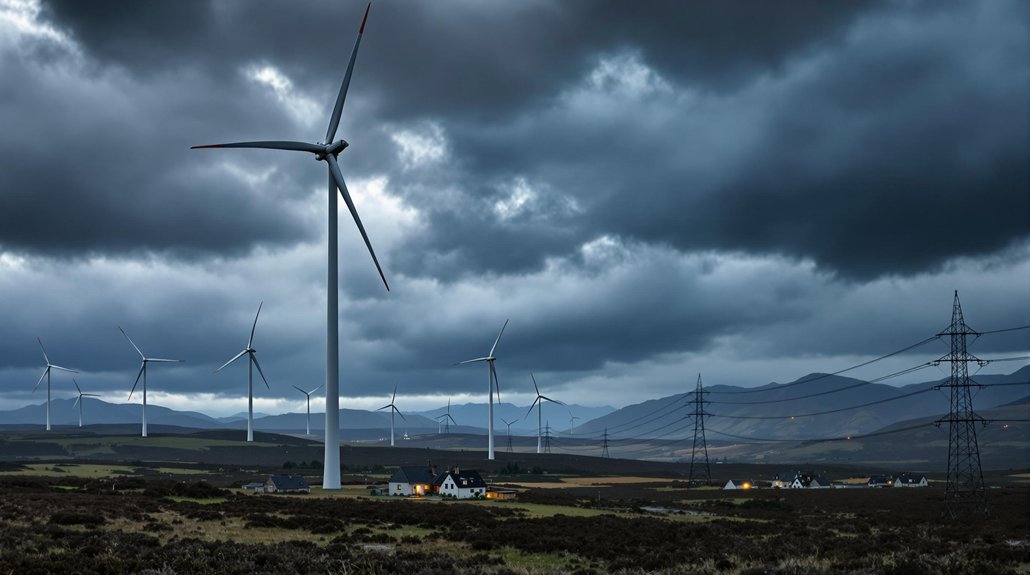
Millions of Scottish households could have been powered entirely by clean energy that was instead deliberately switched off during the first half of 2025. This massive curtailment of renewable energy reached over 5.5 TWh across Great Britain and Ireland, with Great Britain alone accounting for 4.6 TWh—a 15% increase compared to the same period in 2024.
In Scotland, renewable energy sufficient to power millions of homes sits wasted, deliberately curtailed despite its clean potential.
Northern Scotland bore the brunt of this waste, representing over 86% of GB’s curtailed volume. The economic impact of this curtailment is substantial. Generators received £152 million in curtailment payments across GB and Ireland, with Northern Scotland‘s curtailed wind costing over £116 million. These costs are ultimately passed on to consumers through their energy bills.
I’ve analyzed the data and found the situation particularly troubling given Scotland’s impressive renewable capacity growth to 17.7 GW by March 2025—a 13.9% increase year-on-year. The approximately 4 TWh of wind energy turned off in Northern Scotland during H1 2025 could have powered every domestic household in Scotland for six months. Scotland has maintained consistent renewable capacity increases of over 700MW annually since 2009, making this waste even more significant.
This comparison illustrates the opportunity cost to consumers rather than representing actual metered supply. The curtailment occurs primarily due to network constraints in northern zones where generation capacity exceeds transmission capability.
Scotland’s renewable pipeline shows promising development with 951 projects totaling an estimated 70.7 GW by March 2025. Battery storage represents the largest share at 23.9 GW, offering potential curtailment mitigation through temporal shifting of energy. This flexibility will be essential as Scotland’s wind capacity continues to expand both onshore and offshore.
The environmental implications are significant. Scotland’s electricity generation produced just 20.7 g CO2e/kWh in 2023, and utilizing more renewable energy would further displace fossil fuel generation. Each curtailed megawatt-hour represents foregone zero-carbon output that could contribute to net-zero targets.
The integration of storage with wind generation offers a pathway to reduce future turn-down events and maximize renewable utilization.