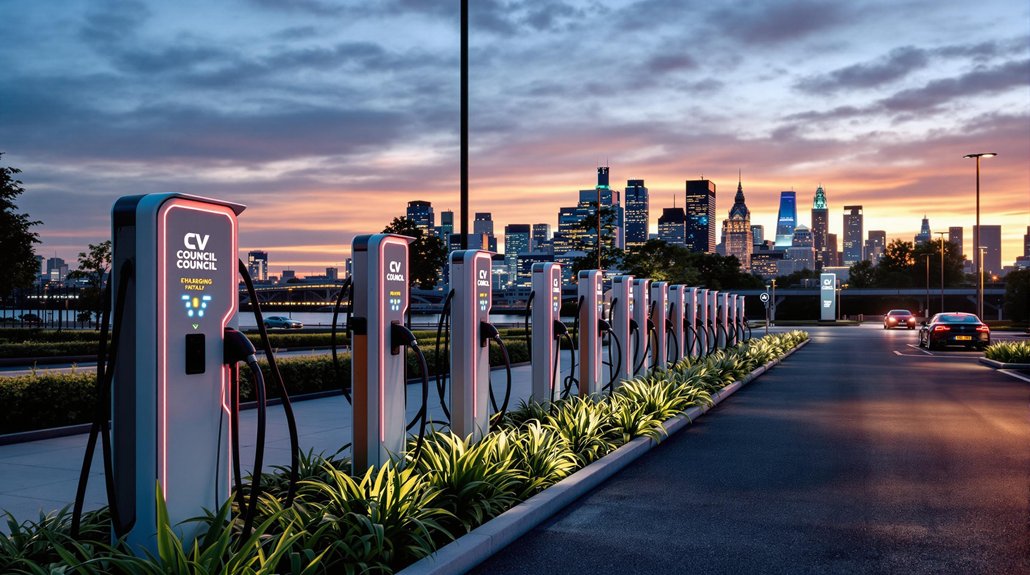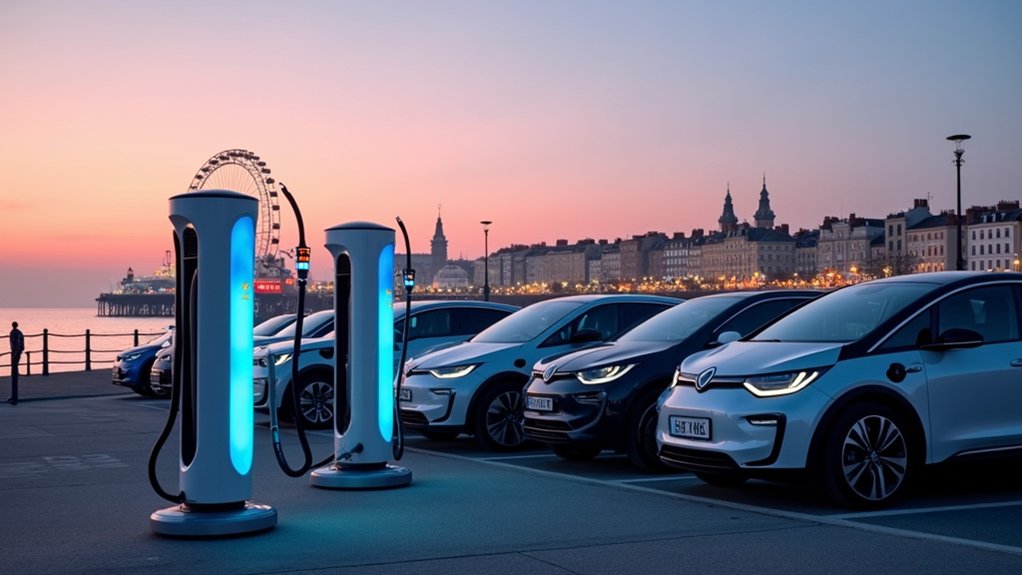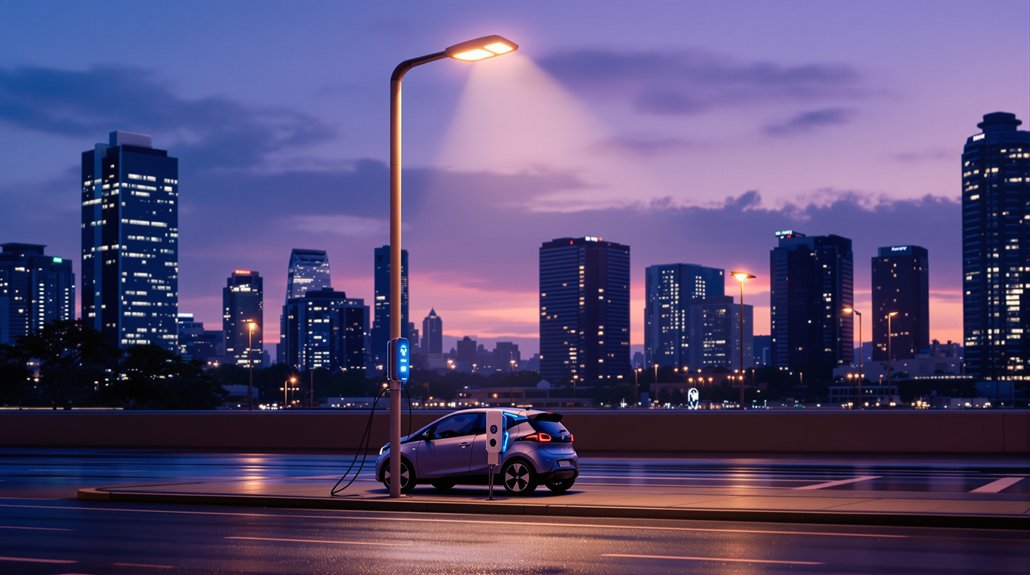

As cities transform into electrified transit hubs, the explosive growth of urban EV charging infrastructure has become impossible to ignore. The global market, valued at $31.91 billion in 2024, is projected to reach a staggering $258.53 billion by 2033—a 26.17% CAGR that underscores the sector’s remarkable trajectory. This expansion is particularly evident in dense urban centers where utilization rates can reach 40% during peak hours, compared to the national average of 16.2%.
Streetlight charging initiatives represent one of the most innovative approaches to urban deployment challenges. By leveraging existing electrical infrastructure, these conversions greatly reduce installation costs while maximizing accessibility in space-constrained environments. The concept is elegantly simple: transform thousands of ordinary streetlights into dual-purpose assets that provide both illumination and EV charging capability. The integration with renewable energy sources can further enhance the sustainability profile of these urban charging solutions.
The Northeast region, which already boasts the highest charger density nationwide, has become a natural testing ground for these streetlight conversions. Massachusetts, Connecticut, and Rhode Island—states with limited geographic footprints but substantial urban populations—have embraced this approach to boost their already impressive charger-to-population ratios. I’ve observed these deployments firsthand, and their integration into the urban landscape is remarkably seamless.
This strategy addresses a critical pain point: apartment dwellers and rideshare operators who lack access to home charging solutions. In metropolitan areas like New York, Miami, and Los Angeles, these demographics drive utilization rates far above national averages. Streetlight chargers, typically Level 2 units capable of providing 20-30 miles of range per hour, offer a practical solution without requiring dedicated real estate. The trend toward fixed pricing models in 80% of charging stations nationwide provides users with consistent and predictable costs when using these urban solutions.
The reliability factor cannot be overlooked. With the Paren’s Reliability Index climbing to 82.6 in early 2025, confidence in public charging infrastructure is growing. These streetlight installations, connected to smart urban monitoring systems, contribute to this upward trend by enabling real-time status updates and preventative maintenance. Expanding urban charging networks helps reduce transportation emissions by providing convenient alternatives to gasoline vehicles in densely populated areas.
The urban charging revolution isn’t just expanding—it’s becoming increasingly dependable, one converted streetlight at a time.