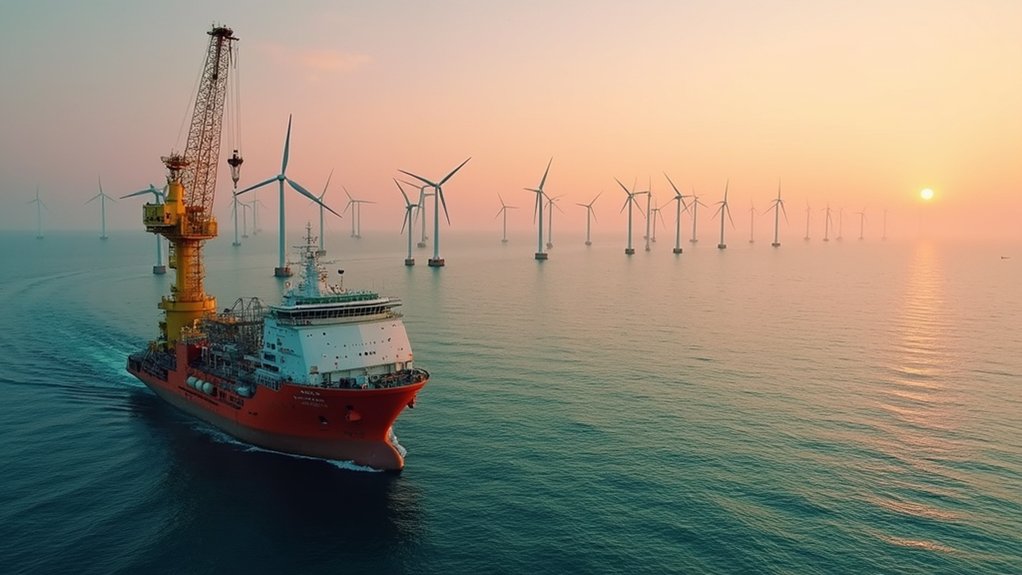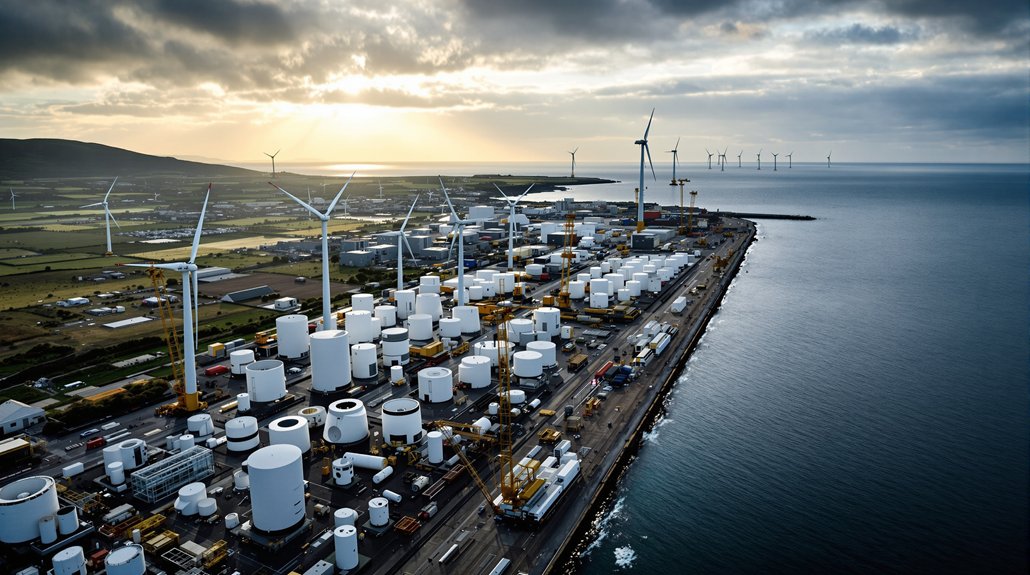
A maritime revolution is underway along Ireland’s rugged coastlines as the country positions itself to become a global powerhouse in offshore wind energy. The Irish government has laid out an ambitious roadmap aiming to deliver 20GW of offshore wind capacity by 2040, expanding to at least 37GW by 2050. These targets would transform Ireland into what some industry experts refer to as the “Saudi Arabia of offshore wind” – a fitting analogy for the scale of renewable resources available in Irish waters.
Ireland achieved a significant milestone in May 2023 with its first offshore wind auction (ORESS 1), which selected four projects with a combined capacity of 3.1GW. These developments – North Irish Sea Array, Dublin Array, Codling Wind Park, and Sceirde Rocks – represent the vanguard of Ireland’s offshore wind ambitions. The projects will deliver over 12TWh of clean electricity, an important step toward the government’s goal of 80% renewable electricity by 2030.
Ireland’s first offshore wind auction marks a pivotal moment in the nation’s ambitious journey toward renewable energy dominance.
Despite these promising developments, Ireland’s offshore wind sector faces substantial challenges. The country currently has just one operational offshore wind farm, the Arklow Bank Phase 1, built over two decades ago. Recent delays in the ORESS 2.1 auction have raised concerns about maintaining momentum. Even with the completion of all six “Phase 1” projects currently in development, Ireland will fall short of its 5GW by 2030 target.
The regulatory framework has evolved substantially with the introduction of Maritime Area Consents (MACs) and the establishment of the Offshore Wind Delivery Taskforce. May 2024 saw the launch of the Future Framework for Offshore Renewable Energy and the draft South Coast Designated Maritime Area Plan, outlining pathways for development through 2050. The framework includes 29 key actions designed to facilitate long-term offshore wind development and maximize economic returns.
Major international energy players including EDF, RWE, and Statkraft have invested in Irish offshore projects, recognizing the country’s extraordinary wind resources. The successful shift from Phase 1 to Phase 2 development will determine whether Ireland can fulfill its potential as Europe’s wind energy powerhouse or whether these ambitious plans remain largely unrealized. The recent cancellation of the Sceirde Rocks development has dealt a significant blow to Ireland’s offshore ambitions, reducing the projected capacity by 450 MW. The stakes couldn’t be higher for Ireland’s energy future.