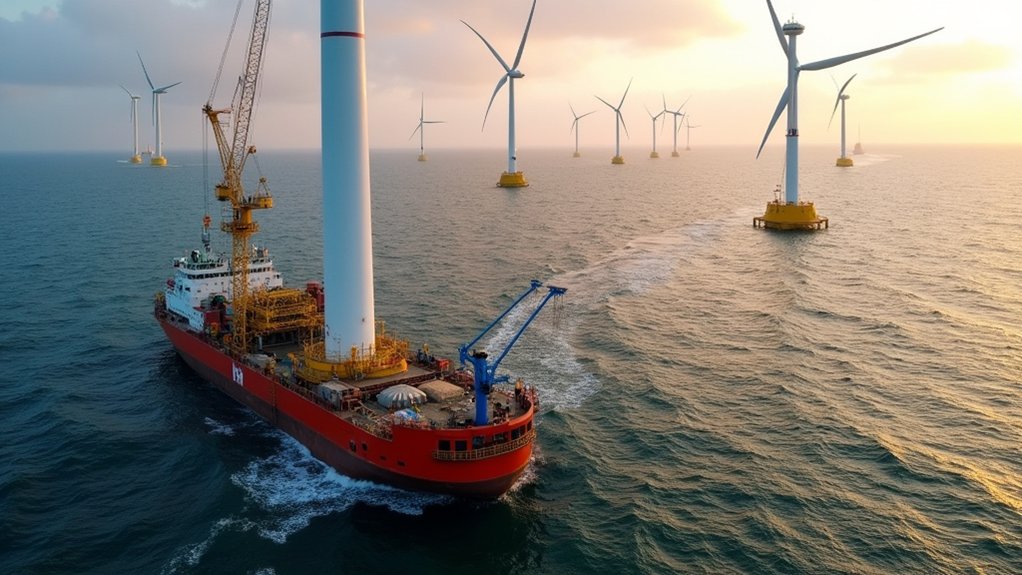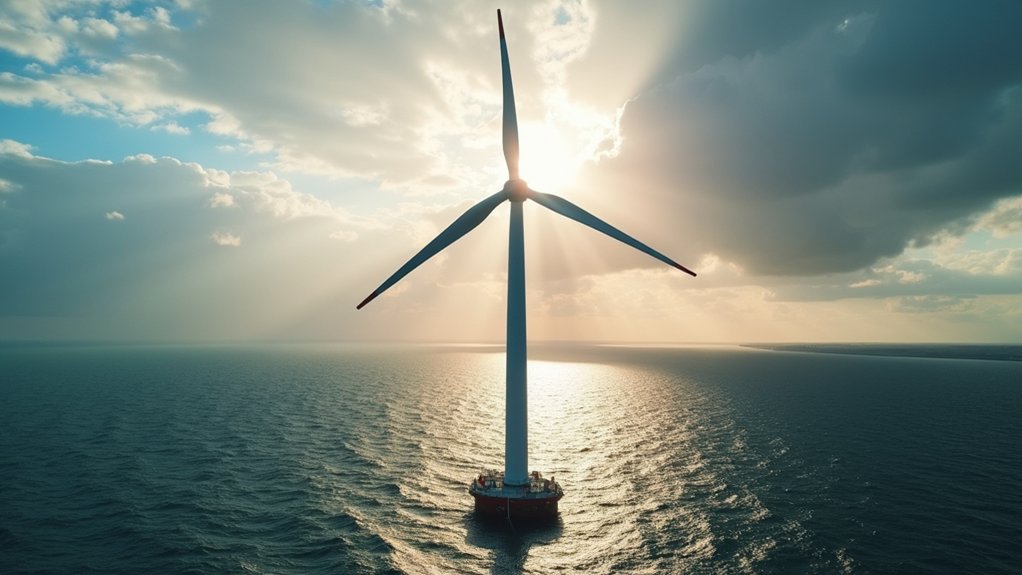

While many European nations have aggressively pursued offshore wind energy for decades, France has recently emerged as a formidable player in the sector with ambitious expansion plans. The installation of the first turbine at a new 486MW project marks a significant milestone in the country’s offshore wind journey, adding to its growing portfolio that currently stands at 28.89 GW of total wind capacity, with 6.4 GW allocated to offshore developments.
France’s offshore wind landscape is rapidly evolving, with 20 projects at various stages of development. Currently, five operational farms contribute 1.48 GW to the grid, while another five projects totaling 1.03 GW are under construction. The recent inauguration of the Fécamp wind farm—the nation’s second fully operational offshore site—demonstrates France’s commitment to accelerating deployment.
The Saint-Brieuc farm, partially commissioned at 500 MW, represents the next wave of French offshore wind. The government has outlined ambitious targets: 18 GW of offshore wind capacity by 2035, scaling to an impressive 45 GW by 2050. This trajectory requires substantial investment, with capital expenditures ranging from €3-5 million per megawatt. France’s new 1.7 GW wind capacity addition in 2024 positions it as the third largest market in Europe for new installations.
I’ve observed that these targets are driving unprecedented auction activity, with two rounds scheduled for 2024 that will offer 2.7 GW of capacity. Strategic positioning of wind farms primarily concentrates in the English Channel and North Sea regions, though future expansion will increasingly target the Western Channel and North Atlantic.
The national policy framework supports both fixed-bottom and floating turbine technologies, recognizing the diverse seabed conditions along France’s coastline. Project developers and operators include a mix of international and domestic players, fostering a competitive environment that’s driving innovation and cost reduction.
The extensive project database tracks everything from precise GPS coordinates to turbine specifications, creating transparency in the sector’s growth. France’s late entry into offshore wind may ultimately prove advantageous, allowing it to leapfrog earlier technologies with larger, more efficient turbines as it pursues its ambitious 2050 targets. According to authoritative statistics, users can access comprehensive information about France’s renewable energy projects through various download formats including PNG, PDF, XLS, and PPT files.