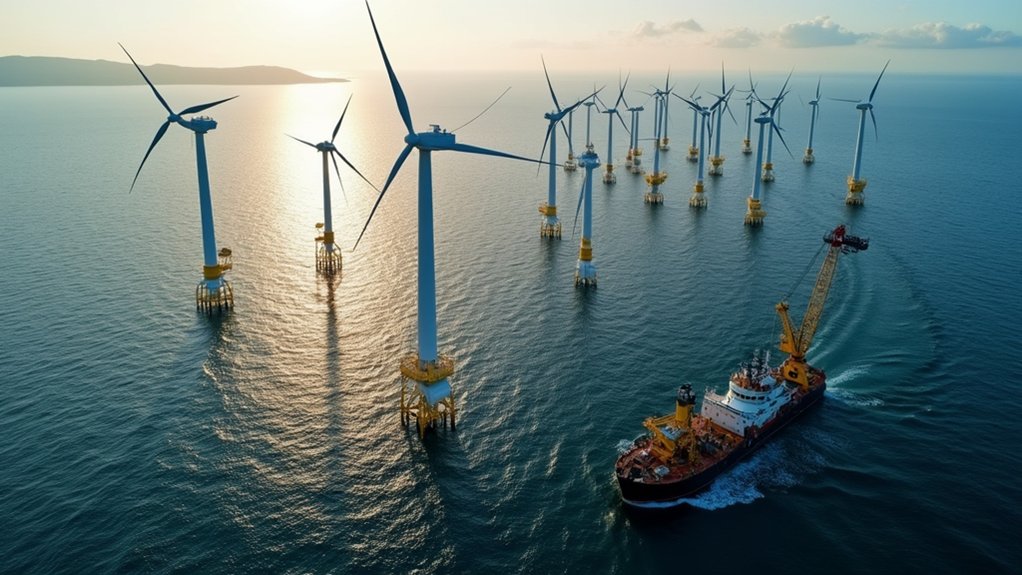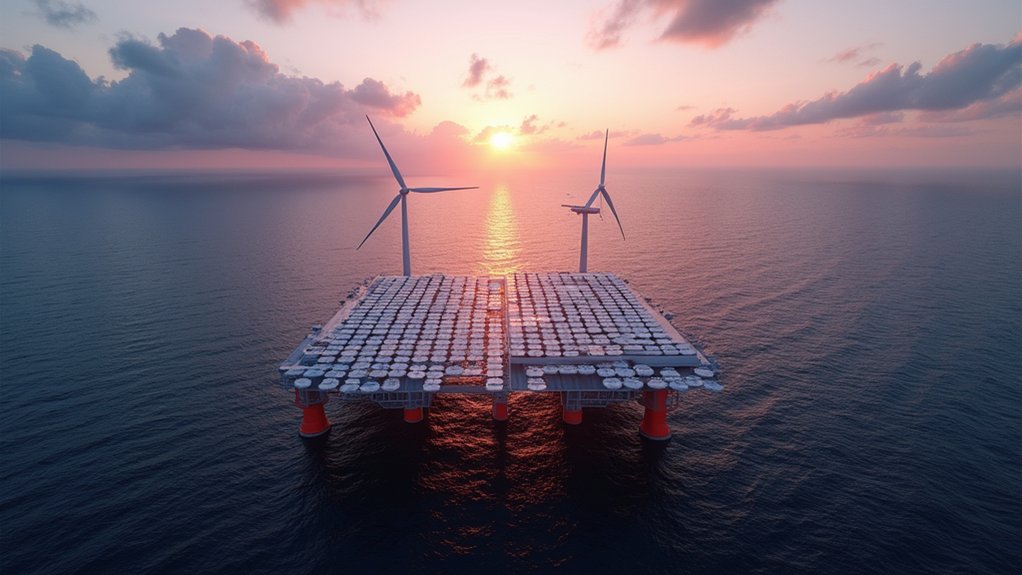

While offshore wind development continues to accelerate across Europe, HSM Offshore Energy has secured a significant EPCIC contract for the East Anglia TWO project’s offshore substation and jacket foundation. The contract, awarded by ScottishPower Renewables, encompasses delivery of a 5,100-tonne offshore high-voltage substation and a 3,700-tonne jacket foundation for the 960 MW wind farm located in the southern North Sea.
Initial engineering work commenced in summer 2024 under an early work agreement, with main construction slated to begin in Q4 2025. The jacket foundation is expected to be installation-ready by Q3 2027, followed by topside installation later that year. This timeline aligns perfectly with the UK’s ambitious renewable energy targets.
The strategic importance of this contract cannot be overstated. By securing early fabrication yard capacity, ScottishPower has demonstrated exceptional foresight in steering through supply chain constraints that have plagued similar projects. I’ve rarely seen such proactive procurement strategies in the offshore sector.
Located approximately 33 km from Southwold and 37 km from Lowestoft off the Suffolk coast, the East Anglia TWO wind farm will generate enough clean energy to power up to one million homes. The contract, signed on April 8, represents a major milestone in the project’s development. The substation’s role is critical, serving as the crucial nexus for power collection and transmission to the mainland grid.
The collaboration between ScottishPower Renewables, part of the Iberdrola group, and HSM Offshore Energy underscores a growing trend toward early supply chain engagement in large-scale renewable projects. This partnership is further strengthened by HSM’s recent acquisition by Smulders, expanding their collective expertise in offshore construction. With an estimated overall investment of $5.1 billion USD, East Anglia TWO represents a substantial commitment to the UK’s energy changeover.
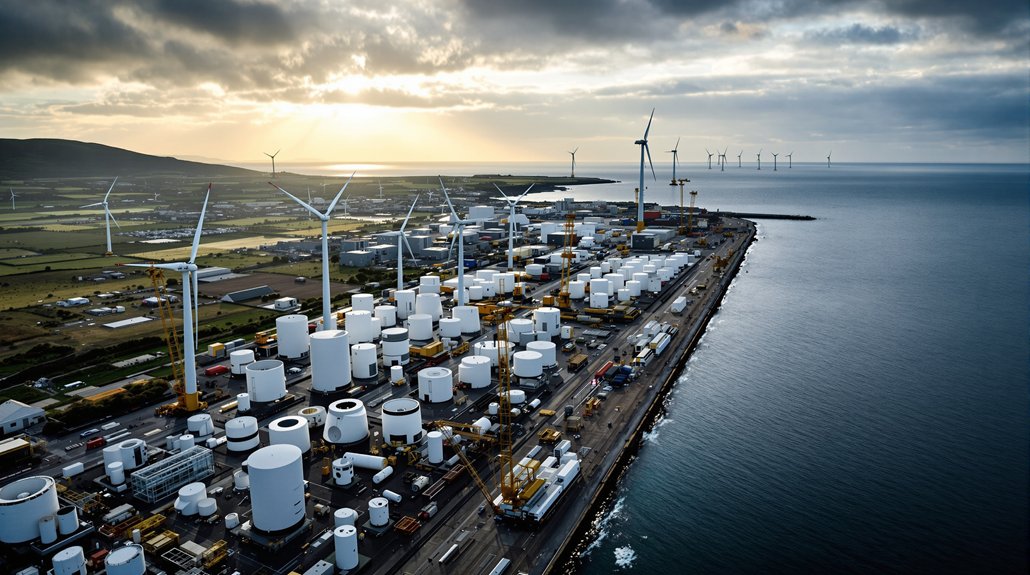
The scale of this infrastructure is impressive – a 5,100-tonne substation atop a 3,700-tonne foundation requires precision engineering and meticulous execution. Large-scale marine operations will be necessary for installation, with HSM coordinating fabrication at their specialized facility.
When operational, this substation will form the backbone of what promises to be one of the UK’s most significant contributions to its renewable generation portfolio.