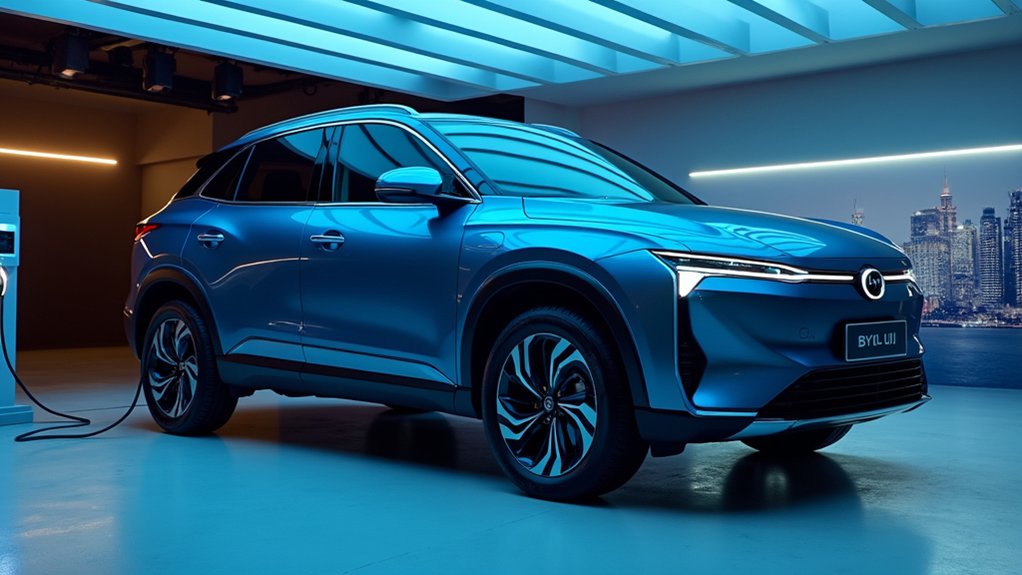
While many automakers hesitate to finalize their electrification strategies, BYD is decisively expanding its European footprint with a calculated plug-in hybrid offensive. The Chinese manufacturer’s latest entrant, the SEAL U DM-i, exemplifies this approach by marrying a 1.5-litre combustion engine with electric propulsion capabilities. This SUV achieves remarkable efficiency metrics: 6.4 L/100km fuel consumption and a staggering 1080 km combined driving range. The unique EHS integrated powertrain combines high-speed dual motors to deliver optimal power distribution between electric and combustion systems.
The SEAL U DM-i’s 18.3 kWh Blade Battery pack enables 70 km of pure electric range while supporting full charging in just 35 minutes. Performance credentials remain impressive, with the AWD variant delivering 0-100 km/h acceleration in 5.9 seconds. I’ve noticed BYD has prioritized NVH excellence, ensuring the vehicle delivers a refined driving experience that closely mimics pure electric operation. The vehicle’s integrated technologies address range anxiety concerns that continue to impact consumer adoption of fully electric vehicles.
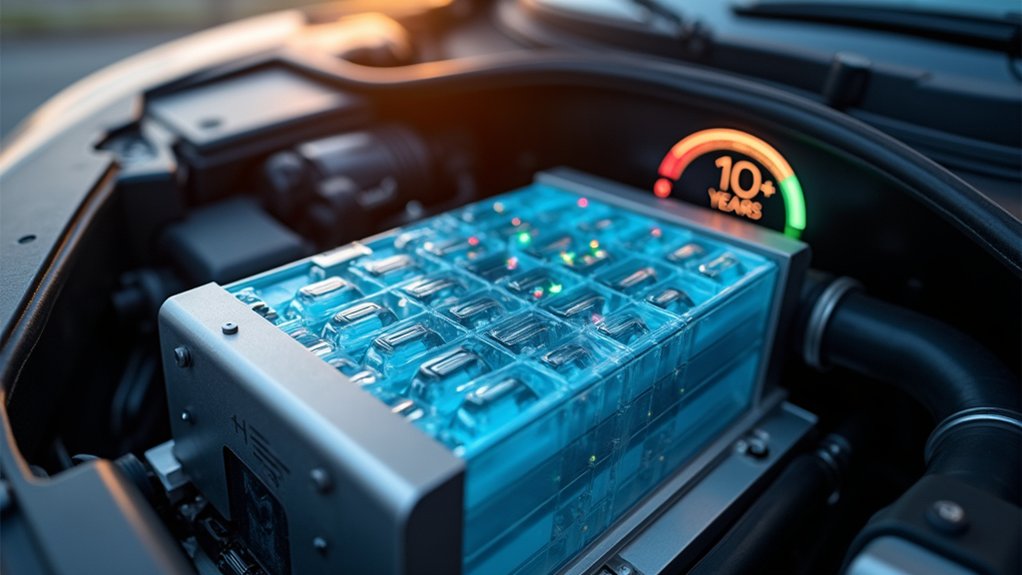
BYD’s proprietary Blade Battery technology underpins this strategy with compelling safety credentials. The cells pass the rigorous Nail Penetration Test without generating fire or smoke, while their aluminum honeycomb structure increases space utilization by 50% compared to conventional designs. Each cell functions as a structural beam, enhancing vertical rigidity and force distribution.
Safety reimagined—BYD’s Blade Battery delivers unprecedented protection with structural intelligence that redefines EV architecture.
European expansion plans are equally ambitious. BYD will introduce two additional PHEV models to Germany in 2025, complementing its production investments in Hungary and Turkey. The Hungarian facility, opening October 2025, will initially produce the Atto 3 BEV SUV, while the Turkish plant will focus on PHEVs like the Seal 05 and Seal 06.
This strategic pivot toward PHEVs reflects a pragmatic response to slowing pure EV demand across Europe. Combined with local production that circumvents import tariffs, BYD is positioning itself as a versatile market player. The projected combined capacity of 500,000 units annually demonstrates considerable confidence.
BYD’s thorough approach spans from affordable city cars to premium offerings, targeting diverse consumer segments. The company’s vehicles feature an impressive oceanic design aesthetic that combines futuristic elements with elegant details like double U-shaped headlights and continuous water drop pattern taillights. By embracing hybrid powertrains alongside BEVs, BYD manifests a flexibility that may prove vital as European buyers reconsider their electrification timelines.