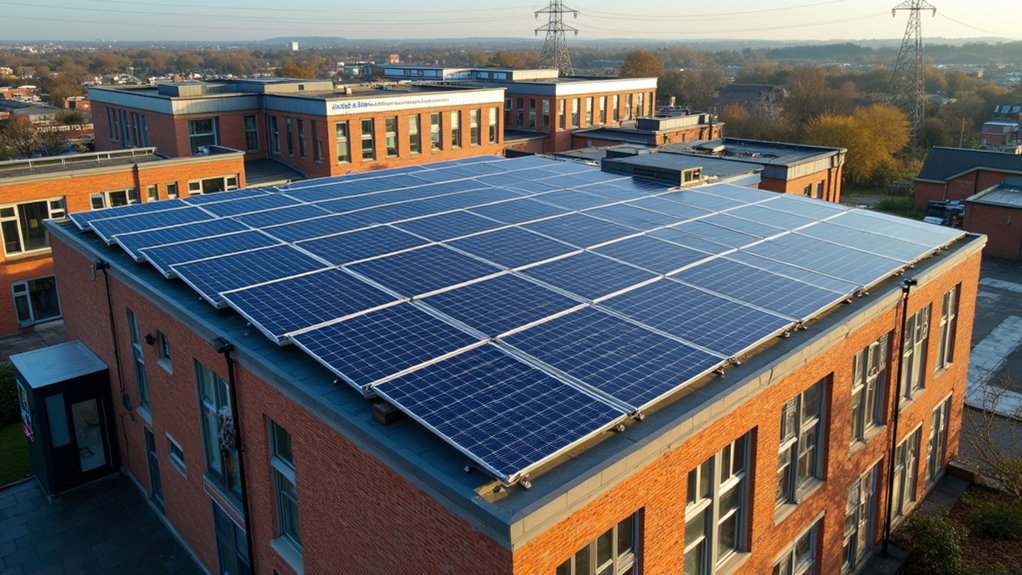

As Britain initiates an ambitious energy transformation, Great British Energy has launched its inaugural initiative to install rooftop solar panels across hundreds of public buildings throughout the UK. The £200 million investment, a cornerstone of the government’s Plan for Change, targets approximately 400 sites split evenly between educational institutions and healthcare facilities across the nation.
The project allocates £80 million for solar installations at 200 schools in England, while nearly £100 million will fund similar upgrades at 200 NHS sites. These hospitals represent about one-third of all NHS trusts, which currently face energy costs of £1.4 billion annually—nearly double the amount paid in 2019. I’ve rarely seen such a thorough approach to public sector energy transformation.
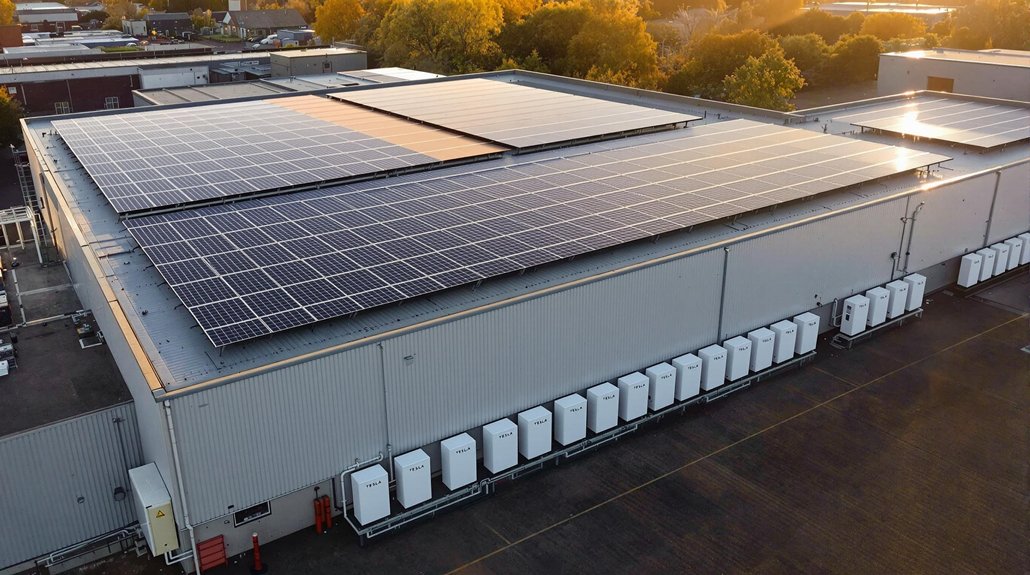
Expected to generate between 70MW and 100MW of solar capacity, these installations will directly power classrooms and medical operations with real-time renewable energy. This initiative follows in the footsteps of the first photovoltaic energy discovery made by Eduard Becquerel in 1839. The integration of battery energy storage systems (BESS) represents the project’s most forward-thinking element, allowing surplus electricity to be stored or sold back to the grid for additional revenue.
Renewable power flows directly into classrooms and operating theaters, with smart batteries capturing excess energy for later use or grid revenue.
Lifetime savings from this initiative are projected to reach £415 million over 30 years, funds that will be reinvested into education and healthcare services. The first solar sites will become operational by summer 2025, with school installations strategically timed to coincide with the academic year.
Beyond the primary focus on schools and hospitals, £12 million has been earmarked for local authorities and community energy groups to develop their own clean energy projects. This initiative continues the momentum that began in 2010 when the Feed-in-Tariff scheme significantly boosted solar installations across the UK. Additionally, £9.3 million will support public building solar schemes in Scotland, Wales, and Northern Ireland.
This catalyst project establishes Great British Energy as the UK’s first state-owned energy company focused on advancing renewable energy goals. The rooftop solar initiative serves as both an economic efficiency measure and a significant step toward the nation’s 2030 clean power targets, reducing reliance on grid electricity while providing critical protection against energy price volatility.