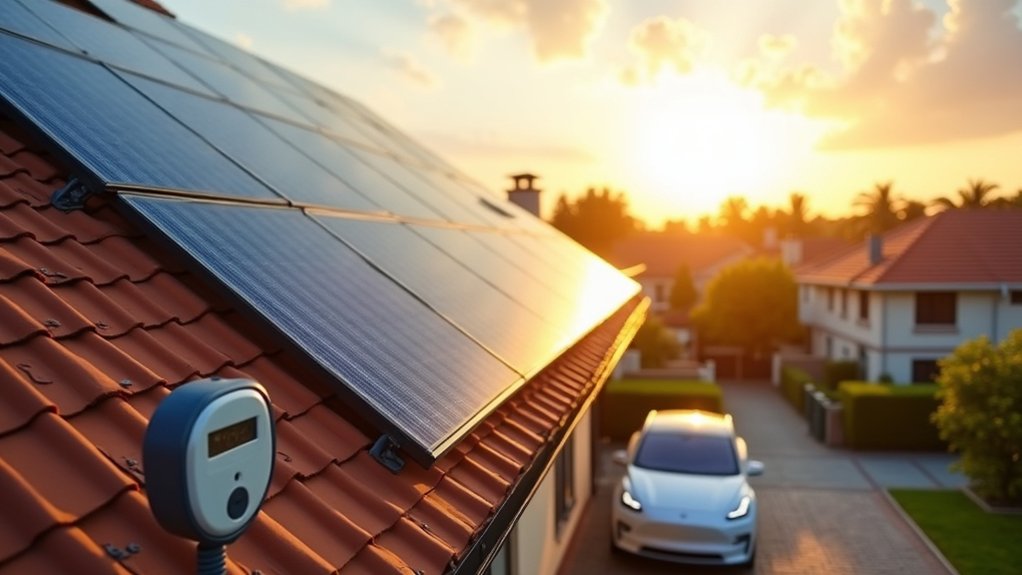

The rising tide of renewable energy adoption has positioned solar panels as more than just an eco-friendly choice—they represent a substantial financial investment for homeowners. With installation costs averaging $2.86 per watt in 2024, an 11 kW system costs approximately $22,000 before incentives, making the entry price significant yet increasingly accessible.
Financial returns manifest in several ways. Most immediately, homeowners see utility bills plummet, with lifetime savings ranging from $20,000 to $90,000 depending on location and consumption patterns. The 30% federal tax credit reduces system costs dramatically, bringing that average 11 kW system down to about $15,400 net investment. State incentives often sweeten the deal further, though these benefits tend to diminish as adoption increases.
Property values receive a considerable boost from solar installations. Studies from Lawrence Berkeley National Laboratory confirm that solar-equipped homes command premiums of roughly $4 per installed watt. In practical terms, a modest 6 kW system can add $24,000 to a home’s resale value—a return that often exceeds the initial investment.
The ROI calculation proves compelling in most markets. With payback periods typically ranging from 6-10 years, solar panels generate “free electricity” for the remaining 15+ years of their warranted lifespan. I’ve found these systems particularly valuable in regions with high electricity rates or abundant sunshine, where the financial case becomes nearly irrefutable. The potential return on investment of approximately 10% annually makes solar an attractive option compared to many traditional investments. Even in areas with low solar resource, such as the Pacific Northwest, homeowners can achieve significant cost savings comparable to regions with more sunlight.
Solar investments deliver remarkable paybacks, providing decades of free electricity after a brief break-even period.
Maintenance requirements remain minimal—occasional cleaning and rare component replacement—while warranties typically extend 20-25 years, ensuring long-term performance without significant additional costs.
Beyond financial considerations, environmental benefits cannot be overlooked. Residential systems offset several tons of CO₂ annually, contributing meaningfully to emissions reduction targets while decreasing dependency on fossil fuels.
For most homeowners, solar represents an investment trifecta: reduced monthly expenses, increased property value, and environmental stewardship. With predictable long-term energy costs, protection against utility rate hikes, and minimal maintenance requirements, solar panels increasingly represent the cornerstone of smart home energy strategy.