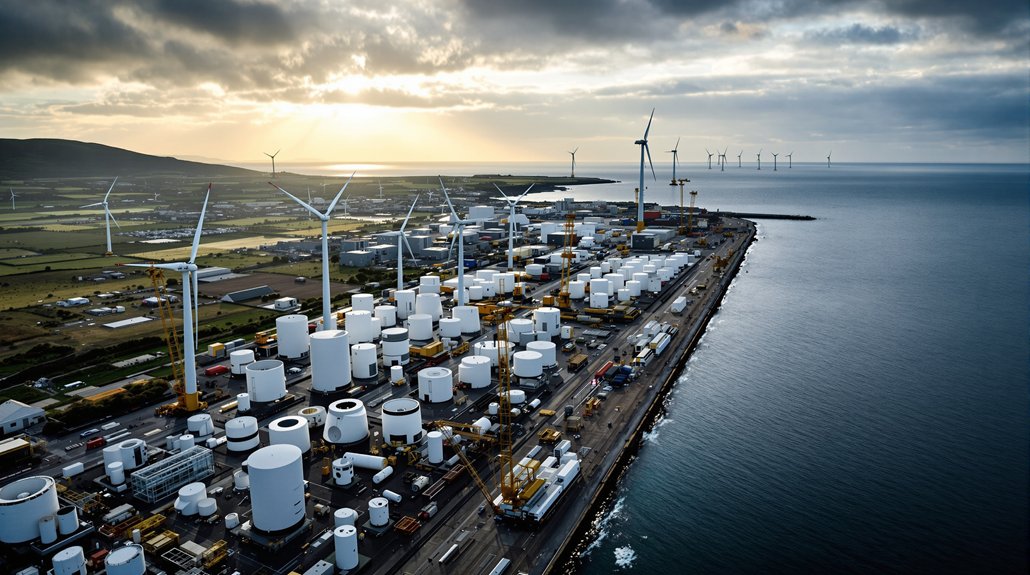

While controversy surrounding wind energy often focuses on land use and visual impacts, Germany’s offshore wind farms have created unexpected ecological sanctuaries beneath the waves. The massive concrete foundations and surrounding stone fills function effectively as artificial reefs, attracting diverse marine life and fundamentally altering local ecosystems. Research conducted in the southern German Bight has documented considerable populations of commercially valuable species like cod, mackerel, and pollack establishing themselves around these structures.
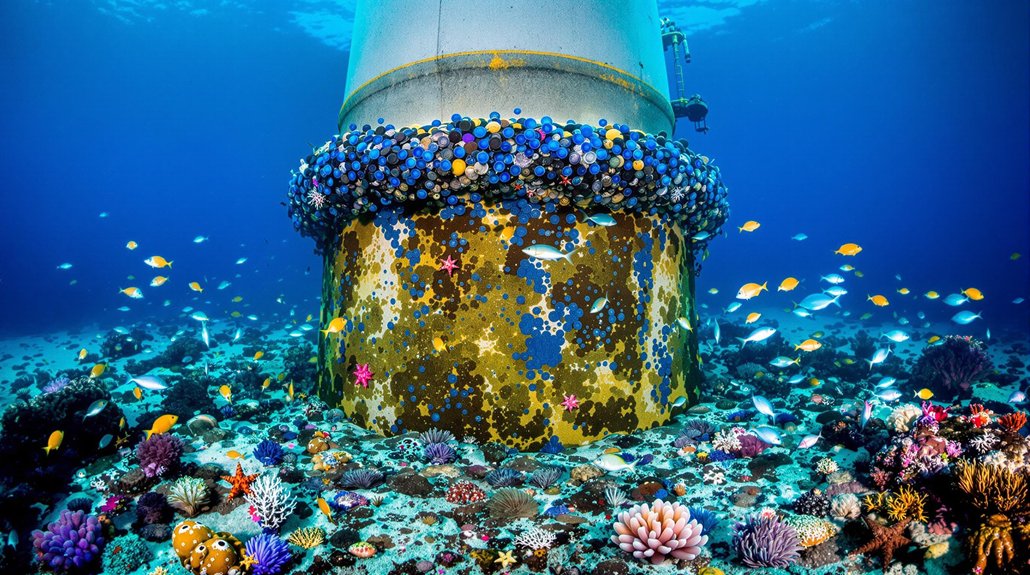
The ecological transformation begins almost immediately after installation. Blue mussels, anemones, starfish, barnacles, and tubeworms rapidly colonize turbine bases, creating complex three-dimensional habitats that fish find irresistible. These fouling communities not only provide shelter but establish robust food webs through their filtering activities. I’ve observed that the resulting fecal deposits greatly enhance food availability for seafloor organisms and, consequently, higher-trophic species. Biomass in these areas can increase 4,000-fold compared to the original seafloor sediment biomass. The recent collaboration between Thünen Institute and Northland Power has provided valuable insights into these ecological dynamics.
Once built, turbine foundations become thriving marine ecosystems within months, supporting complex food webs from mussels to predatory fish.
Most compelling is the difference in fish abundance between turbine areas and surrounding waters. Flatfish species, particularly plaice, show remarkable population increases near these structures. The response is decidedly species-specific, however, with common sole showing limited attraction to monopile habitats. This variability emphasizes the need for thorough monitoring protocols, which German regulations wisely mandate before, during, and after construction.
Perhaps the most notable ecological benefit stems from fishing restrictions within wind farm boundaries. These de facto marine protected areas allow fish populations to recover from commercial fishing pressure. The resulting no-fishing zones function as vital refuges supporting both biodiversity conservation and sustainable fisheries management objectives.
Beyond fish communities, these artificial habitats create important foraging grounds for migratory seabirds, particularly auks. The enhanced prey availability supports broader ecosystem resilience throughout the North Sea region.
Germany’s offshore wind developments, while primarily conceived as renewable energy infrastructure, have inadvertently created valuable marine conservation assets—a rare instance where industrial development and ecological enhancement align synergistically.