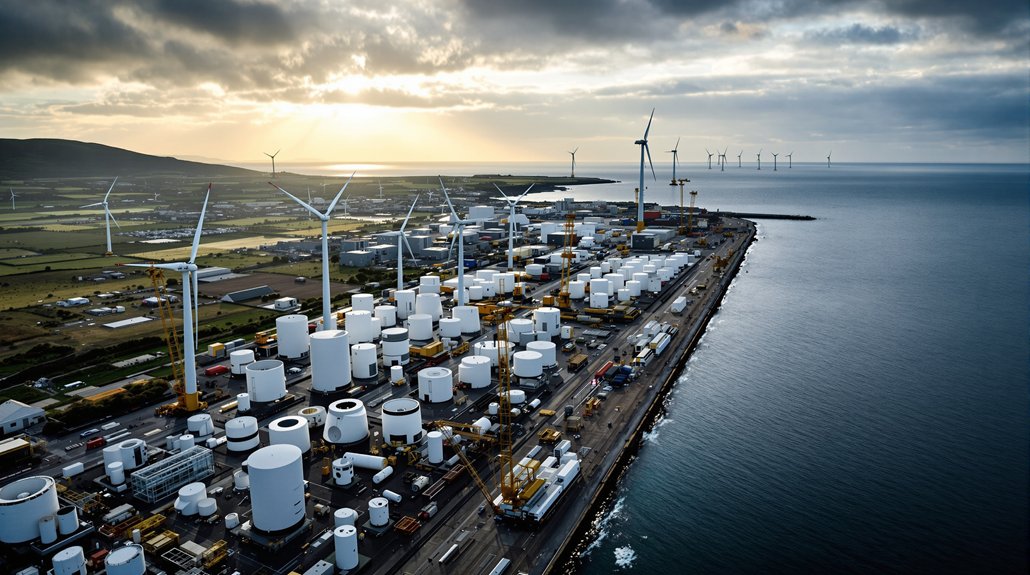

A groundbreaking sustainable housing solution is emerging from the renewable energy sector‘s waste stream, as decommissioned wind turbine components find new life as compact living spaces. The wind energy industry faces a mounting challenge with approximately 5,000 turbines reaching end-of-life annually, creating disposal difficulties for composite materials in blades and nacelles that traditionally resist recycling efforts.
Innovation turns wind energy’s waste challenge into housing opportunity, repurposing decommissioned turbine components into sustainable living spaces.
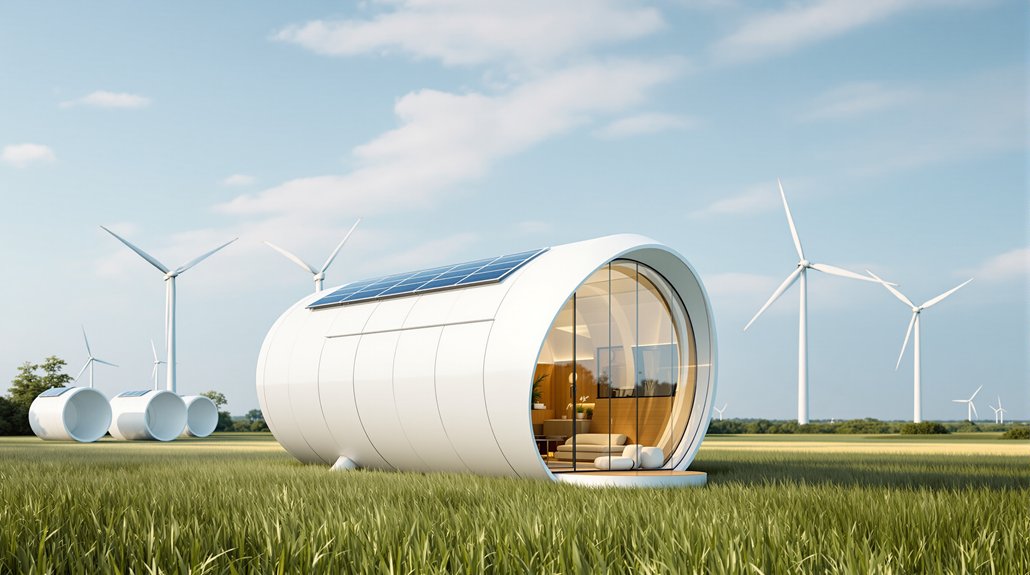
Design studio Superuse, in collaboration with energy company Vattenfall, pioneered this innovative approach by converting a Vestas V80 nacelle into a fully functional micro home. The project will be showcased at Dutch Design Week in October 2024, highlighting its potential for wider adoption. The nacelle’s dimensions—roughly 10 meters long, 3-4 meters wide, and 3 meters high—provide sufficient space for essential living requirements while remaining transportable on conventional roadways, a vital factor for scalability.
Despite its compact footprint, the prototype incorporates all necessary amenities: a complete kitchen, bathroom facilities with toilet, sink and shower, and a reconfigurable living area. The design meets Dutch habitability standards with appropriate insulation, daylight access, and utility connections. I’ve seen similar micro-living concepts, but the structural integrity of these nacelles offers unique advantages over conventional tiny home construction. The home features sustainable materials with all furnishings being sustainably produced or secondhand items.
The environmental benefits extend beyond waste reduction. The nacelle used in the Dutch prototype previously generated 73 GWh during its 20-year operational lifespan—enough to power over 29,000 households for a year. Its conversion now incorporates solar panels, heat pumps, and solar water heaters, creating an energy-independent dwelling with considerably reduced embodied carbon compared to new construction.
Economic considerations appear promising. The prefabricated structure minimizes on-site labor and construction time, potentially offering affordable housing solutions. With over 10,000 V80 nacelles globally nearing decommissioning, the supply chain for scaled implementation exists. The concept particularly appeals to sustainability-minded consumers seeking minimal environmental impact.
This architectural adaptation of wind energy infrastructure demonstrates how circular economy principles can transform industrial waste into valuable resources, extending material lifecycles while addressing both housing needs and environmental challenges.