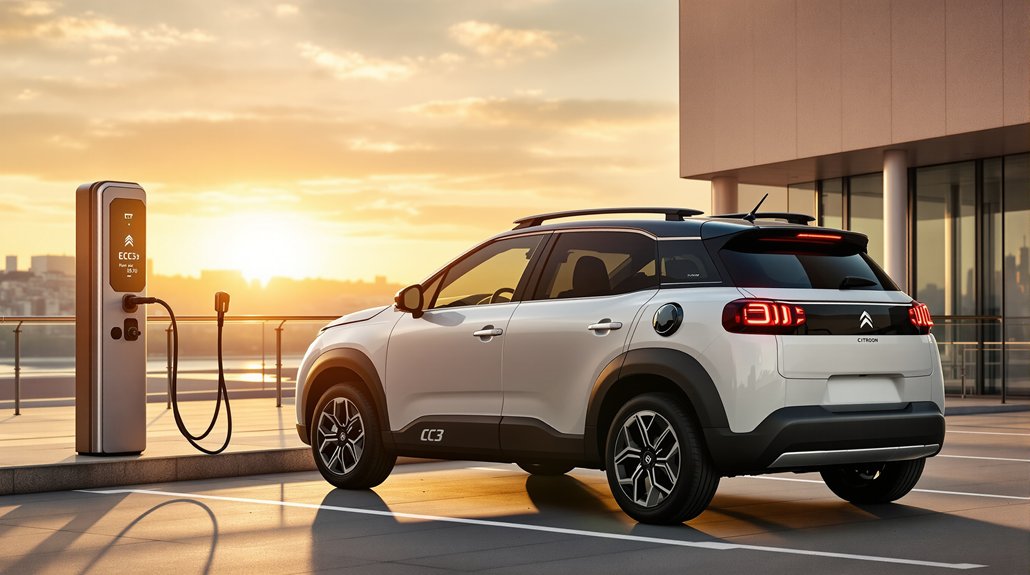

Several automotive manufacturers are placing their technological bets on solid-state batteries as the next revolutionary power source for electric vehicles. These advanced energy storage systems replace conventional liquid electrolytes with solid separators, typically ceramic-based materials, though polymer and sulfide alternatives are also being explored. The fundamental architecture maintains familiar components—cathode, anode, electrolyte, and casing—but the shift to solid materials yields noteworthy performance improvements.
The energy density advantage cannot be overstated. Toyota‘s developmental solid-state cells demonstrate up to double the energy density of current lithium-ion technology. This translates to a potential 70% increase in vehicle range while simultaneously reducing battery weight and volume. The combination of lithium metal anodes with solid electrolytes creates a power-to-weight ratio that conventional batteries simply cannot match. These cutting-edge batteries can achieve energy density levels of up to 450 Wh/kg, significantly outperforming traditional options.
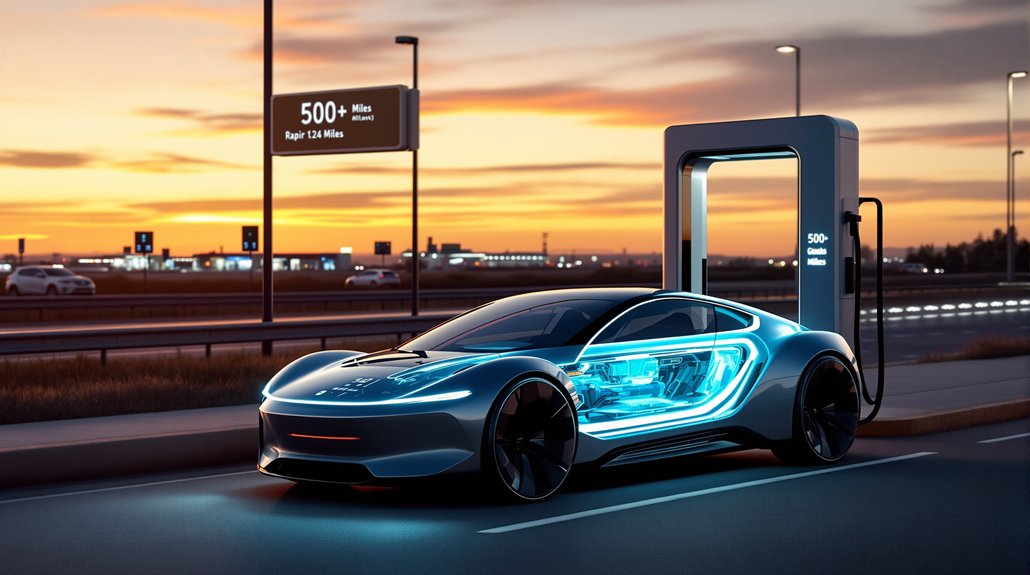
Charging times will see dramatic reduction as well. Current DC fast-charging typically requires 30 minutes to reach 80% capacity; solid-state technology could slash this to just 10 minutes. The solid electrolytes show superior stability at high voltages, enabling more efficient energy transfer without compromising battery lifespan. Recent testing by QuantumScape has demonstrated over 1,000 charging cycles while maintaining 95% of initial capacity.
Rapid recharging redefined: solid-state technology slashes wait times while maintaining battery integrity at higher voltage transfers.
Safety improvements are particularly compelling. By eliminating flammable liquid electrolytes, solid-state batteries considerably reduce fire and explosion risks during crashes or system failures. This enhanced stability during temperature fluctuations may also simplify thermal management systems, further reducing vehicle complexity and weight. The replacement of flammable organic solvents used in conventional batteries with solid materials represents a major safety advancement for EV technology.
The timeline for commercial deployment appears accelerated. Honda, Toyota and several competitors have announced plans to incorporate solid-state cells in production vehicles before 2030, contradicting earlier predictions of a more distant horizon.
Manufacturing challenges remain substantial, however. Current laboratory processes must be scaled dramatically, interface stability issues resolved, and cost-effective production methods developed. The material sourcing and specialized component supply chains will require considerable investment.
Despite these hurdles, I’m convinced the automotive industry stands at the precipice of a battery revolution. The race to market solid-state technology isn’t merely about incremental improvement but represents a fundamental leap forward in electric vehicle capability.