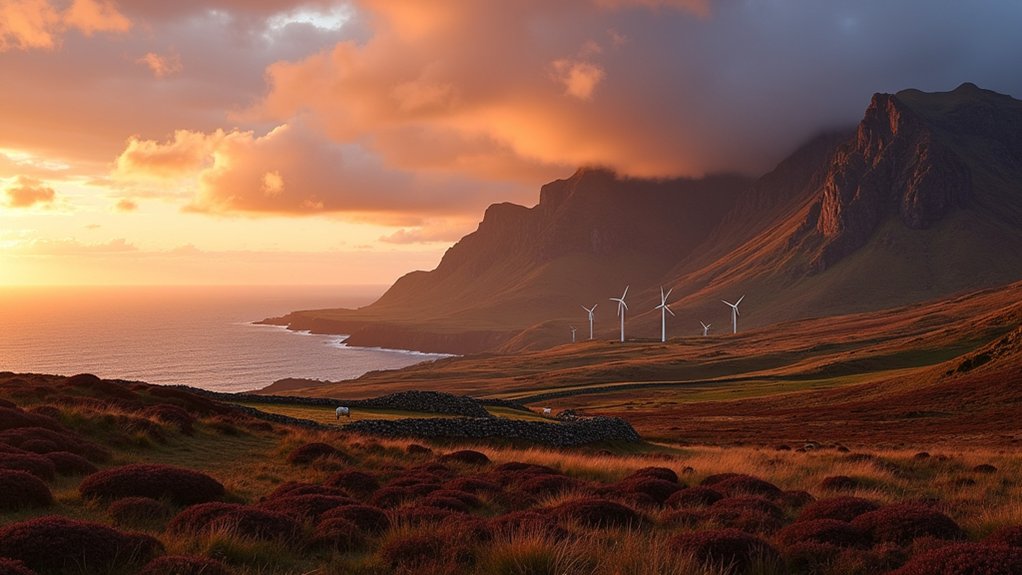

Standing firm against the tide of industrialization, a Highland laird has turned down multimillion-pound offers from three wind farm companies, prioritizing community cohesion and heritage over financial gain. The landowner’s family has resided on Skye and surrounding areas for approximately 700 years, creating a deep connection to the land that transcends monetary value.
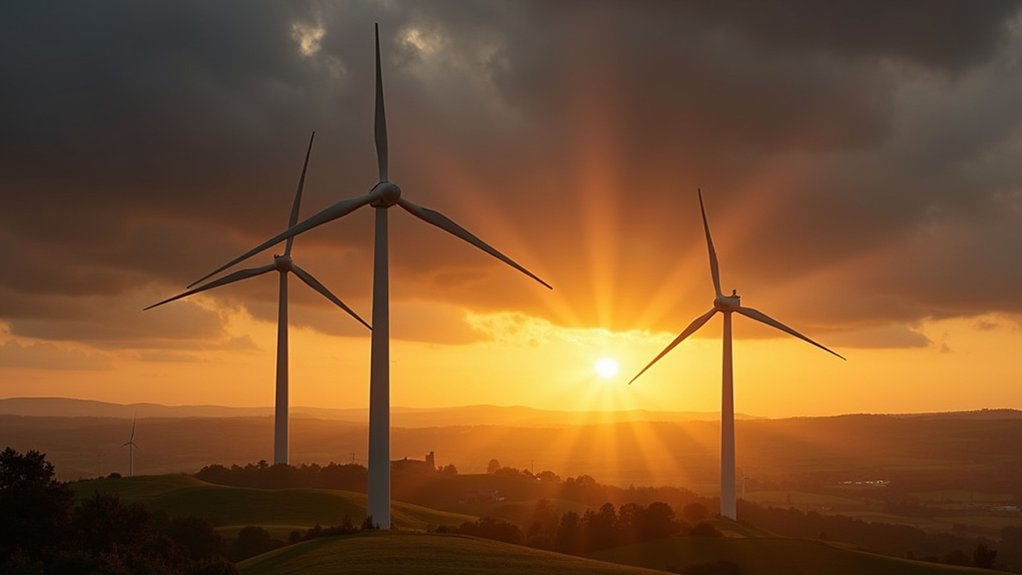
The rejected proposals sought to replace 12 existing 100-meter turbines with nine notably larger structures reaching 200 meters in height. NatureScot and local authorities raised substantial concerns about the visual impact these industrial-scale developments would have on Skye’s iconic landscape, a centerpiece of the island’s tourism economy.
Wind farm proposals threatened to replace existing turbines with massive 200-meter structures, risking Skye’s iconic landscape and tourism economy.
Skye’s 16 crofting townships would have experienced unequal benefits from the development, with only one or two communities receiving direct financial advantages. This imbalance threatened to fracture the island’s social fabric, prompting residents to rally behind the slogan “Skye is not for sale” in unified opposition.
The economic incentives, while described as “very useful” by the landowner, paled against the potential costs to community stability. Charles MacDonald criticized the community benefits from existing wind farms as pitiful and inadequate compared to recommended levels. The dramatic surge in crofting land values, from £120,000 for 20,000 acres in the 1970s to £1.4 million today, has made it increasingly difficult for communities to purchase their own land. Wind farm income, substantial as it might be, could not compensate for heightened local economic disparities and the erosion of cultural identity.
Environmental preservation remains paramount on an island where biodiversity supports both the ecosystem and tourism industry. Local wildlife enthusiasts and business owners have consistently emphasized how industrial development would fundamentally alter the character of this Hebridean landscape.
The decision reflects a broader concern about rural communities being sacrificed for external economic interests. Several local councillors even resigned from planning committees to protest what they viewed as an abandonment of community voices in development decisions.
For seven centuries, this land has maintained its traditional patterns of use through crofting and small-scale farming. The landowner’s rejection of short-term profit demonstrates a commitment to preserving this heritage—ensuring that Skye’s cultural landscape remains intact for future generations rather than becoming merely another industrial opportunity.