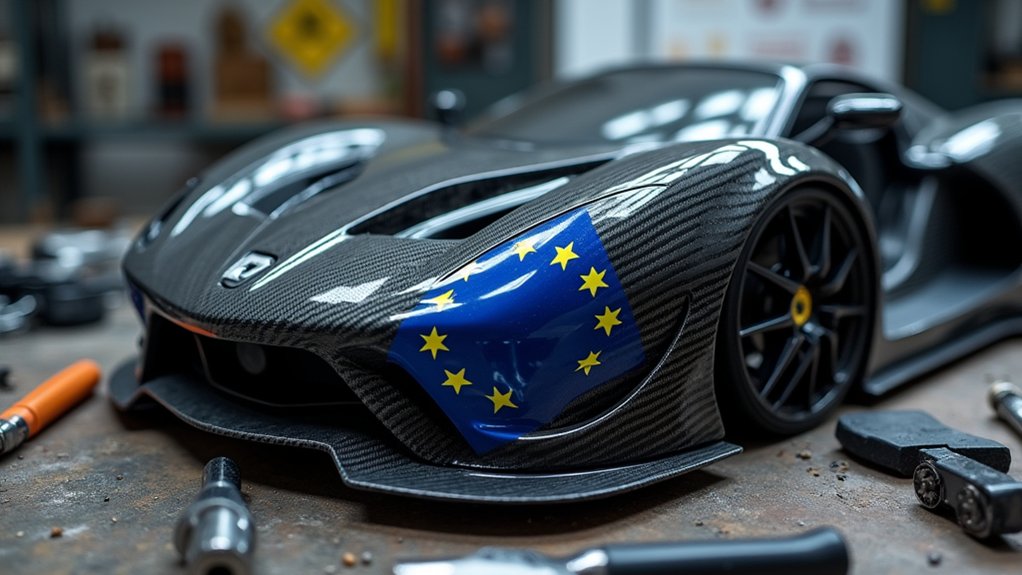

The European Union has ignited controversy in the automotive sector with its proposal to ban carbon fiber use in vehicles by 2029, citing significant health hazards associated with the material. The potential revision to the End of Life Vehicles (ELV) Directive would classify carbon fiber alongside hazardous substances like mercury, cadmium, and chromium, fundamentally altering the material landscape for vehicle manufacturing.
Carbon fiber’s exceptional strength-to-weight ratio has made it indispensable in modern automotive design, particularly for electric vehicles where weight reduction directly translates to extended range. The material’s widespread adoption in sports cars and luxury vehicles speaks to its performance advantages. I’ve observed manufacturers increasingly relying on carbon fiber composites to meet stringent emissions standards while maintaining structural integrity.
Carbon fiber remains the automotive industry’s most critical lightweight solution, especially as electrification demands every gram saved for maximum efficiency.
Health concerns driving this regulatory approach center on microscopic particles released during dismantling operations. These fibers can potentially infiltrate bodily tissues, with some studies suggesting risks similar to asbestos exposure. The resin-coated filaments irritate skin and mucous membranes, while their conductivity disrupts recycling machinery.
German research presents conflicting evidence on carbon fiber’s bio-persistence. Studies from 2019 raised alarms about mesothelioma risks, while 2022 findings suggested more nuanced health impacts. The scientific community remains divided on equivalent classification with definitively harmful materials.
Implementation timeline extends to 2029, providing manufacturers essential adaptation periods. Japanese carbon fiber producers, dominant in the global supply chain, have expressed particular concern about the economic implications of EU restrictions. With 52% market share, Japanese companies stand to lose significant business if the amendment passes.
Alternatives like aluminum and high-strength steel exist but carry weight penalties that compromise efficiency. This proposal represents the first global instance where carbon fiber would be officially classified as a harmful substance. Recycled carbon fiber offers a partial solution aligned with circular economy principles, though production processes require refinement.
The automotive industry faces a profound innovation challenge if the ban proceeds. Manufacturers must balance safety concerns with performance requirements while maintaining competitiveness in the EV market.
The regulatory decision ultimately pits environmental protection against technological advancement, with significant implications for global automotive design and manufacturing strategies.