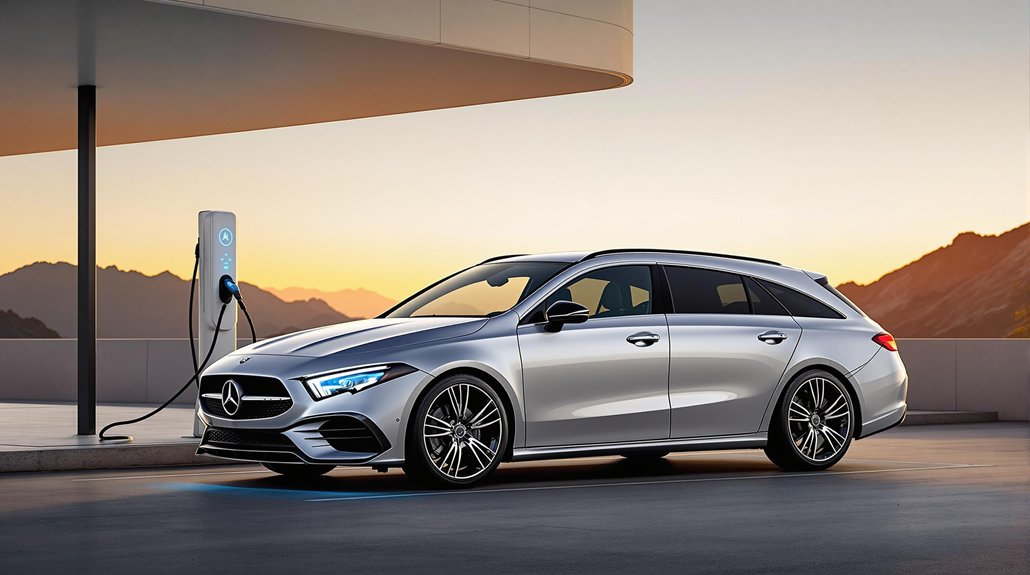
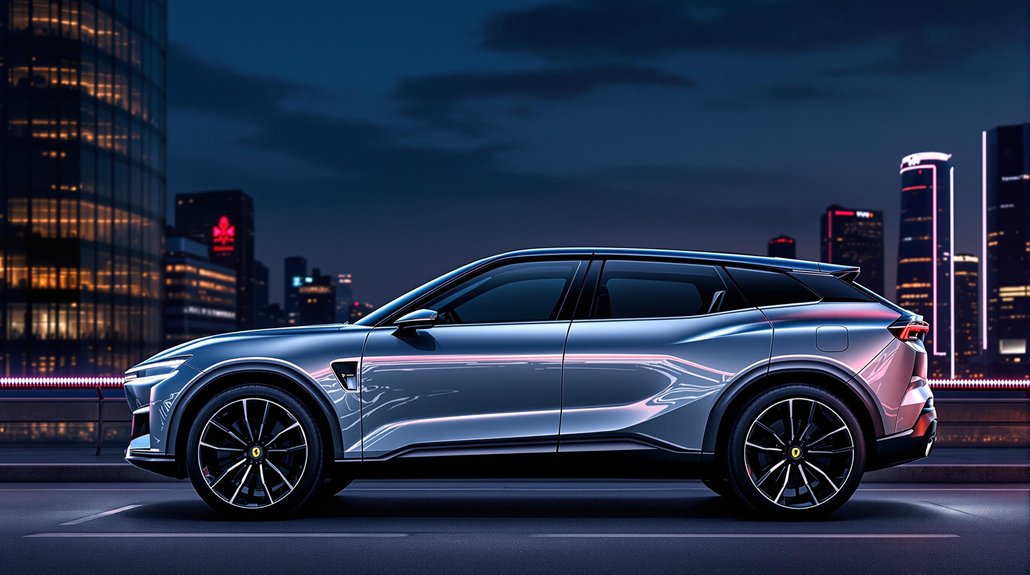
While most automakers struggle to deliver truly practical electric vehicles, Mercedes-Benz has boldly entered the segment with its innovative CLA Shooting Brake. Built on the cutting-edge Mercedes-Benz Modular Architecture (MMA), this compact estate stands apart as the first premium electric shooting brake in its class, offering unrivaled versatility without compromising performance.
Mercedes-Benz redefines practical electrification with the CLA Shooting Brake—pioneering versatility in premium EV estates without performance compromise.
The numbers speak for themselves. With an 85 kWh lithium-ion battery featuring silicon-enhanced anodes, the CLA 250+ achieves a remarkable WLTP range of 792 kilometers—significantly outpacing competitors from BMW, Tesla, and Polestar. Energy consumption hovers impressively between 12.2–12.5 kWh/100 km, establishing a new benchmark for efficiency in the segment.
I’ve seen few EVs that manage this balance while maintaining such compelling performance metrics. Charging infrastructure limitations are addressed through the vehicle’s 800V architecture, enabling ultra-fast DC charging at up to 320 kW. This translates to gaining 285–325 kilometers in just 10 minutes—a game-changer for longer journeys. Like most modern EVs, the CLA benefits from thermal management systems that help maintain optimal battery performance in extreme weather conditions.
The dual-motor CLA 350 4MATIC delivers exhilarating acceleration, reaching 100 km/h in 4.9 seconds, while maintaining 771 kilometers of range. The base model offers both affordability and impressive specs with its 58kWh LFP battery for budget-conscious buyers. Practicality hasn’t been sacrificed for performance. With 405 liters of standard boot space expandable to 1,290 liters with seats folded, the Shooting Brake offers unmatched utility in its class.
The 2,790 mm wheelbase creates ample rear legroom, while the flat floor maximizes interior space—a direct benefit of the MMA platform’s intelligent packaging. A luxurious interior experience is enhanced by the panoramic electrochromic roof that can transition from transparent to opaque at the touch of a button. Mercedes has leveraged technological innovation throughout the vehicle, implementing advanced silicon carbide battery chemistry and intelligent energy recuperation borrowed from their Vision EQXX concept.
The next-generation MBUX system provides seamless connectivity and over-the-air updates. Competitors have yet to offer a direct rival to this practical yet premium electric estate. Mercedes has identified a segment gap and created a compelling proposition—a stylish, efficient vehicle that combines range, practicality and innovation in a package that’s uniquely positioned to convert traditional wagon buyers to electric mobility.