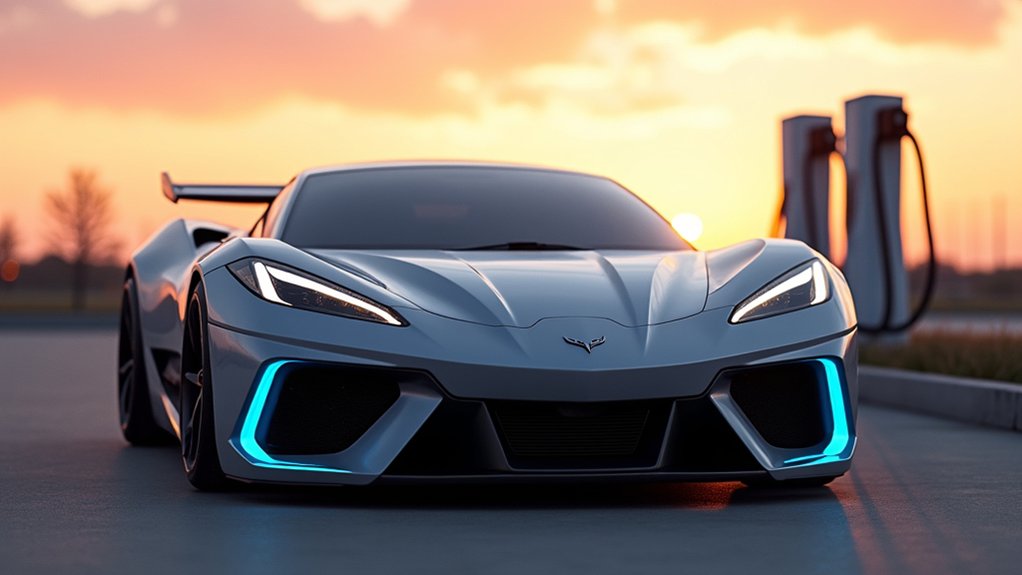
As General Motors pushes boldly into the electric vehicle frontier, the upcoming Corvette EV Hypercar represents the most radical reinvention of America’s sports car since its 1953 debut. Eschewing the iconic V8 powerplant that has defined Corvette’s character for generations, this pure electric hypercar is expected to deliver approximately 1000 horsepower through a sophisticated three or four-motor configuration. The decision to abandon internal combustion entirely signals GM’s confidence in electric performance capabilities, a move that would have seemed unthinkable just years ago.
The hypercar’s projected performance metrics are genuinely staggering. With standard all-wheel drive and advanced torque vectoring, the EV Corvette will likely surpass even the hybrid E-Ray in straight-line acceleration while offering unprecedented corner exit speeds. Electric motors’ inherent advantage of instant torque delivery should translate to blistering throttle response with none of the hesitation sometimes found in traditional powertrains. Unlike the E-Ray which employs its eAWD system for enhanced stability across various driving conditions, the Hypercar version will utilize a fully electric all-wheel drive architecture with independent motors at each wheel. This technological leap forward represents a significant departure from the 2025 E-Ray, which achieves 655 horsepower from its combined V-8 engine and front electric motor setup.
The EV Corvette promises zero-hesitation acceleration and cornering prowess that redefines the very limits of American performance engineering.
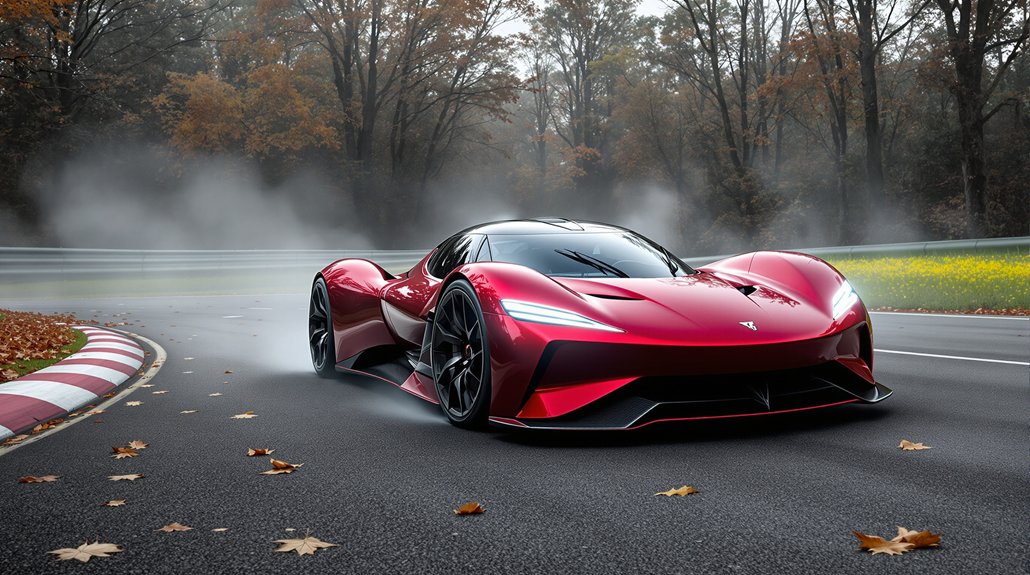
Visually, the car will maintain Corvette’s design language while incorporating necessary aerodynamic elements optimized for electric propulsion. The styling pays homage to classic Stingray cues but reinterprets them through a forward-looking lens, creating what I’d consider a harmonious blend of heritage and innovation. Expect a low-slung silhouette with active aero elements to manage both downforce and range optimization. The vehicle’s augmented reality display system will provide drivers with real-time performance metrics and charging information while maintaining the immersive driving experience Corvette enthusiasts expect.
Speaking of range, the hypercar will likely offer between 250-350 miles per charge, competitive with other entries in this ultraperformance segment. Fast-charging capabilities and sophisticated thermal management systems should enable both quick energy replenishment and sustained track usage without performance degradation.
Most intriguingly, this hypercar represents merely the vanguard of a broader Corvette sub-brand expansion that includes planned four-door sedan and SUV variants. This strategic pivot positions Corvette to compete beyond its traditional two-seat sports car niche while challenging emerging electric supercar manufacturers.
The automotive landscape is shifting rapidly, and Corvette’s electric future looks set to redefine American performance for a new generation.