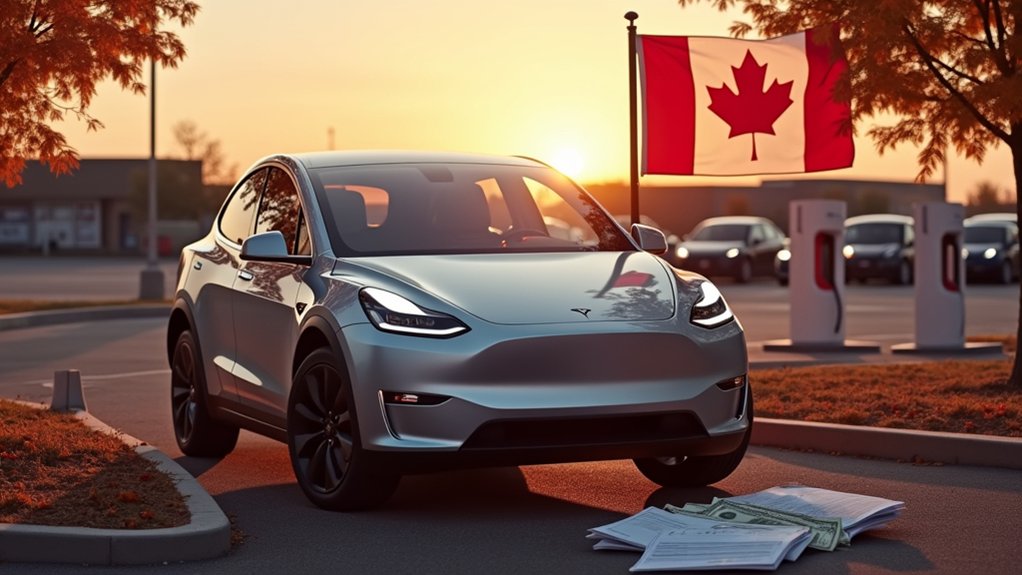
While Canadian authorities scrambled to process a flood of applications before their federal EV incentive program ended, Tesla filed for an astonishing C$43.1 million (approximately $30 million USD) in rebates across just three days. The electric automaker’s claims accounted for over 50% of the remaining $71.8 million in public subsidies, effectively cornering the market as the program’s funds dwindled.
The timing couldn’t be more suspicious. Tesla claimed rebates for 8,653 vehicles sold at a rate of approximately two cars per minute—even during hours when dealerships were closed. One location in Quebec City reportedly processed an implausible 4,000 rebate claims in a single weekend, a volume that raised immediate red flags with Transport Canada officials. This controversial move left many independently owned dealerships struggling to cover customer rebates themselves.
Tesla’s frenzied rebate claims—two vehicles per minute, even after hours—strained credibility and triggered immediate government suspicion.
When confronted with these statistical anomalies, Tesla’s defense was straightforward: the sales represented a backlog of legitimate transactions rather than manufactured ones. Each store averaged 30 sales per hour during the three-day period, an extraordinary volume that raises questions about processing capabilities. The company maintained that the government was aware of their filing practices and threatened legal action when authorities froze the $30 million payout pending investigation.
The program’s structure inadvertently created the perfect storm. With just days’ notice before the incentive dried up, dealers rushed to submit outstanding claims for the $5,000-per-vehicle rebate. Tesla’s approach, however, went beyond mere efficiency. This situation highlights the challenges facing the industry as EV sales surged 15% year-to-date in 2025.
For competitors, the fallout was immediate. Other Canadian auto dealers watched helplessly as Tesla absorbed what might have been their slice of the subsidy pie. I’ve seen aggressive sales tactics before, but Tesla’s maneuver represents an unprecedented exploitation of program mechanics.
The government’s response was decisive. Beyond freezing the funds, officials banned Tesla from future participation in subsidy programs as long as U.S. tariffs remain in place. Each of Tesla’s 8,653 rebate applications now faces detailed scrutiny.
The incident highlights the challenges in administering EV incentive programs. When a system designed to accelerate widespread EV adoption becomes dominated by a single manufacturer’s last-minute claims, it deserves the thorough investigation it’s now receiving.