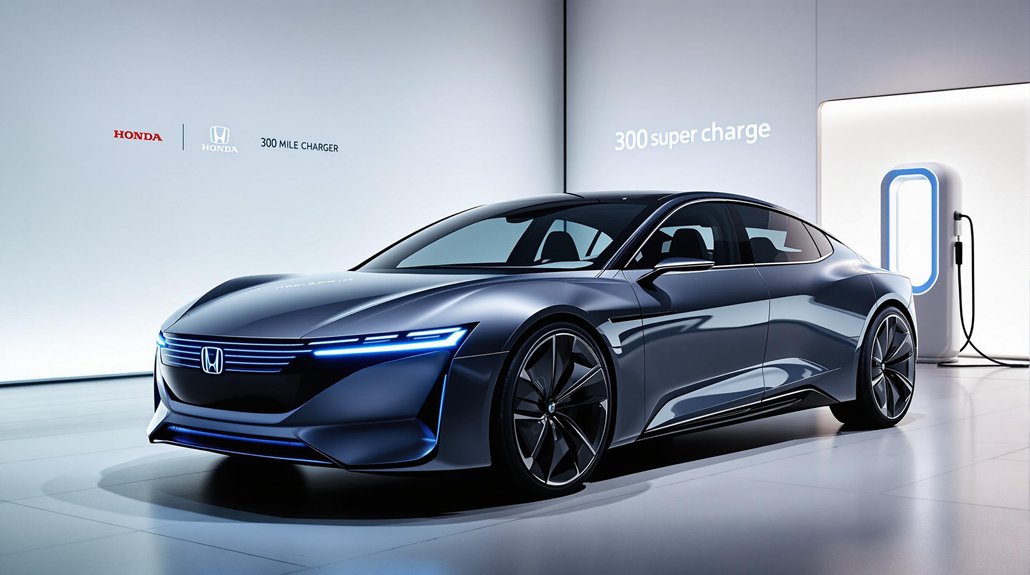
The collaborative brainchild of tech giant Sony and automotive powerhouse Honda has finally materialized in the form of the Afeela sedan, a premium electric vehicle set to challenge established players in the increasingly crowded luxury EV market.
The debut model boasts impressive specifications, including a targeted driving range of 300 miles and dual electric motors delivering a combined output of approximately 482 horsepower through a standard all-wheel-drive system.
Afeela’s premier model promises 300-mile range and 482 horsepower from dual motors with all-wheel-drive capability.
With a starting price of $89,900 for the Origin trim and $102,900 for the upscale Signature variant, Afeela positions itself as a direct competitor to established models like the Lucid Air, Tesla Model S, and Mercedes EQE.
The sedan stretches 193.5 inches in length with a wheelbase slightly longer than the Lucid Air Pure, offering a generous 27.0 cubic feet of trunk space.
Production will commence at Honda’s Ohio facility, with initial sales targeted for California in 2025 before expanding nationwide by mid-2026. Early adopters can secure their reservation with a mere $200 refundable deposit.
The partnership cleverly marries Honda’s manufacturing prowess with Sony’s technological expertise.
Tech enthusiasts will appreciate the vehicle’s formidable array of 40 sensors for advanced driver assistance and 800 TOPS of computing power.
The heavily digitalized interior showcases multiple displays for both driver information and passenger entertainment. The vehicle features a distinct yoke steering wheel design that sets it apart from many competitors in the segment.
The front exterior of the Afeela includes a screen that allows owners to display personalized messages for various occasions, adding a unique customization option rarely seen in other vehicles.
Significantly, Afeela offers three years of complimentary subscription services including Intelligent Drive, Personal Agent, and 5G data connectivity—features that will subsequently require payment.
The manufacturers haven’t overlooked sustainability, incorporating approximately 70% plant-derived and recycled materials throughout the vehicle.
Exterior finishes include Tidal Gray, Calm White, and Core Black, while interiors come in either Black or Gray schemes.
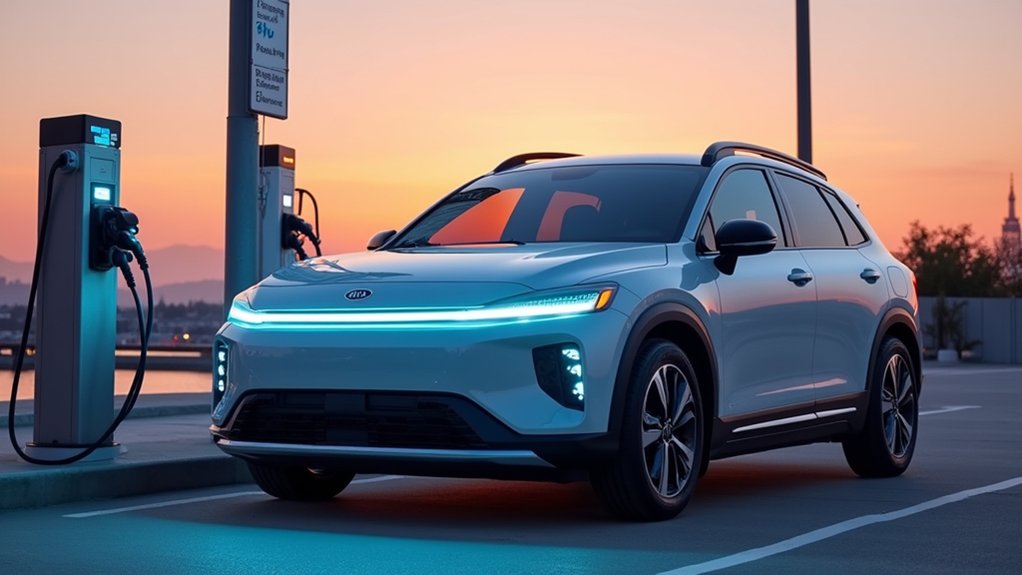
Perhaps most practically, Afeela will have access to Tesla’s extensive Supercharging network, though specific charging speeds remain undisclosed.
The car features smart charging technology that optimizes charging schedules and costs through sophisticated algorithms, helping owners reduce their carbon footprint while maximizing efficiency.
This thoughtful combination of range, power, technology, and charging convenience makes a compelling case for the Afeela as a serious contender in the premium EV segment.